Home Blog Page 26

 Minister assures Ghanaians on the completion of major roads

0

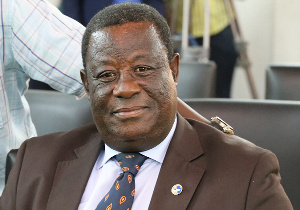
According to the Minister; Kwasi Amoako-Atta, the government is committed to improving the country’s road projects in order to boost its developmental agenda.

“From this month, with the President having declared 2021 and 2022 as the years of roads, we are going to see to the completion of all the major road projects started by the government across the country since 2017,” he explained.

He assured the public after his visit to the Ofankor-Nsawam highway rehabilitation project, La Beach Road and the construction of the flyover at Flower Pot on the Accra-Tema Motorway.


SSNIT increases pensions by 25%

0

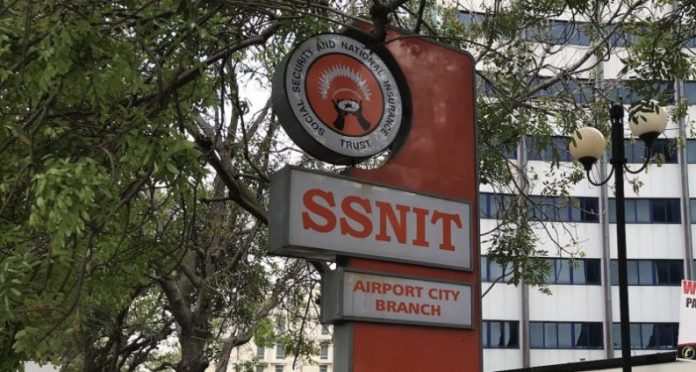
The Social Security and National Insurance Trust (SSNIT) has increased monthly pension payments by 25 percent.

The review will see all 234,000 pensioners on the SSNIT pension payroll  have their monthly pensions increased by a fixed rate of 19 per cent, plus a redistributed flat amount of GH¢73.58.

By this increment, the minimum paid pensioner will receive GH¢430.58 while the highest paid pensioner receives GH¢169,725.89.

The Director-General of SSNIT, Dr John Ofori-Tenkorang, also mentioned that the projected expenditure on pensions for 2023 will be GHȼ4.3 billion, GHȼ850 million more than last year.

He said, “the Trust remains committed to paying all legitimate benefits accurately and timeously.”

Police seize sacks of suspected Indian Hemp at Kpando

0

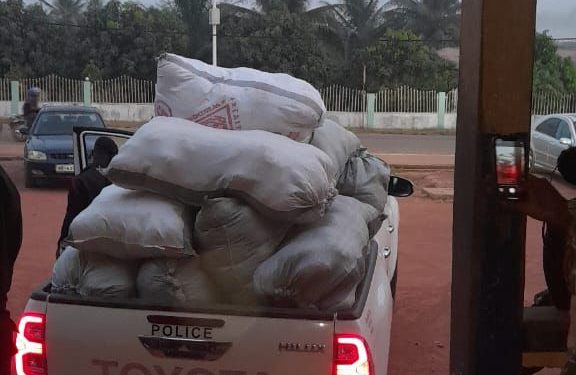
The Kpando Divisional Command of the Ghana Police service has seized undisclosed sacks of substance suspected to be Indian hemp in the Volta Region.

The sacks were seized on Thursday after they were informed earlier that the sacks could have suspected substance in them.

Samuel Jinapor to head Trade Ministry

0

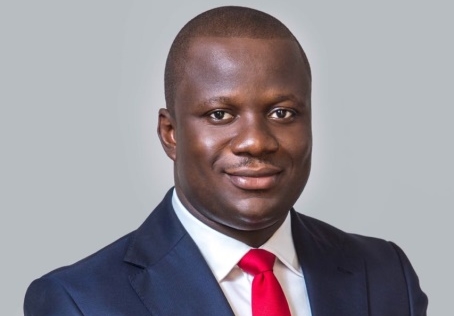
The Minister for Lands and Natural Resources, Mr. Samuel Abu Jinapor, has been appointed as head of the Ministry of Trade and Industry.

In a statement signed by the Director of Communications at the Office of the President, Eugene Arhin said the Lands Minister is expected to replace Alan Kyerematen on Monday, January 16.

“The President of the Republic, Nana Addo Dankwa Akufo-Addo, has tasked the Minister for Lands and Natural Resources, Hon. Samuel Abu Jinapor, MP, to assume responsibility for the Ministry of Trade and Industry, with effect from Monday, 16th January 2023, pending the appointment of a substantive replacement for the outgoing Minister, Mr. Alan Kyerematen.”

Deputy CEO of Northern Development Authority sacked

0

The Deputy Chief Executive Officer of the Northern Development Authority, Patrick Seidu, is expected to leave office by March 21, 2023 as directed by President Nana Akufo-Addo.

A letter signed by the Chief of Staff, Frema Osei-Opare stated that Mr Seidu is expected to  hand over his duties and any official property to the Chief Executive Officer of the Northern Development Authority before his departure.


“We wish to inform you that, H. E. the President has decided to terminate your appointment as Deputy Chief Executive Officer of the Northern Development Authority with effect from 21st March 2023.

“You are expected to comprehensively hand over your duties and any official property in your custody to the Chief Executive Officer of the Northern Development Authority before your departure. We thank you for your services, and we wish you the best in your future endeavours.”

Son of former Ghana Blackstar player joins FC Midtjylland

0

Malik Pimpong, whose father Razak Pimpong played for Ghana at the 2006 World Cup, has joined FC Midtjylland.

The 15-year-old has shown great promise, prompting the Danish club to sign him in the January transfer window.

The transfer means he has followed in his father’s footsteps. Razak spent six years at Midtjylland, where he helped them win the Danish Superliga.

“Malik Pimpong, who is the son of former FC Midtjylland profile Razak Pimpong, has signed his first academy contract in central Jutland,” the Danish club said.

The statement continued, “Malik Pimpong is a skilled offensive player with technique, goal-scoring ability and a winning mentality. It has now been rewarded, as the 15-year-old great talent has signed his first agreement with FC Midtjylland.

“He joined FCM as an U13 player and has been part of the U15 team during the autumn, while it has also become a league match on Allan K. Jepsen’s strong U17 team. He was also with the second-oldest academy team for the Nordic Championships in December 2022.”

UN initiative to save 30 million malnourished children

0
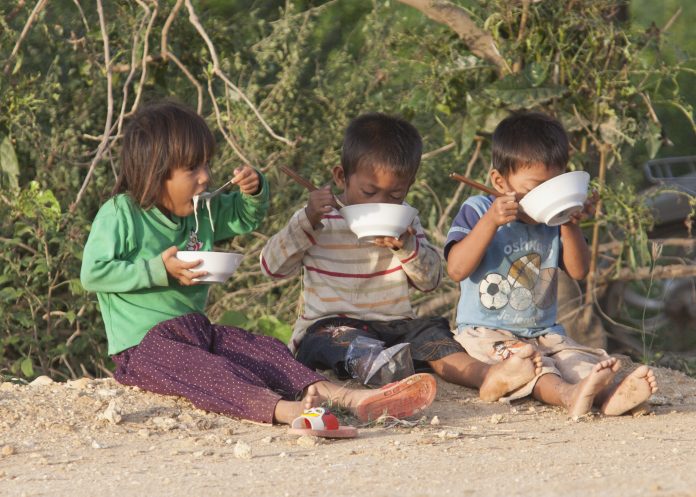
Cambodia July 2005 Photography by Mark A. Philbrick Copyright BYU Photo 2013 All Rights Reserved photo@byu.edu (801)422-7322

The United Nations on Thursday launched an appeal for funds to come to the aid “before it is too late” of 30 million children suffering from acute malnutrition in countries affected by the food crisis.

“More than 30 million children in the 15 most seriously affected countries suffer from wasting – or acute malnutrition – and eight million of these children suffer from severe wasting, the most deadly form of undernutrition”, underline five agencies of the United Nations in a joint statement.

The 15 countries affected are Afghanistan, Burkina Faso, Chad, the Democratic Republic of the Congo, Ethiopia, Haiti, Kenya, Madagascar, Mali, Niger, Nigeria, Somalia, Sudan, Sudan South and Yemen.

Skyrocketing food prices are aggravating food shortages and preventing access to basic food at affordable prices. Conflicts, climate change and the Covid-19 pandemic have worsened the situation, according to the agencies.

“This situation is likely to deteriorate even more in 2023,” warned the Director General of the United Nations Food and Agriculture Organization (FAO), Qu Dongyu.

UN agencies are calling for increased investment to support their efforts to meet “the unprecedented needs arising from this deepening crisis before it is too late”.

Agencies want to prevent, detect and treat acute child malnutrition by acting on all fronts: food, health, water, hygiene, and social protection systems. It is necessary to ensure that healthy food is “available, accessible and affordable”, stressed Qu Dongyu.

The action plan will concern children under the age of 5, pregnant and breastfeeding women, and mothers and caregivers of children under the age of 5.

“The current cascading crises leave millions of children severely malnourished and have made it more difficult for them to access essential services,” said Catherine Russell, Executive Director of UNICEF.

“Wasting is a source of suffering for the child, and in severe cases, it can lead to death or permanent damage to the growth and development of children,” she added.

This crisis must be tackled with “proven solutions to prevent, detect and treat child wasting at an early stage”, Ms Russell said.

Severely malnourished children have weakened immune systems and are at increased risk of dying from common childhood illnesses.

“The global food crisis is also a health crisis, as well as a vicious circle: malnutrition leads to disease, and disease leads to malnutrition,” concluded Tedros Adhanom Ghebreyesus, Director General of the World Food Organization. Health (WHO).

“Urgent support is needed now in the worst-affected countries to protect children’s lives and health,” he said.

Al-Qaeda claims the death of the 14 soldiers in the center of Mali

0

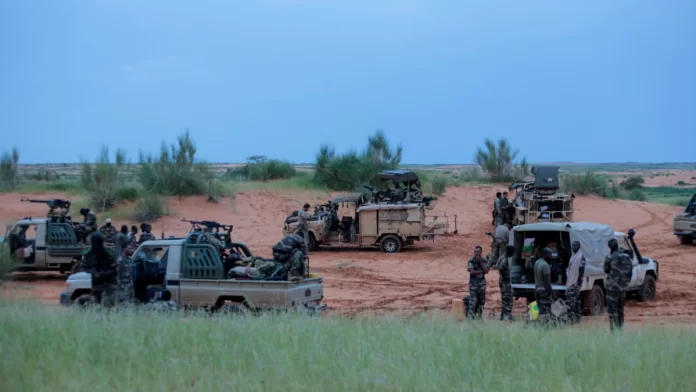
14 Malian soldiers were killed and 11 injured on Tuesday in clashes with jihadists in the centre of the country, according to an army report on Thursday, an attack claimed by Al-Qaeda with different figures.

The previous report communicated by officers of the army and the gendarmerie on condition of anonymity reported the day before at least 12 Malian soldiers were killed during these fights which took place between Mopti and Ségou after several attacks carried out against the army with homemade bombs.

“Enemy side”, the Malian army claims to have neutralized “31 terrorists”, in a statement sent to AFP.

The jihadists of the Support Group for Islam and Muslims (GSIM, JNIM in Arabic), affiliated with Al-Qaeda, for their part claimed responsibility for a ” double ambush having targeted Malian soldiers and mercenaries from the Wagner group in the region of Mopti”, in a press release authenticated by the American NGO SITE, specialized in the follow-up of radical groups, consulted Thursday by AFP.

The first attack was carried out “with a mine” on the road between Tenenkou and Macina during which “an unknown number of Malian soldiers and Wagner mercenaries were killed and wounded”.

It was followed by a second assault “with three explosive devices” between Koumara and Macina in which “five Wagner mercenaries and seven Malian soldiers were killed” and dozens of others injured”, according to the JNIM organization which ” recognizes the death of five martyrs”.

Some countries accuse the junta in power in Mali of having recourse to the private paramilitary company Wagner, reputed to be close to the Kremlin, which Bamako denies.

Mali has suffered since 2012 from the spread of the jihadist movement and a deep multidimensional, political, economic and humanitarian crisis. The centre of the country is one of the hotbeds of the violence which has spread to neighbouring countries, Burkina Faso and Niger and is spreading towards the south.

The colonels who came to power through a putsch in 2020 and reinforced by a second coup in 2021 turned away from the former French ally and its partners and turned militarily and politically towards the Russians.

The junta launched an operation focused on central Mali at the end of 2021. She claims to have cornered the jihadists on the run and on the defensive across the country.

But in a report by its secretary general presented to the Security Council on Tuesday, the UN writes on the contrary that the security conditions continued to deteriorate between June and December 2022 in the centre of the Sahel, “in particular in Burkina Faso and in Mali”.

“In Mali, after the departure of international forces, armed groups advanced in the east of the country, taking control of large border areas with Niger”, underlines the report.

Ivorian researcher, Adjata Kamara awarded for her research to protect yams

0

Adjata Kamara is one of the 20 winners of the For women in science initiative of the L’Oréal Foundation and UNESCO, which aims to give visibility to women researchers worldwide.

The 25-year-old Ivorian was chosen for her work on biopesticides to protect yam crops, a root that is highly prized in sub-Saharan Africa.

Her passion for research stems from her childhood when her father’s mango crops were ravaged by fungi.

“It allows me to show my research to other women, to other countries and it puts a little pressure on me because I tell myself that now, I have to be a role model for young girls in science,” said Adjata.

Adjata explains that her goal is to develop “biopesticides based on plant extracts, fungi and beneficial bacteria,” in order to treat without chemicals this anomaly that disrupts the production of a plant that is the basis of staple food in several regions of Africa.

“I work on the development of biopesticides based on plant extracts, bacteria and also fungi. But these bacteria and fungi are said to be beneficial and so I’m trying to find methods to control the fungi that attack post-harvest yams,” said Adjata.

Adjata is one of the twenty laureates of the For women in science’s young talent prize from sub-Saharan Africa – excluding South Africa – who will receive between 10,000 and 15,000 euros to help them in their work.

“From an early age, my father had a mango plantation. And this plantation was attacked by mushrooms, but at that time we did not know it. And as the years passed, there was a drop in production. And from then on, I wanted to know why these mangoes were being attacked (by fungi), and why production was falling. And it’s since then that I devoted myself to it and that I loved science,” said Adjata.


Uganda confirms end of Ebola after 4-month outbreak

0
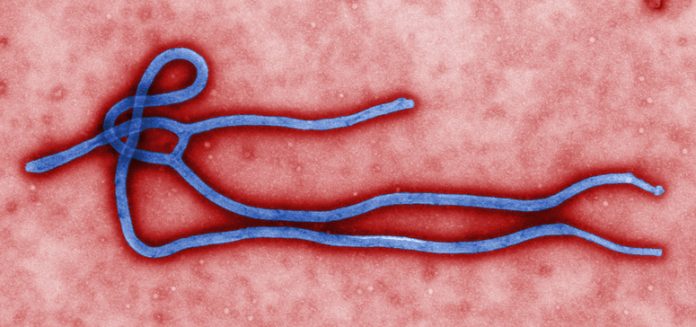
Cynthia Goldsmith This colorized transmission electron micrograph (TEM) revealed some of the ultrastructural morphology displayed by an Ebola virus virion. See PHIL 1832 for a black and white version of this image. Where is Ebola virus found in nature?

The exact origin, locations, and natural habitat (known as the "natural reservoir") of Ebola virus remain unknown. However, on the basis of available evidence and the nature of similar viruses, researchers believe that the virus is zoonotic (animal-borne) and is normally maintained in an animal host that is native to the African continent. A similar host is probably associated with Ebola-Reston which was isolated from infected cynomolgous monkeys that were imported to the United States and Italy from the Philippines. The virus is not known to be native to other continents, such as North America.

Uganda has declared the end of a nearly four-month Ebola outbreak it struggled briefly to contain but was then able to swiftly bring under control despite the absence of a proven vaccine against the viral strain in question.

“We have successfully controlled the spread of Ebola in Uganda,” health minister Jane Ruth Aceng said on Wednesday during a ceremony to mark the outbreak’s end.

The outbreak killed 55 of the 143 people infected since September, according to health ministry figures. Six of the people who died were health workers.

In the early weeks of the outbreak, cases spread beyond the epicentre of Mubende, 150km (90 miles) west of the capital Kampala, to several other districts, including Kampala.

The World Health Organization says a country needs to pass 42 days – twice the maximum incubation period – after the last confirmed case for it to be declared Ebola-free. Wednesday’s declaration followed Uganda’s completion of that timeline.

In December 2022, Uganda discharged its last known Ebola patient from hospital and President Yoweri Museveni lifted all Ebola-related movement restrictions.

African health authorities have made a concerted effort to boost their readiness to respond to Ebola after a devastating outbreak of the Zaire strain of the disease in West Africa between 2014 and 2016 that killed 11,300 people, mostly in Guinea, Sierra Leone and Liberia.