Home Blog Page 80

AKUA DONKOR, WUNTUMI SUED FOR DEFAMATION

0

The Founder and flagbearer of the Ghana Freedom Party, Akua Donkor and Wontumi Communications Limited in the Ashanti region have been sued for defaming a former Parliamentary Candidate in Asante Akim North on the ticket of the NDC, Mary Awusi.

In a suit, the plaintiff is demanding a total of 1,000, 000 Ghana cedis from the defendants for claiming that the plaintiff was having an affair with former President John Mahama.

Among the declarations being sought by the plaintiff include;

A declaration that the words uttered and published by the 1st Defendant in the interview AS PLEADED IN PARAGRAPHS 11 AND 12 in the statement of claim are defamatory.

A declaration that the words uttered and published by the 1st,2nd and 3rd Defendants AS PLEADED IN PARAGRAPHS on the 20th August 2020 are defamatory of the Plaintiff.

A declaration that the Plaintiff’s reputation has been injured by reason of the false, malicious, unjustifiable, and reckless defamatory statement uttered by the 1st Defendant and further repeated in her interview with the 2nd Defendant on the platforms operated by the 3rd Defendant.

An order of the Honourable Court directed at the Defendants to publish an unqualified retraction and an apology on the Platforms operated by the 3rd Defendants with the same prominence the defamatory words received within 14 days after the judgment.

An order of the Honourable Court for an interlocutory and perpetual injunction restraining the Defendants, their agents, assigns, and servants from further publishing any defamatory words against the Plaintiff.

The sum of Three Hundred Thousand Ghana Cedis (GH₵300,000.00) in general damages against the 1st defendant. The sum of One Hundred Thousand Ghana Cedis (GH₵ 100,000) in general damages against the 2nd Defendant for using his radio program to publish the defamatory statements of the 1st defendant.

The sum of Six Hundred Thousand Ghana Cedis (GH₵600,000.00) as punitive damages against the Defendants.

THE POTENTIAL OF THE SOIL AGAINST CLIMATE CHANGE

0

Farmers are the stewards of our planet’s precious soil, one of the least understood and untapped defenses against climate change. Because of its massive potential to store carbon and foundational role in growing our food supply, soil makes farming a solution for both climate change and food security.

The threat to food security
Farming is capital-intensive and farmers are at the mercy of volatile global commodity markets, trade disputes, regulatory changes, weather, pests, and disease. Factor in climate change and you can include droughts, floods, and temperature shifts.

We need to change how we grow our food because:

climate change will increasingly impact farm yields
how we farm can help mitigate climate change
helping our farmers unlock the full potential of soil will help them meet growing food demands while remaining profitable
restoring the carbon-holding potential of our soil combats climate change.
Soil and climate change
The last few years have been among the hottest on record. As of May 2020, the concentration of carbon dioxide (CO2)​​​​​​​ in our atmosphere has been the highest it’s been in human history.

Studies show that soil removes about 25% of the world’s fossil-fuel emissions each year. This is done through carbon sequestration, a natural way of removing CO2 from the atmosphere through the soil with fewer impacts on land and water, less need for energy, and lower costs.

Soil can take in more CO2 from the atmosphere than it releases, making it a carbon sink. The carbon sink capacity of the world’s agricultural and degraded soils is 50 to 66% of what it has been historically. This means our soil can hold 42 to 78 gigatonnes more carbon. Increasing the amount of carbon in the soil also makes it more productive for farmers.

Soil is also a method for water retention and purification and returns oxygen to the atmosphere through plants. A single tablespoon of soil contains billions of microorganisms. In other words, the soil is alive. If care for the soil on our farms it will greatly return the favor by providing us with the fiber, fuel, and food we need, all while removing CO2 from the atmosphere.

Farming with attention to the soil
Carbon-smart farming: The amount of carbon sequestered in our soils can be increased by adopting the right management practices. Reducing tillage, planting cover crops and using organic matter amendments such as compost have been shown to increase the amount of carbon stored in the soil. Soil carbon also performs double duty as a resource in ensuring food security. Farmers can harness the power of carbon stored as soil organic matter, which is the fraction of soil composed of anything that once lived, such as decomposed plant and animal matter. Soil organic matter makes farmland more productive, reduces erosion and improves soil structure, which improves the quality of groundwater and surface waters. All of this reduces the negative impact of climate change across the entire ecosystem.
Reducing food waste at the farm level: Food waste is a major source of greenhouse gas emissions, contributing 8% of total global emissions and at least 2.6% of all U.S. emissions. Specifically, a total of one-third of edible produce, or 33.7%, remains unharvested in fields only to get buried under. Furthermore, a significant amount of food waste is attributed to a loss in crop production due to diseases – a loss of $US200 billion globally per year.

Where Science & Technology can help: Our lack of understanding of our soil is hurting us. We need help from cutting-edge science and technology to measure and interpret the physical, chemical, and biological properties of soil, which is collectively referred to as soil intelligence. Soil intelligence uncovers information such as which pathogens are lurking. It quantifies beneficial nutrients and determines the carbon-holding potential of soil. This information allows farmers to diagnose the health of the soil prior to planting their crops, enabling cost-saving decisions about what types of compost, fertilizers, pesticides, or other treatments to put in their soil, how to irrigate, or whether or not to switch crops entirely and prevent waste.
Every farm is unique and there is no one-size-fits-all approach. There is more biodiversity below ground than above ground. Carbon-smart farming yields comprehensive soil intelligence, which can help farmers and farm advisors “read their soil”, make the right decisions for maximizing profits, and reduce waste. This information can help us better understand what the soil needs to feed our planet while continuing to sequester carbon.

Agriculture can significantly decrease humanity’s carbon footprint. We must aid, nurture, and care for our soil so that it can play this pivotal role in our fight against climate change. An investment in our soil now is an investment in the livelihood and health of generations to come.

UG students told to Forgo residential fees refund

0

Students of the University of Ghana have been entreated to forgo parts of the 2019/2020 residential fees which were to be refunded to them as a compensation for not utilizing the facilities, following the outbreak of the Coronavirus.

Head of Halls for the University, Dr. Charles Wiafe-Akenteng, has indicated that the amount paid by residents of the traditional halls is “insufficient,” preventing any major renovation to be undertaken in the halls.

This is in line with calls for refund of fees by some students of the Institution after educational institutions were asked to close down in the wake of COVID-19.

“If you ask me, the final decision does not rest with me alone because of my portfolio. But if you asked me, I would kindly and humbly appeal to donate that amount to various halls, to ensure that things are put right. That wouldn’t be a bad thing because we don’t have sufficient money from what students pay to keep the hall running. That is why we do just the basics and major things remain standard,” he said.

In an interview on Campus Exclusive, he mentioned that the university management only increases residential fees after Parliamentary approval.

“The University does not charge any fee that was not approved by Parliament. So whatever Parliament approves the last time, if it is not increased, we maintain that. So I don’t think it is factual that any traditional hall or UGEL has concluded an arrangement to increase accommodation fees,” Dr. Wiafe-Akenteng added.

Meanwhile, Ghana Hostels Limited (GHL) has announced that it will open an online portal for prospective applicants who are seeking accommodation in its hall of residence.

The portal which was to be opened on August 18, 2020, will be opened not later than August 21, for students to apply for rooms due to some challenges faced by the administration of the hall.

Commercial vehicles and small businesses to benefit from tax exemptions – Mahama

0

NDC flagbearer John Mahama says he will exempt Commercial vehicles, industrial and agricultural machinery from import duties if he secures power in December.

“And we will exempt Commercial vehicles, industrial and agricultural machinery from import duties. My government from 2021 will exempt vehicles and all other equipment imported into the country for commercial, industry and agricultural purposes from import duty,” he told labour unions in the Volta region where is currently campaigning.

Mr. Mahama also said he will implement business strategies that will exempt startups and other smaller business from paying taxes for at least year.

“Newly established medium-sized companies that employ staff up to twenty (20) will be completely exempt from the payment of corporate income tax for one year. And newly established medium enterprises that employ more than twenty (20) staff will be exempted completely from the payment of corporate income tax for two years”.

On the fight for social justice, the NDC flagbearer said: “In pursuance of social justice, I will vigorously push through a constitutional review that creates a fairer and just emoluments system and removes the distortions between Article 71 Officeholders and other public sector employees.  Launch “Operation Sting” and be ruthless against all corrupt political appointees and public sector workers. It will be a requirement for all who serve in my Government to publish their assets declaration and have same audited by the Auditor General. Drastically reduce the size of government And Pay Assembly Members to perform the function of collecting accurate births and deaths information in their various electoral areas”.

I want Ghanaians to Trust Me – Akufo-Addo

0

The President, Nana Addo Dankwa Akufo-Addo has responded to claims by the flagbearer of the opposition National Democratic Congress (NDC), John Dramani Mahama that he is only good at giving promises but poor at delivering them.

President Akufo-Addo in a tweet on Wednesday, August 19, 2020, asked Ghanaians to reject such propaganda against his government and reward him with victory in December 2020.

“I am someone who promises and delivers, and that is something I want Ghanaians to know, so they can trust me.”

Mean while, Mr. Mahama who was addressing some supporters of the NDC in the Volta Region on Monday, August 17, 2020, said the promises made by President Akufo-Addo before the 2016 elections were “sweet things” that have not been fulfilled.

“Our major opponents (NPP) are good at promises but poor at delivering.”

“For them, their policy is that; say anything that the people will believe and vote for you,” he said.

Mr. Mahama further added that the governing New Patriotic Party is only interested in political power and not making Ghana better.

“Political power is the most important thing to them. And when you get the power, whether you fulfill the promises or not; it doesn’t matter.”

Mr. Mahama thus called for a comparison of achievements between the previous NDC government and the current NPP government.

“Let’s compare track records; how many communities have been electrified in the last four years?” he quizzed, adding that: “We took electrification in this country to 86 percent, one of the best in Africa.”

Military Pledge smooth civilian transition

0

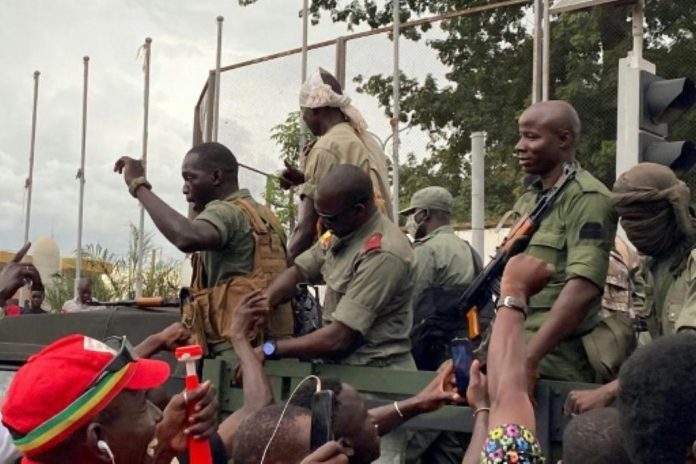
Soldiers who staged a military coup in Mali leading to the resignation of President Ibrahim Boubacar Keita and his government said on Wednesday they plan to form a civilian transitional government that will organise fresh elections.

Keita resigned and dissolved parliament late on Tuesday hours after mutinying soldiers detained him at gunpoint, plunging a country already facing a jihadist insurgency and mass protests deeper into crisis.

In a statement broadcast on state-owned television early on Wednesday, a spokesman for the mutineers calling themselves the National Committee for the Salvation of the People said they had decided to act to prevent Mali from falling further into chaos.

Flanked by soldiers, committee spokesman Colonel Ismael Wague invited Mali’s civil society and political movements to join them to create conditions for a political transition that would lead to elections.

“Our country is sinking into chaos, anarchy and insecurity mostly due to the fault of the people who are in charge of its destiny,” he said.

The military coup has been condemned by Mali’s regional and international partners who fear Keita’s fall could further destabilise the former French colony and West Africa’s entire Sahel region.

President of Mali Resigns after Military intervention

0

Mali’s President Ibrahim Boubacar Keïta has resigned, after being detained by soldiers on Tuesday, state TV reports.

In a televised address, Mr. Keïta said he was also dissolving the government and parliament.

“I want no blood to be spilled to keep me in power,” he added.

It comes hours after he and Prime Minister Boubou Cissé were taken to a military camp near the capital Bamako, drawing condemnation from regional powers and France.

“If today, certain elements of our armed forces want this to end through their intervention, do I really have a choice?” said Mr. Keïta.

“I hold no hatred towards anyone, my love of my country does not allow me to,” he added. “May God save us.”

Earlier, the mutinying soldiers took control of the Kati camp.

There has been anger among troops about pay and over a continuing conflict with jihadists – as well as widespread discontent with the former president.

Mr. Keïta won a second term in elections in 2018, but there has been anger over corruption, the mismanagement of the economy, and the rise of communal violence in areas of the country.

It has prompted several large protests in recent months. A new opposition coalition led by the conservative Imam, Mahmoud Dicko, has called for reforms after rejecting concessions from Mr. Keïta, including the formation of a unity government.

What do we know about the mutiny?

It was led by Col Malick Diaw – deputy head of the Kati camp – and another commander, Gen Sadio Camara, BBC Afrique’s Abdoul Ba in Bamako reports.

After taking over the camp, about 15km (nine miles) from Bamako, the mutineers marched on the capital, where they were cheered by crowds who had gathered to demand Mr. Keïta’s resignation.

On Tuesday afternoon they stormed his residence and arrested the president and his prime minister – who were both there.

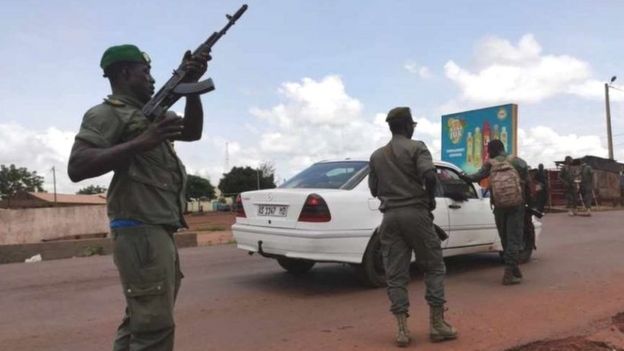
Soldiers patrol after gunshots were heard Tuesday at a military camp near Kati area in Bamako, Mali on 18 August 2020
Image captionSoldiers were pictured patrolling on the streets after gunshots were heard

The president’s son, the speaker of the National Assembly, the foreign and finance ministers were reported to be among the other officials detained.

The number soldiers taking part in the mutiny is unclear.

Kati camp was also the focus of a mutiny in 2012 by soldiers angry at the inability of the senior commanders to stop jihadists and Tuareg rebels taking control of northern Mali.

What has the reaction been to his detention?

When news first broke of the mutiny, the United Nations and African Union both called for the release of those held by the soldiers.

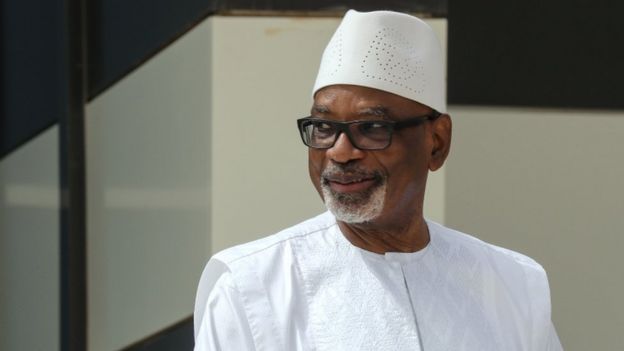
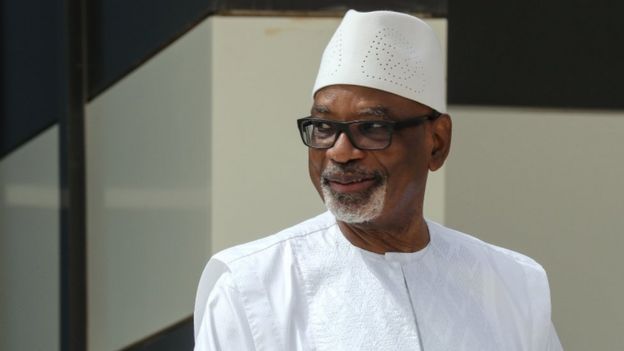
Ibrahim Boubacar Keïta, file picture 30 June 2020
Image captionIbrahim Boubacar Keïta won a second term in 2018

The Economic Community of West African States (Ecowas), a regional body, also said its 15 member states had agreed to close their borders with Mali, suspend all financial flows to the country, and eject Mali from all of Ecowas’ decision-making bodies. In recent months, Ecowas has a key mediator between Mr. Keïta’s government and opposition groups.

The UN Security Council is to meet on Wednesday to discuss the latest developments in Mali.

Mali’s former colonial ruler, France, was also quick to condemn the president’s detention, and Foreign Minister Jean Yves Le Drian urged the soldiers to return to barracks. Mali is a key base for French troops fighting Islamist insurgents across the Sahel region.

AKUFO-ADDO’S FIRST TERM INFRASTRUCTURE RECORDS “UNPRESIDENTED”

0

Vice President Alhaji Dr. Mahamudu Bawumia, has described the infrastructure record of the Akufo-Addo administration as “second to none, with verifiable data to back up my claim”, Unpresidented.

“The investment in infrastructure by the NPP government over the last three years has been massive. I dare say our investment in infrastructure, our infrastructure record, is second to none for any government in its first term under the Fourth Republic,” Dr. Bawumia stated on Tuesday, August 18, 2020, during a virtual Government Townhall Meeting and Results Fair showcasing the NPP’s infrastructure record, held in Accra.

“Notwithstanding the impact of the COVID-19 pandemic on the completion times of some projects, the data indicates that in the fourth republic, no government has achieved as much in its first term of office in terms of infrastructure projects it initiated its first term as the NPP government of Nana Addo Dankwa Akufo-Addo.”

Using a combination of film, tables, and data, Dr. Bawumia disclosed that over the past 3 and half years, the Akufo-Addo administration has implemented different infrastructure programs across various sectors in line with the government’s agenda to ensure inclusive and accelerated economic development. The focus, he said, has been to provide infrastructure for all.

As a result, “about 17,334 individual projects have been started since January 2017. We have completed a total number of 8746 projects throughout the country. A further 8588 projects are at different stages of completion throughout the country.


“This is consistent with our strategic orientation to ensure the development of broad base, wide-scale infrastructure, taking place in every district across the country instead of a few big infrastructure projects in a few cities.”

Zeroing in on the sectoral performance, the Vice President revealed that a total of 1927 road projects have been undertaken across the country since 2017. Out of that, 1307 of them are completed while 620 are currently under construction.

“Government has selected three critical roads in every region. Work is ongoing on all these critical roads and is at various stages of completion, including the famous Eastern Corridor road, for example, Jasikan-Dodo-Pepesu road, Bolga-Bawku (80% complete) and Lawra-Hamile (complete).

“In the urban areas, across the country, since the beginning of 2017, we have done 589 km of Asphalt Overlay, rehabilitating and upgrading of 143.61 km of roads, reconstruction of 97.8km and resealing of 48.82 km of roads across the country.
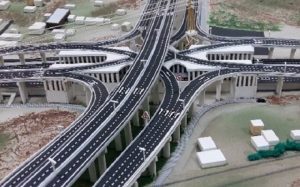
 

“Four states of the art interchanges are also under construction: The Tema Interchange, where the loan, sod cutting and completion were executed by this government; Tamale interchange under the Sinohydro Programme, the first-ever interchange in the Northern Sector of the country (44% complete and expected to be completed by the middle of 2021); Pokuase interchange (the first four-tier interchange in West Africa – 75% complete.

“The, loan agreement for this (Pokuase interchange) project was signed in November 2016 for a three-tier interchange. We subsequently renegotiated for a four-tier interchange without any increase in cost.

“The Obetsebi Lamptey interchange is 55% complete. As well, the Sod has just been cut for the Nungua Interchange

“This is the highest number of interchanges (5) being constructed in the first term of any government since independence. A sixth interchange, the PTC interchange in Takoradi (the first interchange in the Western Region) will start in early September.”

“It is important to note that the cost of the Tema, Pokuase, Tamale, and Obetsebi Lamptey interchanges total $289 million while the Kwame Nkrumah interchange was constructed at a cost of $270 million” Dr. Bawumia disclosed.

Agriculture
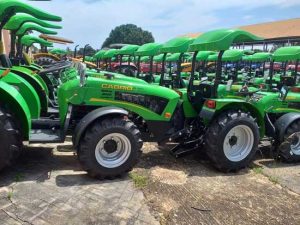


Turning to Agriculture, Dr. Bawumia said Government has embarked on the construction of 80 warehouses throughout the country, each with a capacity of 1,000 MT, under the One District One Warehouse Initiative as part of measures to ensure food security, reduce post-harvest loses, guarantee farmer incomes and improve marketing.
Some of the beneficiary communities include Ejura, Atebubu, Tamale, Sandema, Bawku, Pusiga, Yendi, Twifo Praso, Dunkwa, Diaso, Sefwi Bekwai, Essam, Juaboso, among others.

The government has also established three Greenhouse Training Centres with commercial components, each on a five-hectare piece of land, at Dawhenya, Akumadan, and Bawjiase. 100 Greenhouses have so far been built, with hundreds of graduates trained in greenhouse vegetable production.

“The NPP government is implementing a holistic plan to provide farmers and households access to water for all-year-round farming. Under the plan, there are three components of infrastructure: Small Earth Dams (aka 1 Village 1 Dam), the Pwalugu Multipurpose Dam and Irrigation Project, and various irrigation systems, including Tamne Phases I & II, Mprumem Phases I & II, rehabilitation and expansion of existing schemes at Tono, Kpong Irrigation Schemes (KIS), and Kpong Left Bank Irrigation Project (KLBIP).
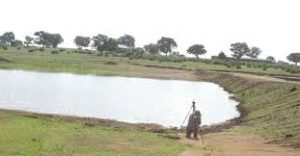
“The completion of the Small Earth Dams project (372 completed, 64 ongoing) will deliver the largest stock of small earth dams ever constructed in the country. The amount of irrigable land the 1V1D policy provides is over 12,000 hectares which is almost equal to the total public irrigable land currently available in Ghana.”

HEALTH

Vice President Bawumia indicated that since coming to office in 2017, the NPP government has embarked on numerous infrastructure development in the health sector, including:
(i) Contracts for the construction of 429 CHPS compounds in rural communities. 243 are completed and commissioned for use, 186 are at various stages of completion.
(ii) Of the 55 maternity blocks and wards being constructed at different health facilities across the country, 36 have been completed and 19 are at various stages of completion. Some of the completed projects are in communities including Aduman in the Afiagya Kwabre district, Frimponso in the Atiwa district, Bawku Central, Aveyime in the North Tong district, Danladi in the Nkwanta North, and many more.

“In collaboration with the private sector, we have delivered the first-ever Infectious Disease Centre in Ghana. This was constructed within 100 days and has since been commissioned for use.

“To improve the delivery of essential services at deprived and remote communities across the country, in collaboration with Zipline, we have constructed the four drone centers at Omaneko in the Eastern region, Walewale in the Northeast Region, Mampong in the Ashanti Region and Sefwi Wiaso in the Western North region. As of the end of June 2020, 79800 medical products have been delivered to 945 health facilities. In addition, it has delivered over 2500 COVID samples to testing centers in Accra (Noguchi) Kumasi (KCCR),” Dr Bawumia disclosed.

As well, 307 well-equipped states of the art ambulances have been procured and managed by the National Ambulance Service, with each constituency being allocated at least one ambulance.

“In addition to what we have done, we have also completed several health projects that we inherited from the previous government. Out of 30 infrastructure projects inherited, we have completed 16 of them including 10 polyclinics and 2 district hospitals. There is also the ongoing construction of another 9 district hospitals.

WATER AND SANITATION
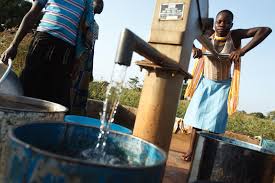
Massive investments have also taken place in water and sanitation, Dr. Bawumia indicated. Various interventions, including the Greater Accra Metropolitan Water and Sanitation Project, Upper East Water Supply Project, Sustainable Rural Water Supply Project, and the Toilet For All project continue to yield results.
“Over 5,498 communities have been declared Open Defecation Free. Even more interesting is the fact that no cholera cases have been recorded thus far,” he added.

To spur economic growth, hundreds of modern markets have also been constructed, while a total of 183 companies, 61 of which are existing companies while 122 are new, are benefitting from the One District One Factory initiative.

“There has also been various infrastructure support for industrial parks and special economic zones across the country including Dawa, Apolonia, Tema Free Zones enclave among others.

Citing numerous examples in digital infrastructure, Energy, Education, Security, Railways, Sports, Housing, Sea Defence and Airports, Vice President Bawumia his party’s opponents “to show us what they accomplished by way of infrastructure initiated in their first term in office. This is because virtually all the key projects they like to point to were completed in their second term of office.

“We are however happy to compare our three and a half year record with their 8 year record. The data will show that the infrastructure we have provided in many districts over just three and a half years surpasses what they provided in 8 years. We have done more while actually spending less as a percentage of GDP because of value for money.

“Also, contrary to the propaganda, the evidence is that we have also completed or working to complete many projects that our government inherited.

“I will like to note that we are not just building infrastructure, we are building a nation. We are building all this infrastructure while staying committed to our social contract to providing free senior high school education, creating jobs, transforming agriculture, industrializing the economy, sustaining the national health insurance scheme, digitizing the economy, ensuring the public safety of Ghanaians, and keeping the lights on. We still have much more to do.

“The future is bright if we stay the course. That is why we are asking the good people of Ghana to give Nana Akufo-Addo and the NPP “four more to do more for you”.

A LETTER TO THE PRESIDENT BY GYASI EDUAM

0

Mr. President,
I remember vividly, your call for all Ghanaians to be citizens, and not spectators under your watch as President. This is what has inspired me to pen down an opinion that I believe would inure to the benefit of our beloved country, boost the vibrance of Ghana’s tertiary education, and would further curb some notable challenges of the sector.

As widely asserted by many, the emanation and outbreak of COVID-19 have indeed forced the world to adjust to a new norm, hence, adopting more innovative modes of routine operations.

Prior to the recording of Ghana’s first COVID-19 case, there was an anticipating concern on limited accommodation and a general infrastructure deficit in our tertiary institutions. This, people logically predicted, would see a drastic hike when the first batch of Free S.H.S graduates is given admission. The general assumption was that the huge number of about 375,373 “Akufo-Addo” graduates who would apply to further their education, would either be deprived of what they qualify for or be admitted to become a burden unto our already overburdened and limited infrastructural facilities.

One question that keeps resonating, is, should our Tertiary Institutions forever continue the tradition of putting up buildings and new structures, as well as creating satellite campuses as our population increases? Obviously NO!, what then is preventing us from charting a new transformational path, as most world-class Tertiary Institutions are doing?

The irony is, a number of the Ivy league Schools, other top class Universities and colleges across the globe, do not have as many buildings and edifices, as we do have in our major ghanaian tertiary institutions, although they are comparatively rated higher than our native academic Institutions.
One may ask, what then is the striking difference,  and hence, the panacea ?
Your Excellency, I honestly believe, that this is strictly a technology centered issue. Facilitating the adoption, patronization and implementation of online/ Electronic Teaching and Learning platforms for all Tertiary institutions in Ghana, is the way forward as the course of Education evolves and advances in our country. This, I firmly believe, can be a major educational sector policy as we head towards the December 2020 polls. A policy which when implemented, would greatly relieve our institutions of the cumbersome accommodation and infrastructure burden. This, in my most candid opinion, is a major policy recommendation to Dr. Matthew Opoku Prempeh led Ministry of Education, as well as Dr. Kingsley Nyarko’s National Accreditation Board.

It is a known fact that numerous individuals opt to stay in Ghana to obtain various academic Degrees and Certificates from European, American and some African Universities and colleges without necessarily traveling outside the borders of Ghana, which is basically due to the availability of Online Teaching and Learning Systems. Most students of Ghanaian universities, would unequivocally prefer an alternative as such.
The University of Ghana, has been a pacesetter in this regard, as its SAKAI ELECTRONIC LEARNING MANAGEMENT SYSTEM has played the most vital role  during this COVID-19 era. The numerous features on this system enables frequent student-lecturer interaction, conducting of various examinations and submission of assignments electronically.
Replicating such systems in various Universities, Technical Universities and Training Colleges across the country, will be of a huge relief to our institutions and help minimize infrastructural deficit.
Also, there are numerous individuals who would enroll to this electronic learning platforms, due to their schedule and preference. E-Learning is indeed the future, and that’s the way to go.

Making it a policy to assist tertiary institutions to acquire and utilize online Teaching and Learning systems promises to be herculean, due to diverse challenges that may be encountered, but comparatively, its usefulness would vastly outweigh the conspicuous challenges that it may be confronted with. My ultimate goal is for all Tertiary Educational Institutions in Ghana to be able to provide a more innovative and compelling alternative, to our traditional Teaching and Learning Systems, to help reduce drastically the bane of accommodation deficit, and to further ensure a technology inclined and more productive tertiary education.
Mr. President, as a citizen and not a spectator in this noble country of ours, this is my widow’s mite. Thank you.

Your Citizen,
Nana Gyasi Eduam?
Vice President/Aspiring President?
University of Ghana TESCON.

AKUFFO-ADDO TOURS CENTRAL AND WESTERN REGIONS

0

President Akufo-Addo will from Tuesday, 18th August 2020, embark on a five-day working visit to the Western and Central Regions, where he is expected to commission projects, cut the sod for the construction of projects, and pay courtesy calls on traditional rulers.

On Tuesday, 17th August, the President will commence his official working visit at Egyam in the Western Region, where he will be inspecting work on the ongoing construction of the Ankyernyin-Egyam road. He will then move to the Evalue-Ajomoro-Gwira constituency to inspect the Axim Fishing Habour Project.

From Axim, the President will cut the sod for the construction of the Esiama-Nkroful road at Esiama, in the Ellembelle constituency. He will also inspect ongoing road construction works at Gwira Aiyinase, and to launch the Gwira Community Mining Scheme. He will also cut the sod for a 100-bed capacity District Hospital in Shama.

On day two, he will meet with the Regional House of Chiefs at Sekondi; visit the Essiam Bypass and Railway Training School at Essikado, and cut the sod for the construction of the GNPC Operational Headquarters, at Takoradi, in fulfillment of a 2016 manifesto pledge.

Beginning his tour of the Central Region, on Thursday, 20th August, cut the sod for the construction of a landing site and fishing harbor at Elmina in the Komenda/Edina/Eguafo/Abirem constituency. He will also pay a courtesy call on the Mokwamanhene, in Twifo Praso, and inspect the ongoing construction of the Twifo Praso District Hospital.

Also, in Twifo Praso, the President will also cut the sod for a bridge over River Pra, commission the Ekumfi Fruit Juice Factory, and later visit the Gomoa West constituency where he would join the Chiefs to inspect work an ongoing construction of a Landing Site.

On Saturday, President Akufo-Addo will cut the sod for the construction of the NHIA Office at Cape Coast, and attend the ceremony for the launch of the NPP 2020 Manifesto.