Home Blog Page 71

AGRICULTURE RECORDS POSITIVE GROWTH DESPITE PANDEMIC

0

It is the sector given the least support; it is the sector with the highest number of the aging workforce; it is the one that is least attractive to the youth.

But it is this same sector – agriculture – that has become the light of the economy, being the only sector to grow as the others are trumped by the pandemic’s impact.

While the other two sectors, industry and services, were decimated by impacts of the coronavirus pandemic as they experienced a contraction of 5.7 percent and 2.6 percent respectively, the ‘rejected stone’ – agriculture – didn’t succumb to the pressure but rather saw a growth of 2.5 percent in the second quarter, data released by the Ghana Statistical Service (GSS) have shown.

That the agriculture sector was able to withstand shocks of the pandemic is not mere serendipity, as the sector outperformed the other two in the first quarter of 2020 – growing by 5.9 percent, whereas industry and services both grew at 5.7 percent in the third quarter of 2019.

The last time that agriculture recorded growth higher than those two sectors was during the first quarter of 2014 when it grew by 8.2 percent while industry contracted by 9.9 percent and services grew by just 2.6 percent.

Despite the sector’s recent growth, its overall contribution to GDP is what has become of more concern.

It contributed a paltry 19 percent to the economy in the second quarter of 2020 while industry and services, which rather contracted, contributed 33 percent and 48 percent respectively – reflecting the fact that agriculture is no longer the economy’s backbone or considered the most important sector.

Dean of the University of Cape Coast Business School, Prof. John Gatsi, says the data should prompt managers of the economy to formulate policies that will make growth in other sectors automatically contribute to growth in the agriculture sector by promoting the value chain.

“I think what the entire data tells us is that we should be more inclusive in our economic management. From the data, agriculture seems to do well because the pandemic didn’t stop people from consuming agriculture products. It didn’t stop farmers and traders of agriculture produce from going about their normal business, because agriculture is a necessity. It tells us that if we are planning, then we should engineer our policies such that they promote agriculture across the value chain.

“The data show the information and communication sector also performed very well. So, what we can do is that we should take advantage of that sector and use it to support and revive agriculture. Some countries are using ICT to boost agriculture growth, so we can learn from them and do the same thing. It is not merely about allocating huge money in the budget to agriculture; we are talking about creating a viable investment attractive to both internal and external players,” he said in an interview with the B&FT.

It is fair to say that successive governments have introduced several interventions over the years to boost growth in the sector, the most recent being the Planting for Food and Jobs introduced by the Akufo-Addo-led administration in 2017. Even though the program has achieved some success, which many attributes the recent performance of agriculture to, fundamental challenges still remain an obstacle to the full potential of the sector in economic growth.

One age-old challenge of agriculture in this country is rampant land litigation issues which threaten the investments of businessmen and eventually lead them to abandon lands they have acquired with huge capital. This has discouraged many private investors from pushing resources into the sector.

There is also the problem of poor road networks linking farming communities to towns and cities which are the main markets for farmers, resulting in post-harvest losses to the farmers.

Then, there is the issue of finance. Agriculture is still considered a high-risk sector in the finance industry, hence many banks and other financial institutions are cautious in lending money to the sector. It remains one of the sectors that receive less support from banks.

As a result of this, farmers continue to use outmoded methods of farming rather than modern methods involving mechanisation.

If these and other challenges blighting the sector’s prospects are addressed by both government and the private sector, then agriculture can be the game-changer in the country’s efforts to reset the economy after the coronavirus pandemic plunged it into ruin – which has resulted in a contraction of 3.2 percent for the second quarter, a situation the country has not experienced in almost four decades.

GHANA’S ECONOMY GREW BY $13 BILLION UNDER MY WATCH – MAHAMA

0

Former President John Mahama says Ghana’s economy is shrinking under the Akufo-Addo administration.

According to him, the government has very little to show for the amount of money it has borrowed so far.

“In 2012, the size of Ghana’s economy was 41.6 billion dollars. In 2016, on my watch as president it was 54.5 billion dollars – a nominal change of 13 billion dollars in 4 years.
This year, 2020, on the watch of Akufo-Addo as president, Ghana’s economy is projected to be somewhere 66 billion dollars, which means the NPP government in four years changed the size of the economy by 11 billion dollars – note in 4 years; 13 billion dollars under my watch and 11 billion dollars under NPP. This is what the data says, and it is verifiable. You can examine the data for yourselves.
“This government has meanwhile borrowed GH¢140 billion as against GH¢54 billion during my presidency”.
On Sunday, Mr. Mahama challenged President Akufo-Addo to point to a secondary school you has constructed since he won power in 2016.

According to him, President Akufo-Addo is “heavy” on giving promises but “low” on delivery.

“Ghanaians know what my track record is; my opponent comes nowhere near me. When we talk about credibility; who is more credible when it comes to delivery on social infrastructure, everyone knows who is credible.

“He (President Akufo-Addo) should show me one secondary school he has built or one hospital he has built in four years. It is easy to say that we have better credibility when it comes to infrastructure with our opponent,” the NDC presidential candidate told TV XYZ in an interview Sunday.

YOUR GUIDE TO GRASS CUTTER FARMING

0

Starting Grasscutter Farming
Many people want to know how to start a grasscutter/cane rat farming business. However, before going into the details about starting a profitable grasscutter farm, it is important to discuss grasscutters or cane rats.

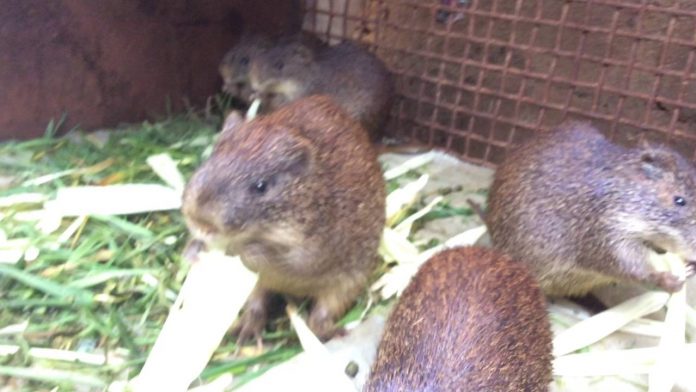
Grasscutters (Thryonomys swinderianus), also called Cane Rats and Grass Cutter in English-speaking West African countries, Agouti in French-speaking West African countries, and hedgehogs in Central Africa, are rodents that are widely found in wet or grasslands areas in Africa. Though these animals are widely hunted in Africa, they can be domesticated like other micro-livestock animals such as rabbits.

Some characteristics of grasscutters are:
Grascutters are placid and relatively prolific animal
They become sexually active and mature at 5-6 months. At this age, they can reproduce and give birth to as high as 12 young.
They can be easily reared or managed, and this made their domestication as an alternative to poaching them in the wild.
They can grow rapidly in intensive conditions
The meat of grasscutters is very rich in protein and economically valuable.
How to Breed or Raise Grasscutters
The best way to breed grasscutter is by raising them under an intensive system, i.e. keeping them in cages or pens inside a very safe shed. It is very important to choose a very good location as this is highly critical for successful grasscutter rearing.

Other conditions that must be met for a successful grasscutter rearing include:

The area/location should be easily accessible and free from flood
It must be well ventilated, secured, availability of a source of feed and water
The number of grasscutters kept and the objectives of production determine the size of the building or pen. However, the standard is that a family of grasscutters, comprising one adult male and four females should be provided a space of 1.6-2 m2.

How to Construct Rearing Sheds for Grasscutters

There are various materials used in constructing the rearing shed of grasscutters, Breezeblocks, bricks, straws and bamboo can be used for this purpose. It is always advised to use local materials to reduce construction costs. It is mandatory that the building have adequate light and ventilation. The long sides of the pen must be low-walled (1.5 meters high) and the upper half can be covered with a chicken net. Corrugated iron or other waterproof materials can be used for roofing the rearing shed.

How to Construct Rearing Pen for Grasscutters
Rearing pen
Grasscutters are commonly kept and raised inside rearing pens. It is the production objectives that determine the number of pens to construct. One breeding female per pen is recommended and the surface area per adult grasscutter is 0.2 m2.

Your pen setup could be:

A pen for adults
A pen for mating
A pen for giving birth and feeding the young
A pen for fattening young grasscutters

The pen’s construction materials determine the layout of the pens. Brick pens are fixed and unmovable while metal pens are movable.

Using wood, bamboo, or straw to construct pens for grasscutters is not recommended because the grasscutters can eat them. Rearing pens can be opened or closed, and when constructing, it is important to have passages to move around between rearing pens.

open-pen-for-grasscutter

Open Pens

These are enclosures that are not covered at the top and they have a surface area of 3m2 and height of 1.5m. The pens have openings in the side that facilitate access for the farmer to move in and out of the pens.

Close Pens

These are enclosures that are covered at the top with some appropriate roofing material. These pens may be partitioned into compartments. The surface area could be between 2-3 sqm and the height of 80cm.

If two compartments are created, they should have the same surface area. They should also be separated by partitions and have a 15cm opening for free movement of grasscutters to and fro the compartments.

Various materials can be used to make the covering and the floor of the building should be even and smooth, while the floor of the pens can be plastered.

A grasscutter pen with partition

How to Construct the Feeding and Drinking Troughs of Grasscutters

These can be constructed with clay or cement but should be heavy enough for the grasscutters. This is to prevent the animals from knocking the troughs over. The farmer can personally construct the troughs by molding them out of wood or metal. One trough should be for three grasscutters.

a feeding/water trough for-grasscutter
A feeding/water trough for grasscutter

The squeeze cage

A squeeze cage is used for easy handling of grass cutters. It should have dimensions that are the same as the animal to be handled. A squeeze page can be made by building a rectangular cage with fine-meshed screening. When constructing this cage, the average weight of the animals and variety should be considered. It shouldn’t be built in a way that the animals can turn or move about inside the cage.

Squeeze Box
Squeeze Box

Reproduction in Grasscutters

Some basic facts about grasscutter with regards to reproduction are as follows:

  • Sexual maturity: Male grasscutters mature in 8 months or 32 weeks and they have a minimum body weight of 2.5kg while the female grasscutters mature in 6.5 months or 26 weeks having a minimum body weight of 1.8 kg.
  • Sex ratio: 1 male can service 4 to 10 females.
  • Ovulation: Just like female rabbits (does), female cane-rats start ovulating on sighting a male
  • Gestation period: 152 days
  • Numbers of litters per year: 2 litters
  • Number of young per litter: 3-11 young
  • Suckling period: 40 days before weaning

Selection for Breeding

In grasscutter production, random selection should be avoided. You should procure the best animals from the nearest breeding center or another grasscutter breeder. Additionally, when making your selection, it should be based on body weight. All the females within a family should be having almost the same body weight and the male grasscutter should be 0.5-1kg heavier than the females. Don’t buy or breed closely related mating pairs; that is, a male closely related to the females.

Mating in Grasscutters

A male grasscutter is capable of mating with many females grasscutters in a single period. The male should be placed in the mating pen and the female grasscutter is moved from her own pen to the male’s pen. Leave both in the pen for 24 hours.

Note: Don’t move the male to the female pen because it may result to fight and mating may not occur. Also, avoid mating a male that is lighter than the female in weight.

There are two mating options in grasscutter farming:

  1. Permanent mating: Here, the male and female grasscutters are allowed to mate together in the same pen but the young are moved to another pen after they have been weaned.
  2. Temporary mating: Here, the female is placed together with the male until she is pregnant and she is moved to another pen.

Both permanent and temporary matings have their advantages and disadvantages.

Advantages of permanent mating

  • Increased breeding cycle

Disadvantages of permanent mating

  • Difficult to identify the mother of each offspring
  • Less control over reproduction
  • Risk of cannibalism
  • Risk of exhausting reproductive females
  • Under-exploitation of the male

Advantages of temporary mating

  • Clear identification of mother and offspring
  • Excellent management of the breeding process
  • Reduced risk of adult male killing offspring

Disadvantages of temporary mating

  • Increased investment (several pens needed)
  • Need for larger space to house females
  • Reduced number of litters per female and per year

Gestation

The gestation period for grasscutters or cane-rats is 152 days. After your male and female grasscutters must have mated with each other, it is necessary to check if the female is pregnant.

Pregnancy Test

4-8 weeks after mating, carefully insert a cotton bud into the genital of the female. If it changes color to red, then that grasscutter is pregnant. If there is no discoloration, then the female is not pregnant.

Birth

Newborn grasscutters resemble adult ones. Within a few hours, they can move around. After the female has delivered, she must be provided with enough feeds and water for adequate milk production.

Weaning Grasscutters

You should wean your newborn grasscutters 40 days after they are born. This is necessary because any extension will make the mother grow weak due to prolonged breastfeeding. When weaning, separate the males from the females. You can identify a male grasscutter by distancing the genitals and anus, which is twice as large as those in the young females.
The feeds or foods that are given to grasscutters should meet all their daily nutritional requirements. Since the grasscutters would be in captivity, their diet should consist of majorly green forage, but fresh or dried food could also be provided. They can also be given concentrates rich in energy, proteins and minerals.

Feeds and Feeding in Grasscutter Farming

Grasscutters need a balanced diet daily. The green mistake some grasscutter farmers make is given their animals only green forage. That is one of the reasons for the slow growth and low milk production in nursing female grasscutters. On the other hand, if they are not fed with green forage such as grasses or legumes, they would suffer digestive problems. A balanced diet would produce an average weight of 3.5kg and 2.8kg in male and female cane-rats respectively.

Some of the forage and concentrates that grasscutters could be fed with as presented below:

  1. Edible grasses and legumes
  2. Agricultural by-products such as garden wastes, leftover vegetables, ripe or unripe fruits, coconut, leaves, pawpaw, and bamboo shoots.
  3. By-products from agricultural processing like Brewers dried grain (BDG), corn bran, wheat bran, and groundnut cake (GNC).
  4. Tubers and roots: Yam, yam peels, cassava, cassava peelings, potato, potato peels, cocoyam, and cocoyam peels.
  5. Cereals grain such as rice, millet, sorghum, and corn
  6. Shells like eggshells, oyster shell, or bone meal

Grasscutters should be provided with food always. Also, the grasscutters should be fed with fodder 2 hours before feeding them concentrate in the morning and evening. It is also very important to provide water always to animals. Hence, grassy fodder needs to be dried in the sun for 1-2 days before feeding them to animals.

Concentrate could be combined with fodder. The concentrate can be made from just one ingredient or several ingredients. It is advisable to alternate the concentrate if single ingredient concentrate is used. If the concentrate is a mix of more than one ingredient, then it could be given to the grasscutters continuously.

Importance of Conserving and Storing feeds

Conservation of feeds and stocking the feed barn is another aspect of grasscutter farming that should be considered. The fodder for the animals should be air-dried or sun-dried and kept in a dry place. Planting and cultivating fodder could be done to have sufficient fodder in the period of scarcity.

Concentrates should be stored in a dry place and avoid storing them for long because a concentrate feed is very sensitive to changes in humidity, temperature, and/or oxidation. It could also be attacked by insects, rodents, mites, bacteria, fungi, or mold.

Health Management in Grasscutter Farming

Health management is very important in all aspects of livestock farming. As a grasscutter or cane rat farmer, the health of your big rats should be very important to you because if they come down with diseases, you would be spending additional money to combat those diseases. Of course, your cost of production is increasing. To protect your grasscutters from diseases, the following measures should be done:

  • Inspect grasscutters daily in order to detect any sick animals early.
  • Giving your animals the appropriate feed and taking basic hygiene measures help in reducing potential losses to diseases.
  • Avoid rough handling of your animals and unnecessary noise
  • Regularly disinfect the pens, sheds, cages its environment and materials. Wash the feeding and drinking troughs twice a week.
  • Quarantine new grasscutters for 2 weeks before joining them with the main stock.
  • Keep feed away from rodents by making the feed store rodent-proof.
  • Give minerals and vitamin supplements bi-weekly. You can also give sweetened lemon juice which has been recognized as an immune system strengthener. To make this juice, get 400 ml of pure lemon juice and add 55 cubes of sugar and mix with 20 litres of water.

How to Identify a Sick Grasscutter

To know if a grasscutter is sick, there are some observable signs you will see. These include:

  • Loss of appetite
  • Dull-looking or matted fur
  • Social withdrawal or isolation from others
  • Inability to escape capture
  • Liquid or soft faeces
  • Paralysis
  • Coughing
  • Inflammation of certain parts of the body
  • Abnormally long incisors

ECOWAS: AKUFO-ADDO OUTLINES HIS PLANS AS ECOWAS CHAIR

0

The President of the Republic and Chair of the Authority of Heads of State and Government of the Economic Community of West African States, Nana Addo Dankwa Akufo-Addo, has tasked the President, Commissioners, and Staff of the ECOWAS Commission to work to continue to work to build a united, economically prosperous, politically stable, and secured Community that meets the aspirations of the citizens of the Community.

According to President Akufo-Addo, “As we round off the implementation of ECOWAS Vision 2020, and finalize the development of Vision 2050, we should strive to make ECOWAS a Community in which our dreams of prosperity, peace, security, integration, and development are realized for the well-being of its citizens.”

The President made this known on Monday, 21st September 2020, when he paid a working visit to the offices of the ECOWAS Commission in Abuja, capital of the Federal Republic of Nigeria.

Addressing a gathering of Commissioners and staff of the Commission, he explained that the purpose of his visit was to interact with the management and staff of Community Institutions on the collective agenda on integration and development of West Africa.

“The challenges in the areas of democracy, health, security, economy, trade, and currency, must be addressed in a spirit of genuine cooperation and solidarity if we are to overcome them, which I am confident we can. I believe that, collectively, we can all make ECOWAS the most viable regional bloc in Africa, and realize the vision of transforming ECOWAS from ‘a body of states to a community of peoples’,” President Akufo-Addo said.

To this end, the President outlined his 5-point Agenda for the chairmanship of the Community, which, he said, are the fight against terrorism; winning the fight against COVID-19; trading under the African Continental Free Trade Area (AfCFTA); the issue of a monetary union in ECOWAS; and, lastly, the consolidation of democratic governance in the Region.

NURSES ON STRIKE: TAMALE CENTRAL HOSPITAL DISCHARGES PATIENTS

0

It was a frustrating and sorrowful moment on Monday morning at the Tamale Central Hospital when patients on admission were discharged because nurses and other allied health workers began their national strike.

All the wards at the Tamale Central Hospital remained empty and new patients were returned.

Some relatives were seen lifting their patients from the wards onto tricycles to leave the hospital’s premises, while others waited on the premises thinking about where to send their sick relatives.

A young boy, who came to pick his father, who was in serious pain, told the Ghana News Agency (GNA) that “I do not know what to do now. I will just take him home.”

The GNA also observed three relatives trying to revive their sick relatives, an elderly man, through a pulmonary resuscitation procedure.

At the Tamale Teaching Hospital, patients remained on admission although nurses were not at post.

Nurses, midwives, and other allied health workers began a nationwide strike on Monday in line with the directives from the Ghana Registered Nurses and Midwives Association to demand better conditions of service.

UPDATE #17: PRESIDENTIAL ADDRESS IN TEXT.

0

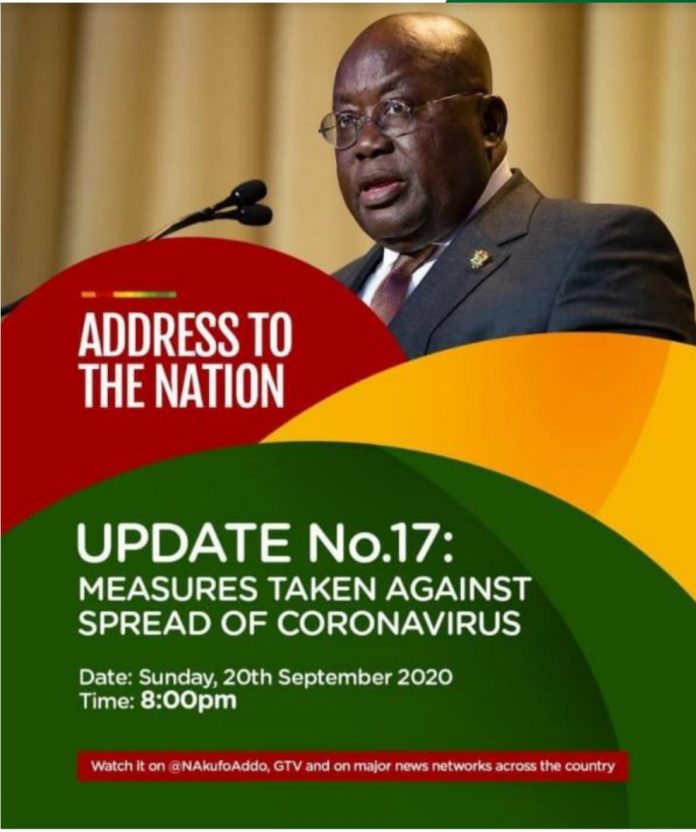
Address To The Nation By The President Of The Republic, Nana Addo Dankwa Akufo-Addo, On Updates To Ghana’s Enhanced Response To The Coronavirus Pandemic, On Sunday, 20th September 2020.

Fellow Ghanaians, good evening.

This is the seventeenth (17th) time that you are kindly opening the doors to your homes to me to enable me brief you about the issue of COVID-19, the steps being taken by Government to eliminate it, and the measures being implemented to ease progressively and safely the restrictions put in place to defeat the virus.

We, in Ghana, have certainly come a long way, and have made significant progress in combating the disease. The angst, fear and panic exhibited by many, especially when the first two (2) cases were recorded on our shores, have been replaced, in recent weeks, by a growing sense of optimism and renewed hope that we are on our way to winning the battle against the pandemic. The improvement in the situation is all thanks to the effectiveness of the measures put in place by Government, the co-operation and support of you, the Ghanaian people, and, most certainly, by the grace of Almighty God.

Nevertheless, I appeal to each and every one of you to continue to tread on the path constructed by Government, and follow religiously all the social distancing, mask wearing and enhanced hygiene protocols. They are and will remain our weapons in this struggle against the virus. In the same manner, we have to remember to continue improving our fitness by exercising and eating well, patronising our healthy Ghanaian foods, which will boost our immunity to disease, and help us in the fight against the pandemic.

When I delivered Update No. 16, exactly three weeks ago, the number of recorded active cases, that is persons with the virus, stood at one thousand, eight hundred and forty-seven (1,847). This number, as at Friday, 18th September 2020, has reduced considerably to five hundred and seven (507) persons. There are, currently, some regions in the country without active cases. Greater Accra, Eastern, Ashanti and Central Regions account for some eighty percent (80%) of the active cases. As at Friday, 18th September 2020, the total number of tests conducted is four hundred and seventy thousand, seven hundred and thirty (470,730). So far, a total of forty-five thousand, two hundred and fifty-eight (45,258) persons have recovered, and two hundred and ninety-seven (297) persons, a great majority of them with underlying illnesses, such as hypertension, diabetes, chronic liver disease and asthma, have sadly died.

In the face of these encouraging statistics, I know there are many who are wondering why I have not announced a complete return to normalcy in all aspects of national life, because they believe the figures suggest we have turned the tide in the fight against the virus. Yes, our death rate continues to be low, and our hospitals have, mercifully, not been overwhelmed, as there are, presently, only twenty (20) severe and critical cases. Indeed, there are a lot of empty beds in our treatment centres, and the isolation centres have virtually no patients under care. But truth be told: we cannot afford, at this critical moment, to throw caution to the wind, and destroy the incredible amount of work undertaken by Government, health officials, heroic frontline health workers, and members of the security agencies, in bringing us this far. Now more than ever, we must be even more disciplined in our adherence to the personal hygiene, mask wearing and social distancing measures that have become part of our daily routines. That is the way to eliminate the virus altogether. The experience in other parts of the world show us that the virus can return with a vengeance, once you let your guard down.

Fellow Ghanaians, in my last address, I announced the reopening of our international airport, Kotoka International Airport, signaling our gradual reintegration with the rest of the world. Sixteen (16) out of the twenty-three (23) airlines that operated in Kotoka prior to its closure have, again, commenced flights to and from Accra.

As at yesterday, Saturday, 19th September, a total of ten thousand and sixty-one (10,061) passengers have been tested at Kotoka. In spite of the requirement that all passengers must be in possession of a negative PCR test result upon their arrival in Ghana, a test which should have been conducted not more than seventy-two (72) hours before the scheduled departure from the country of origin, a total of twenty-six (26) positive cases have been recorded from the tests at KIA. Let us pause for a moment and imagine what would have happened if these twenty-six (26) positives had not been detected, and had been allowed to mingle with the population. Even though the cost of one hundred and fifty United States dollars (US$150) per passenger, for the mandatory airport COVID test, has been criticised in certain quarters, the value of the test in its speed, accuracy and savings for passengers, who no longer have to bear the cost of the 14-day mandatory quarantine in hotels, has been clearly established.

It is worth noting that a lot of people, who have experienced at first hand the service being offered at our international airport, have praised the country for the innovation and farsightedness on display at our airport. Let me assure you again that, as President of the Republic, I will do everything in my power to protect you and stop the importation of the virus into our country, or limit and contain its spread. This is my solemn commitment to you.

Fellow Ghanaians, on Friday, 18th September, five hundred and thirty-one thousand, six hundred and seventy-four (531,674) JHS 3 students completed the Basic Education Certificate Examination (BECE). SHS 3 students also, on 5th September, wrote the last paper of the West Africa Senior Secondary Certificate Examinations (WASSCE). I am particularly excited at this development because, despite the fears and genuine anxiety expressed by some, and the criticisms proffered by some in the political space, these students have gone to school, studied, sat and completed their examinations unscathed. Their forward march in life has not been interrupted. And, by the grace of God, the predictions made by some of widespread infections and even deaths did not materialise. I pledged I will be the last person to put the lives of students at risk, and I express my deep appreciation to all parents and guardians for the trust reposed in me and Government. I pray for the success of the students in their exams.

As has already been announced, relevant arrangements and logistical deployments are being made for the return to school of second year Junior and Senior High School students. Continuing students in the University of Cape Coast, the University of Health and Allied Sciences, Technical Universities, and some other Colleges have returned to school, and I have been reliably informed that adherence to protocols is high. Long may it continue.

On Monday, 14th September, I extended, by Executive Instrument, the mandatory wearing of face masks by another three (3) months. So, until 14th December 2020, the wearing of masks remains mandatory, and the law enforcement agencies will be required to ensure this directive is respected by all. It has served us well in the fight against COVID-19, so I urge each and every one of us to wear our masks, and do so correctly anytime we leave our homes. It is the new normal requirement of our daily existence until the virus disappears.

Towards the progressive easing of restrictions, Government has taken the decision to allow the resumption of training in all contact sports, taking into consideration the imminent participation of our national teams in international competitions. Indeed, some national teams have already been given the dispensation to begin training, ahead of their international engagements. All sports people, who are camped, are to be tested regularly.

Fellow Ghanaians, with respect to football, after due consultations with the Ghana Football Association, it has been decided that the Ghana Premier League and the Division One Football League will restart on Friday, 30th October, with a full regime of testing of the players, technical and management staff. No spectators will be allowed at the training centres, and, when actual competition resumes, seating at all stadia will be limited to twenty-five percent (25%) capacity to ensure social distancing. Wearing of masks by spectators at stadia will be mandatory. The restart of all other sporting competitions will be determined on a case-by-case basis, pending consultations between the Ministry of Youth and Sports and the respective sport associations.

Private burials, still, with a maximum of one hundred (100) persons, can continue to be performed. Our borders, by land and sea, will remain closed to human traffic until further notice. Beaches, pubs, cinemas and nightclubs remain closed until further notice. All other institutions that have been cleared to function are to continue to do so in strict adherence to the COVID-19 protocols.

Fellow Ghanaians, as we work to rid the virus from our shores, let us continue to remember, at all times, that this virus is no respecter of persons, and has wreaked its havoc on every country on the planet. There are countries that are imposing lockdowns all over again, others are imposing curfews, all in a bid to curb the onset of fresh infections and a second wave. Let us continue to look out for one another, and remain each other’s keeper. United, and with one goal in mind, we will emerge victorious in the fight against COVID-19. Zero active cases must be the ultimate aim.

My rallying cry to you all remains: this too shall pass! For the Battle is the Lord’s.

May God bless us all, and our homeland Ghana, and make her great and strong.

I thank you for your attention, and have a good night.


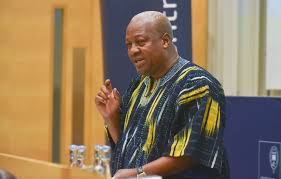
Be Cautious, Be Bold and Have Hope! A message from John Mahama

0


Tomorrow, Monday 21st September marks the birthday of Ghana’s Founder and first President, Osagyefo Dr Kwame Nkrumah. He was an iconic figure in the independence struggle and the liberation of many African countries.

Dr. Kwame Nkrumah was an inspiration to many countries around the world. On this day, I want to salute him for his tireless and monumental contribution to our nation’s history.

Finally, I come before you this morning with a triple invitation: be cautious, be bold and have hope!

Be cautious when you read articles on social media, because, unfortunately, today we are living in the age of fake news. It is now too easy to take something false as the truth. There is sometimes a big difference between what someone really did, and what people are made to believe he or she did.

They say, for instance, that during my first term as President I was a poor manager of our economy. Some of you may have been made to believe this false story. However, when you look at the data, things look different.

In 2012, the size of Ghana’s economy was 41.6 billion dollars. In 2016, on my watch as president it was 54.5 billion dollars – a nominal change of 13 billion dollars in 4 years.

This year, 2020, on the watch of Akufo-Addo as president, Ghana’s economy is projected to be somewhere 66 billion dollars, which means the NPP government in four years changed the size of the economy by 11 billion dollars – note in 4 years; 13 billion dollars under my watch and 11 billion dollars under NPP. This is what the data says, and it is verifiable. You can examine the data for yourselves.

This government has meanwhile borrowed GH¢140 billion as against GH¢56 billion during my presidency.

The Akufo-Addo government has not got a track record; not in healthcare, we built hospitals, they have none; not in tertiary education, we built universities, they have none; not in the roads sector, we built roads, they have declared a year of roads without roads; not in fighting corruption, we fought corruption head on; President Akufo-Addo fights those who fight corruption in his government. The case of Auditor General Daniel Domelevo is proof that corruption is fighting the president.

This is why I invite you to be cautious.

But I also invite you to be bold. Imagine, for instance, that, today Ghana had the digital infrastructure allowing people to work easily from home, like they do in countries like South Korea or Denmark. The Covid-19 pandemic would have certainly had a lesser impact on our economy.

Imagine a Ghana where all this is possible, where new types of services and new types of jobs allow people to live decent lives. Imagine a 21st Century Ghana! If you would, you won’t settle for “good enough” anymore. Instead, you would be asking for change in the way our country is led.

So, I’m telling you: have hope!

Our Manifesto, The People’s Manifesto, pledges that the new NDC government will help one million young Ghanaians to become coders and programmers – to become the backbone of the new economy we will build together for the benefit of all.

With one million young coders and a solid digital infrastructure, we will bridge the gap between our Ghana and the more advanced countries far sooner than you think now. Have hope!

And believe this hope is real! Because together with NDC we have already delivered. And if we delivered once, we are able to deliver again.

So, my brothers and sisters, be cautious, be bold and have hope! I guarantee you that the next NDC government will provide you with a clear and honest chance to live a decent life!

Be cautious, be bold, and have hope!

Jobs and Prosperity for all.

Thank you!

KUMASI ASANTE KOTOKO UNVEILS NEW MANAGEMENT TEAM

0

Kumasi Asante Kotoko has officially released the full list of its management team to steer the affairs of the club with the Chief Executive Officer, Nana Yaw Amponsah.

The eight-member team is made up of persons with a high level of expertise and experience from various fields of study including a Brazilian who is going be the club’s Legal Representative(International).

The full list of the Asante Kotoko new management team is as follows;


NO RDERS FROM SC TO STOP YOUR CASE – JUDGE TELLS KEN AGYAPONG

0

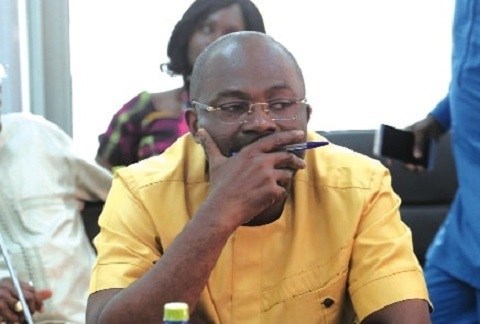
An Accra High Court Judge, Justice Amos Wuntah Wuni, has stated that he has not received any orders from the Supreme Court to stop proceedings in the contempt case against Kennedy Ohene Agyapng.

The case has, however, been adjourned to Friday, September 25, for his lawyers respond to the charges against him.

The court said its attention has been drawn to the Supreme Court case filed but there has not been any orders from the Supreme Court for him to stop the case.

Lawyers of Keneday Agyapong led by Kwame Gyan argued that, the returned date at the Supreme Court is October 13, 2020.

But the court said it cannot wait for a whole month to dispense with justice and said it was going to deal with the matter until the Supreme Court determines otherwise.

He said the contemnor and his lawyers cannot just file processes to frustrate the court in dispensing with justice.

The court has, however, adjourned the case to Friday October 25 for the lawyers to make legal argument on the matter

The MP who was summomed to appear before the court at 9am arrived at 8:30, that is 30 minutes before the court directed time.

ELECTRONIC VOTER’S ID VERIFICATION TO COST 30 PESEWAS

0

The Electoral Commission of Ghana (EC) has announced that all voters who cannot make it to various registration centers to partake in the exhibition of the voters’ register which commences tomorrow, September 18 can do so via this short code, 1422.

All voters who will make use of this process would be charged 30 pesewas.

“The Commission will deploy a mobile telephony system also known as the SMS to allow prospective voters to check their details using their mobile phones for a fee of 30 pesewas. Prospective voters may access this system by simply texting his or her voter’s ID card number to 1422 and immediately, his or her details will pop up. With this simple process a voter with the click of the button can obtain the following details; his or name, voters ID card number, age, gender, polling station code, polling station name, district, and the region”.

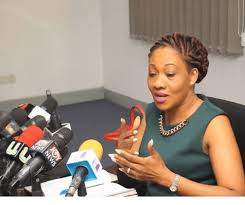
The charge, the EC Chair, Jean Mensa explained was not to enrich the Commission but the charges go directly to the telecommunications network for their services rendered.

However, if voters are fraught with challenges while accessing the shortcode, they would have to immediately go to their assigned polling stations for their problems to be looked at.

The aim of the exhibition of the voters’ register is to give voters the opportunity to correct the wrong spelling of their names, take a new photograph if the one on the ID card was badly taken among others.

It is also to give room for a voter to object the names of unqualified persons on the register.

The exhibition exercise will take place every day including weekends from 7 am to 6 pm at all 33,367 centers across the country.

She said this at the weekly ‘Let the citizens know’ press conference held in Accra Thursday.