Home Blog Page 70

AKUFO-ADDO HAS NOTHING TO SHOW FOR THE HUGE LOANS- MAHAMA

0

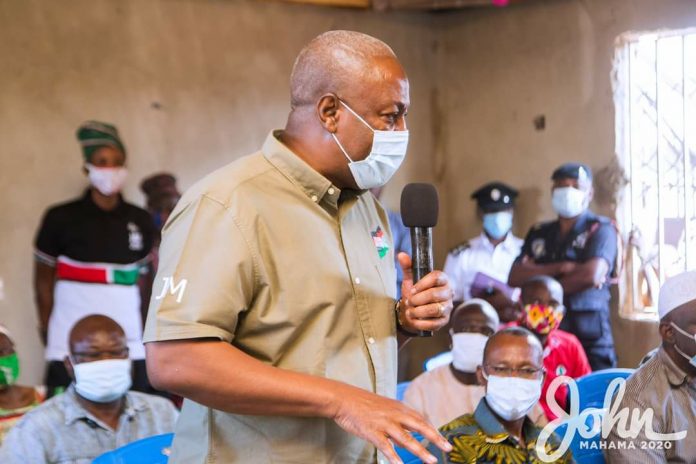
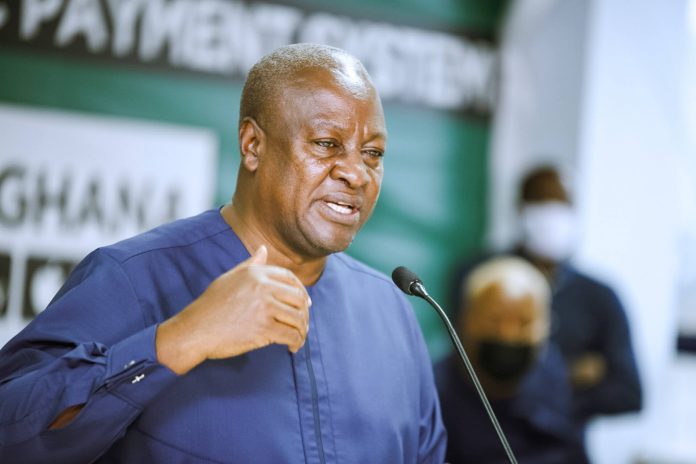
The presidential candidate of the National Democratic Congress (NDC) John Mahama has asked President Akufo-Addo to show what he has done with the GHC140 billion that his government has borrowed since assuming office.

Mr Mahama says despite the Akufo-Addo regime taking more than twice the amount of loans the Mahama administration took, the president has not embarked on any major development project to justify the loans.

Addressing the chiefs and people of Sampa in the Jaman North constituency as part of his tour of the Bono Region, the NDC presidential candidate wondered what the government had been using the borrowed money for, especially as many communities are lamenting the absence of development projects.

Mr Mahama said the government’s GHC140 billion loans constitute a significant addition to the national debt stock, yet the president and his officials cannot point to development projects.

“When I was in government, we borrowed 54 billion Cedis and Ghanaians could visibly see what we used the money for, in the area of roads, water, electricity, airport, harbour, and schools, among others”, he explained.

Mr Mahama said the then opposition New Patriotic Party (NPP) accused the NDC government of borrowing too much, thereby promising to develop Ghana without taking loans.

“But after staying in office for four years, do you know the money they have borrowed?”, he quizzed.

152 Kg of Cocaine packaged as sugar intercepted

0

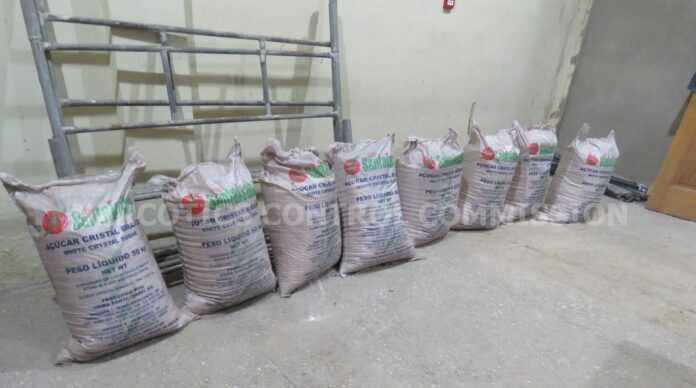
The Narcotics Control Commission (NACOC), in a joint operation with the Bureau of National Investigations (BNI) and the National Security Council Secretariat (NSCS) has intercepted 152 kilograms of cocaine concealed in a shipment of sugar from Brazil.

The seizure was based on intelligence that, a consignment of 50 containers of sugar destined for Ghana from Brazil are likely to have substances suspected to be narcotics concealed in it.

Credit: Narcotics Control Commission

The consignment with bill of laden number MEDUST209567 was shipped from Brazil by Usina Santa Isabel S/A Fazenda Tres, a Brazilian Company on behalf of SUCDEN MIDDLE EAST, based in Dubai.

The shipment consists of 27,000 bags of Brazilian white crystal sugar, with a gross weight of 1,350 metric tonnes. Global Cargo & Commodities Limited, Tema was the consignee of the shipment.

Acting on the intelligence, NACOC, together with BNI and NSCS, mounted surveillance on the shipment until the suspected narcotic substances were retrieved from the consignment of sugar on Saturday, September 12, 2020.

Credit: Narcotics Control Commission

With the assistance of some officials from the Customs Division of the Ghana Revenue Authority stationed at the warehouse, the physical search on the suspected containers and the bags of sugar commenced on Thursday, September 10, 2020.

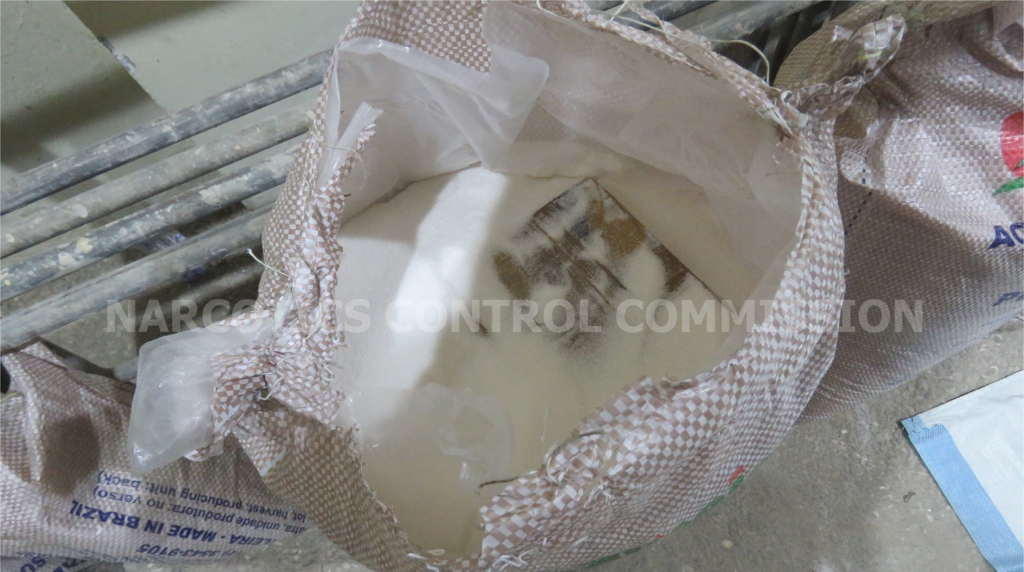
The suspected narcotics substances were on Saturday, September 12, 2020, found concealed among the bags of sugar in container number MSCU6874205.

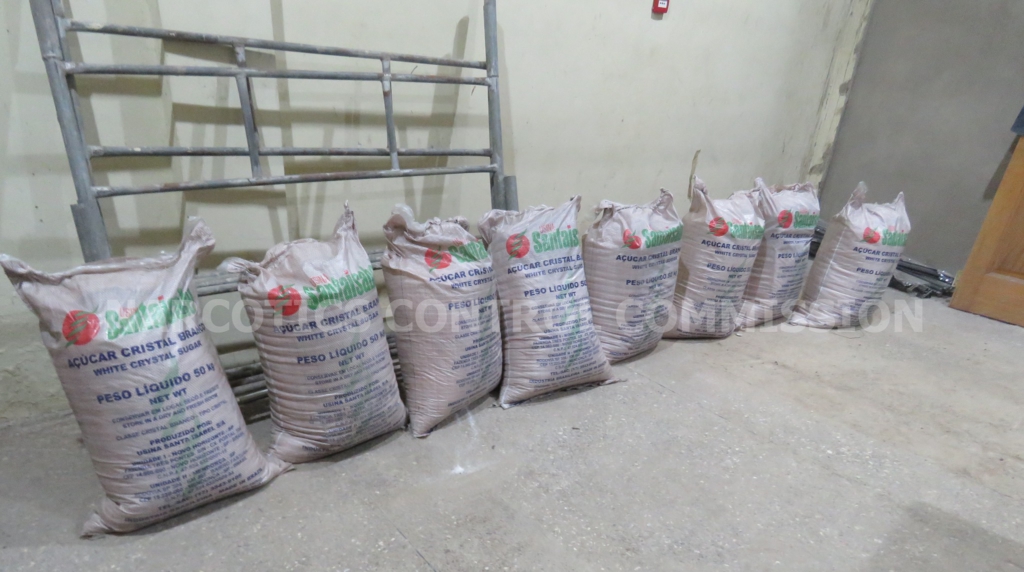
Eight bags of sugar were identified to have suspected narcotic substances concealed in each. In all, 150 slabs of substances suspected to be narcotics were retrieved from the consignment under the joint operation.

Credit: Narcotics Control Commission

The exhibits were field tested and proved positive for cocaine. NACOC took custody of the exhibits and subsequently forwarded same to the Ghana Standards Authority (GSA) for analytical examination and report.

Report from GSA on the exhibits confirmed the substances to be cocaine, with approximate net weight of the 150 slabs being 152.75kg.

Following the seizure, a number of persons have been arrested, and assisting with investigations.

Preliminary investigations have revealed that the consignment of sugar was to be delivered to Tradepass GH Limited.

THE ROLE OF AfCFTA IN POSITIONING AFRICA IN GLOBAL AFFAIRS

0

WRITTEN BY: PRINCESS SEKYERE BIH

It is a known fact that global governance was well structured, administered and controlled by institutions created without Africa’s inclusion at a time when they were under colonial bondage (Uhomoibhi, 2019).

Therefore, as late actors, their influence was challenged given that their interests were not taken into account in the policies and programs that were developed by these bodies.

Also, neither were African countries’ perspectives and views reflected in such international legal and human rights instruments as the Universal Declaration on Human Rights adopted in 1948 by which the entire international community, including African States, are today assessed and measured. This created an unfair playing ground for Africa and developing countries.

Furthermore, Africa’s underrepresentation and voting power in these global institutions at the time impacted the level of influence Africa had. The dominance of the big powers in the United Nations Security Council as well as leadership of these same powers in institutions especially the World Bank and IMF, generated and formulated broad economic perspectives and ideas in their favour to the detriment of African countries. The lack of representation and weighty voting power, allowed the US and its cronies to shape and impose global economic governance policies (Oloo, 2016).

In spite of these constraints, Africa has participated and made some contributions in global affairs in several areas. A major area in which independent Africa made its mark from the early 1960s was in the advancement of political freedom and commitment to the entire liberation of the continent from imperial and colonial rule.

African states rallied global support in the United Nations, the Commonwealth and the Non Aligned Movement to defeat the scourge of colonial domination, racism and oppression. This formed the basis for the formation of the Organization of African Unity (OAU) which was created in May 1963, with the key reason being the Liberation Committee of the Organization which had the most interest, attention and resources of the continent. Oloo (2016) maintains that the defeat of the apartheid regime of South Africa in 1994 was in every respect the climax of Africa’s success in the struggle for liberation and a defining moment in its involvement in global affairs.

The Security Council’s five permanent members―China, France, Russia, the United Kingdom and the United States―were designated in 1945 and have since remained unchanged. While 10 non-permanent members have been added, including South Africa and Nigeria, these members do not have veto power and can only serve non-concurrent two-year terms. To date, both Africa and Latin America lack representation among the Security Council’s powerful permanent members.

Africa made its contributions to global peace and security by discharging these tasks either through its continental or sub-regional organizations such as ECOMOG or through the mechanism of the United Nations.

After the first UN Peacekeeping in Congo whose leadership was provided by Nigeria, the UN was instrumental in other countries such as Tanganyika (now Tanzania) in 1964, Rwanda, Liberia and Sierra Leone. The involvement of Africa in UN peacekeeping was not limited only to Africa: African countries were also actively involved in global peacekeeping operations in Lebanon, Iran, Iraq, the former Federal Republic of Yugoslavia, East Timor and other conflict areas.

Though Africa, along with other Non-Alignment Movement members campaigned for a new international economic order and, most notably, pushed for a UN conference on trade and development, among other such initiatives it ceded the power to change economic order to its chief benefactors.

A typical historical illustration of this concession of power to economic change was the so-called Washington Consensus or IMF “prescriptions”, the Structural Adjustment Programmes which turned out to be perhaps the greatest factor that undermined Africa’s takeoff in the early 1980s.

For example, in Nigeria, the harshly iniquitous IMF conditionalities undermined industrialization projects, unrealistically devalued the national currency and halted growth. By the time the flaws and contradictions of the imposition became manifest in much of Africa, considerable damage had been done to their economies, setting back their growth and development by decades.

African States have not been able to establish self-activated and productive economic systems to generate prosperity and power as the Asians. With the continent’s status as primary producer of raw materials and net importer of manufactured products still very much unaltered, intra-African trade has also largely remained marginal in the context of global trade. Africa has been unable to develop and achieve prosperity and power, defend itself and advocate its own causes independently. This has greatly affected Africa’s role and position in global affairs.

The African Continental Free Trade Agreement & AU Agenda 2063

The African Continental Free Trade Agreement (AfCFTA) can be traced to the Lagos Plan of Action in 1980 and the Abuja Treaty of 1991, where the then Organization of African Unity established an Economic Community for Africa. In January of 2012, 44 heads of state met in Addis Ababa and agreed to establish a Continental Free Trade Area – CFTA (Nwafor, 2019).

The CFTA is aimed at helping African countries to boost economic and trade growth, transform their economies and achieve Sustainable Development Goals and African Union Agenda 2063. The AfCFTA is one of several AU frameworks supporting the Abuja Treaty’s end goal, the establishment of an African Economic Community (Parshotam , 2018).

The African Union’s Agenda 2063 aims to accelerate Africa’s economic growth and development as well as promote a common identity by celebrating its shared history and culture.

According to the African Union Agenda 2063, AfCFTA is “Africa’s blueprint and master plan for transforming Africa into the global powerhouse of the future. It is the continent’s strategic framework that aims to deliver on its goal for inclusive and sustainable development and is a concrete manifestation of the pan-African drive for unity, self-determination, freedom, progress and collective prosperity pursued under Pan-Africanism and African Renaissance.”

What is AfCFTA?

In 2018, member countries of the African Union took a major step to boost regional trade and economic integration by establishing the African Continental Free Trade Area (AfCFTA). They agreed to eliminate tariffs on most goods, liberalize trade of key services, address non-tariff obstacles to intraregional trade, and eventually create a continental single market with free movement of labor and capital.

The AfCFTA has been ratified by 29 countries and was scheduled to take effect in 2019, although negotiations on specific features of the agreement are ongoing. Once operational, the AfCFTA will establish a market of 1.2 billion people with a combined GDP of US$2.5 trillion. This could be an economic game changer for the continent (African Union, 2017).

The AfCFTA has been described by experts as a possible game-changer if implemented successfully because the AfCFTA is about creating a larger market. It aims to liberalize trade among African countries, significantly accelerate the growth of intra-Africa trade and use trade more effectively as an engine of growth and sustainable development by doubling intra-Africa trade, strengthening Africa’s common voice and policy space in global trade negotiations (Nwafor, 2019).

The AfCFTA will make Africa the world’s largest free trade area with a gross domestic product (GDP) worth about US$2.14 trillion dollars. This is key because the population of Africa is expected to grow to about 2.6 billion by 2050.

The AfCFTA seeks to remove tariffs on 90 percent of goods. According to the UN Economic Commission for Africa (ECA), the removal of tariff and non-tariff barriers will increase intra-African trade by 52.3 percent by 2020. This increment will then lead to a generation of more employment opportunities. It will also facilitate better use of local resources for manufacturing and agriculture and increase access to cheaper products.

According to economists, free tariff access to a market as huge as Africa would encourage service providers and manufacturers to leverage economies of scale. Hence, the increase in demand will lead to an increase in production and a decrease in unit costs. This would mean consumers will pay less for products and services and businesses will expand operations.

The AfCFTA will also help diversify trade and encourage a move away from extractive commodities, such as oil and minerals, which have traditionally accounted for most of Africa’s exports.

The impact of AfCfTA in Africa

By the year 2050, the AfCFTA would clearly be exerting the greatest impact on GDP per capita and reduce extreme poverty. For example, in lower-middle-income countries it would be boosting annual GDP per capita by over US$1 500, compared to the next biggest factor, technology leapfrogging, which would be adding just over US$900. By 2050 also, the AfCFTA would have reduced extreme poverty by over 6%, versus the next most effective driver, revolutionized agriculture, which would do so by about 5.5% (African Union, 2017).

The most recent estimates from the United Nations Economic Commission for Africa (ECA) suggest that the removal of tariffs on goods alone would contribute to increasing intra African trade with most gains accruing to the industrial sector (Economic Commission for Africa , 2018).

The largest increases in trade volume are expected in the textiles and apparel, vehicles and transport equipment, wood and paper, leather, and electronics sectors. In agriculture and agri-food sectors, the largest gains would be in meat products, milk and dairy products, sugar, beverages and tobacco, vegetables/fruit/nuts and rice(Oloruntoba & Tsowou, 2019).

The AfCFTA will encourage the creation and development of regional and international value chains, and facilitate their integration into existing ones by taking advantage of economies of scale and improved business and trade practices. More fundamentally, ratification of the AfCFTA begins the process of continental integration to change lives, reduce poverty and contribute to economic development (Economic Commission for Africa, 2019).

In summary the AfCFTA is meant to achieve the following nine benefits (Saygili, Peters, & Knebe, 2017);

  1. Create bigger and integrated regional market for African products.
  2. Permit producers to benefit from economies of scale and to access cheaper raw materials and intermediate inputs.
  3. Improve conditions for forming regional value chains and integrating to global value chains (GVCs).
  4. Allow consumers to have access to cheaper imported products from other African countries.
  5. Lead to better allocation of resources and faster economic and trade growth.
  6. Catalyze the structural transformation of the countries from resource and low technology based economies to more diversified knowledge based economies.
  7. Eliminate some challenges associated with multiple and overlapping trade agreements in Africa (spaghetti bowl).
  8. Encourage both intra-African and external direct capital flows to African countries.
  9. Stimulate cooperation in other areas such as technology transfer, innovation, investment and continent-wide infrastructure development.

Globally the AfCFTA will contribute to strengthening Africa’s   position in global trade. With the failure of the Doha Round and the crisis of multilateral trade negotiations (and ultimately of the World Trade Organization’s ruling authority), the latest international trade rules have been fixed under preferential agreements negotiated at bilateral, regional (continental) or trans-regional levels, from which Africa has been almost systematically excluded.

The consolidation of African regionalism can therefore prove decisive, on the one hand, to develop an adequate negotiating power vis-à-vis relevant commercial partners such as the European Union and China; on the other, to promote economies of scale and value chains that can boost African companies to compete on international markets. The realization of these benefits, however, is conditioned by the overcoming of numerous infrastructural, legal, and political challenges (Cofelice, 2018).

Challenges to AfCFTA

A major challenge to implementing the AfCFTA is poor infrastructure that dots Africa. There is the need for governments to modernize and improve the road infrastructure of all the countries involved. When talking about road infrastructure, all forms of transport that are part of the channels of supply chains used in commerce must be considered.

The network of roads and highways are best to start with, as this should dramatically reduce the transit times of heavy transport and people throughout the treaty regions. More investment should also be made in the rail network, as well as in ports and airports. These infrastructures are critical for commercial development.

It will be important to accentuate the efficiency of infrastructure and customs personnel within borders, so that there is free transit of merchandise according to the bases of the treaty, combined with the internal laws of the country where it is only transited or is the end point of destination of the goods or people.

Among these challenges are establishing the minimum and necessary legal frameworks so that resolutions of conflicts and disputes can be carried out efficiently.

Another critical and major challenge is financial control, due to the high flow of transactions that will result from the opening of investment markets and the exchange of goods and services, as well as the mobility of people. This control should be aimed at monitoring monetary flows and their origins.

The scourge of money laundering is a global problem, and is also an issue within Africa. It may not be easy to apply more efficient controls and policies adapted to the reality of the way in which criminal structures operate. However, the support of countries with more development in establishing and enforcing financial controls could help Africa, supporting economic growth through trade and investment, and bringing development and prosperity for its inhabitants (Sobalvarro, 2019)

E-commerce is also an important part of the future of this vision, which should be supported by clear rules, together with a modern regulatory framework. It could create the conditions to generate the sale of millions of products, following the major global trends of retail and business to business (B2B).

Conclusion

In summary the AfCFTA seeks to remove tariff and non-tariff barriers on goods and services from member states in order to facilitate intra-African trade; promote regional value chains to foster the integration of the African continent into the global economy; boost industrialization, competitiveness and innovation, ultimately contributing to Africa’s economic development and social progress.

The Continental Free Trade Area (AfCFTA) represents one of the most ambitious plans and frameworks geared towards ensuring that African countries trade more with one another. Though the main objectives of the AfCFTA are ambitious, it is doable if the identified challenges, including poor infrastructure are addressed. The appropriate legal frameworks and customs and the necessary financial controls must also be put in place.

This ambition is attainable and will positively influence Africa’s impact in world affairs.

CEO OF GEPA LAUDS WOMEN IN COCONUT FARMING

0

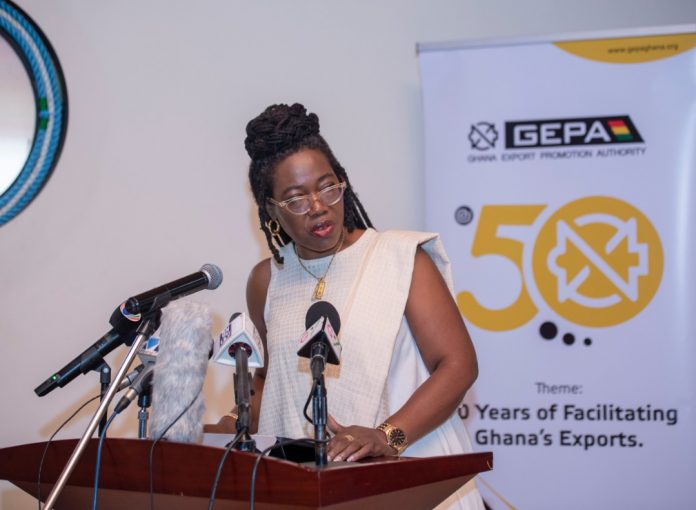
The Chief Executive Officer of Ghana Export Promotion Authority (GEPA), Dr. Afua Asabea Asare, has assured members of the Coconut Farmers Association of Ghana (COFAG) of government’s support for the industry as investor interest increases after Ghana hosted the first-ever International Coconut Festival in 2019.

Speaking during the first coconut policy objective review conference in Accra, Dr. Asabea Asare, commended the leadership of COFAG for acknowledging the role of women in the business through the constitution of a working committee of Women in Coconut Farming which was inaugurated during the conference.

She encouraged members of the committee to stay committed to their mandate of representing and advocating for the welfare of female farmers in the coconut business.

Dr. Asabea Asare, said, GEPA, through its Youth in Export initiative, will train and resource more young people to venture into the coconut value chain to boost cultivation and export.

President of the Coconut Farmers Association of Ghana, Patrick Ndabiah, appealed to the government to speed up efforts to grant certification to coconut farmers to enable them to compete globally.

He said the government deserves commendation for the establishment of the National Tree Crops Development Authority (NTCDA) which is mandated to develop and regulate the production, processing, marketing, and export of coconut.

The 2020 COFAG policy objective conference focusing on the role of the coconut sector in the national development framework, was held under the theme “Reviving and Sustaining the Coconut Industry in Ghana.”

31 MEMBERS OF SEPERATIST GROUP ARRESTED

0

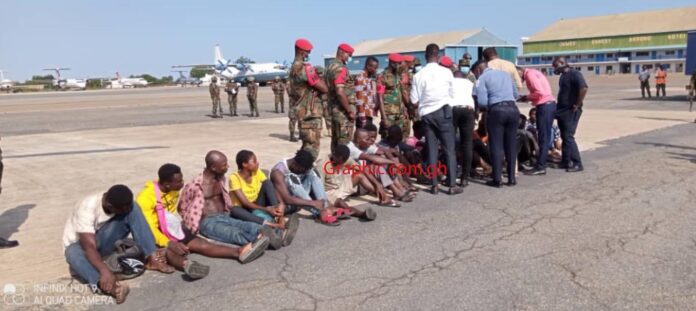
Thirty-one members of the Western Togoland group that blocked some entries to the Volta region Friday morning have been arrested.

They were arrested in a joint police and military operation after they exchanged gunfire with the officers.

The suspects have been handed over to the Bureau of National Investigations (BNI) for questioning.

The Ghana Armed Forces and the Police Service in a joint statement said the group injured a senior police officer after they raided two police stations.


Meanwhile, it has emerged that the Western Togolanders who blocked some entries to the Volta region Friday morning took with them 10 Ak47 assault rifles when they broke into the armory of the Aveyime and Mepe police stations.

This was contained in the situational report filed by the Sogakope Police to the Volta Regional Police command.

“On 25th September 2020 at about 1:00 am, police had information that the western Togolanders had taken over the Aveyime and Mepe police station, took hostage of the personnel, released the inmate in the cells and taken away 10 Ak 47 assault rifles.

“On the receipt of information, the Divisional commander C/supt. Mr Denis Fiakpui inchage men proceeded to the scene. At about 2: 15 am, information received indicate that the rebels had allegedly overpowered the police, took over the police vehicle, took the divisional commander’s sidearm and severely assaulted and short him alongside L/Cpl prosper Banini, service driver and were rushed to Bathor government hospital,”

JOHN MAHAMA CONSOLES JERRY RAWLINGS

0

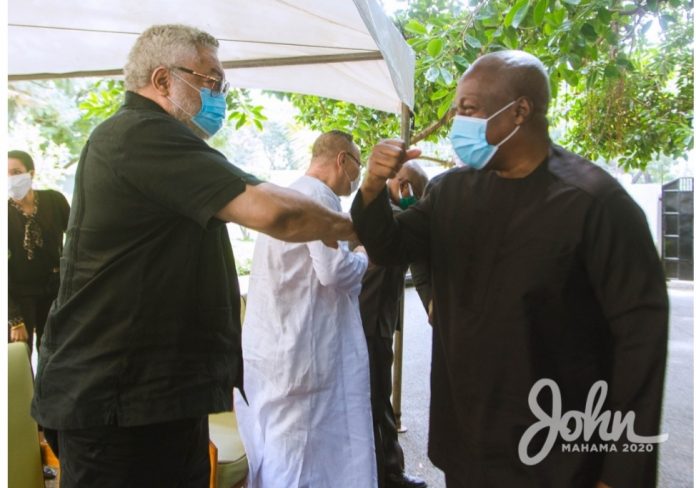
The Flagbearer of the National Democratic Congress (NDC), John Dramani Mahama, and the leadership of the NDC, on Friday morning called on former President Jerry John Rawlings to commiserate with him following the passing of his mother, Madam Victoria Agbotui.

President Mahama, in a brief remark, described the loss of Madam Agbotui as a shared one because she was always on hand to give wise counsel whenever she interacted with him and other party members.

He consoled President Rawlings and encouraged him to take heart as Mama had lived a full life and had seen it all.

The NDC flagbearer said “Mama was the kind of person one would assume would live forever…”

He also assured the NDC Founder that the NDC will participate fully in the funeral activities of the late Madam Agbotui.

President Mahama was accompanied by the Vice Chairman of the NDC Council of Elders Alhaji Mahama Iddrisu, National Chairman Samuel Ofosu Ampofo, General Secretary Johnson Asiedu Nketia and other national executives of the party.

Madam Victoria Agbotui died in the early hours of Thursday, September 24 at the age of 101

FULL SPEECH: JOHN MAHAMA ON INTEGRITY OF VOTER REGISTER REGISTRATION

0

Countrymen and women
My brothers and sisters

Two days ago, my Running Mate, Professor Naana Jane Opoku-Agyemang and I, suspended our regional tours in the wake of widespread anomalies identified in the ongoing voter register exhibition exercise.

This matter is of grave concern and at the heart of the integrity of the upcoming December 7 elections and threatens our democracy.

Let me state at the outset that my Party, the National Democratic Congress (NDC), and I have an unflinching commitment to our democracy. We will do everything in our power to ensure it continues to be the anchor of this country’s much-vaunted peace and stability.

Let me also remind you that in the past few years we have repeatedly drawn attention to a considerable number of unacceptable steps taken by the Electoral Commission, as presently constituted. These steps have the potential to wreck the democratic architecture that has seen the conduct of seven successful elections.

You will recall the numerous disagreements with the Electoral Commission (EC) regarding its mandate and relations with the Inter Party Advisory Committee (IPAC). For the past twenty or more years, IPAC, a committee of representatives of all political parties, has assisted the EC to carry out its constitutional duties to the satisfaction of all.

That collaboration has enabled the EC to improve on its transparency, credibility and confidence building systems in electoral management. This is what has also ensured the general acceptance of election results.

Unfortunately, the EC as presently constituted has ignored valuable advice and the consensus building approach that has inured so well to the sustenance of multiparty democracy in our dear country.

Earlier this year, despite widespread protests against the compilation of a new voter register, the EC proceeded, headstrong and against all sound advice.

The Commission also resisted all attempts to include the birth certificate of an applicant as one of the basic and well-recognised documents for a citizen’s registration into the new voter register.

The voter registration exercise itself was characterized by bigotry and exclusion, where many citizens were crudely prevented from registering on the pretext that they were not Ghanaians. These acts of intimidation were perpetrated by the state security apparatus, which is now filled with vigilante elements loyal to the ruling NPP, with an impunity reminiscent of events at Ayawaso West Wuogon early last year.

What was worse and a danger to our democracy, was that in spite of the glaring evidence available, the President of the Republic denied knowledge of the occurrence of these events. He has also failed to take any action to forestall the recurrence of such acts of political thuggery.

My brothers and sisters, I regret to note that these irregularities, inconsistencies and intimidations are generating anxiety among the Ghanaian public that the upcoming elections may not be free and fair. It is deeply troubling that the ongoing exhibition of the voters’ register has revealed significant omissions and in some other cases the deletion of the names of registered voters on a wide scale. There are also instances in which the gender, name and registration centre have been transposed.

As an interested party in the December elections, we want to state and strongly that these alarming warning signs do not bode well for a free and fair election. To quote what many others have said in their commentary on the current developments on social media, of what use is democracy, if technicalities will be deployed to steal the mandate of the people?

Sovereign power emanates from the people. It must be protected and jealously guarded at all times.

Ladies and gentlemen, the EC and our opponents suggest that these concerns are an exaggeration. So, I would like to take some time, at this point, to walk you through just a few of the numerous examples available to us.

In the Binduri Constituency of the Upper East Region, many cases of omission have been detected. At the Narang-Saago Primary School, not a single person out of four hundred and forty-four (444) registered could find their names on the register. At both the Tempielim Primary School and Kumpalgooga registration centres, no name was found on the voters register despite the registration of 428 and 392 people respectively.

In 18 other centres in the same constituency, 6,341 names were omitted from the registration.

In Jirapa in the Upper West Region, a total of 2,057 names were nowhere to be found on the voters register in five centres.

At Klottey Korle in Greater Accra, 2,054 people who registered in some 12 centres, did not find their names.

In Krowor, also in Greater Accra, cases of duplicated card numbers were recorded in as many as eight centres and this affected 2,453 people.

In Ashaiman, the vigilance of our MP, Hon. Ernest Norgbey, and other NDC executives ensured the detection of the omission of over 21,000 names from the register, including that of the MP. In response to this, the EC presented a new register which was still short of 7,000 names, albeit this time with the name of the MP. In a clear case of subterfuge, the EC then presented another register with the name of the MP as though it was the earlier defective register.

In the Central Region, glaring cases of duplication of card numbers were also recorded in 14 centres in the Komenda Edna Eguafo Abrem Constituency. One such case involved my Running Mate, Prof. Naana Jane Opoku-Agyemang.

In the Volta Region, significant numbers of names were missing on the registers in some Constituencies.

In Ketu South, 6,158 names were missing. In Anlo, 984 names could not be found. In Akatsi South, 426 names were omitted while in Ketu North, 260 names were not found.

Again, in Keta, 275 people could not find their names on the register.

In the Northern Region, instances of missing names have been recorded in Karaga, Tamale South and Tolon Constituencies respectively, which yield a total of 2,173 so far.

Yet another anomaly that has been detected, revolves around the appearance of additional names on the register which have served to swell it.

In Asawase in the Ashanti Region, 907 additional names have mysteriously appeared on the register.
Ladies and gentlemen, I need to stress that these examples are but a fraction of the magnitude of the problems encountered so far with the exhibition exercise.

Even though the occurrence of anomalies during voter exhibition exercises is not new, the sheer volumes and magnitude of the recorded anomalies in the ongoing voter’s exhibition exercise are unusual, unprecedented and give us genuine cause for concern about the credibility of the register and the integrity of the electoral process.

This is particularly so given the limited amount of time that we have for the resolution of these major challenges. It is obvious that the EC, despite the desperate public relations attempts, recognises its failures and the potential challenges to the electoral process, of its actions.

We believe that the decision to extend the exhibition period to Sunday September 27 vindicates the position of the NDC. We, however, think that a two-day extension is inadequate to address the magnitude of issues to be resolved.

The NDC wishes to recommend to the EC, once again, to begin a regular, comprehensive and transparent dialogue with IPAC.

Ladies and gentlemen, it is trite knowledge that a major requirement and prerequisite for the conduct of free and fair elections is the availability of a credible voters register. As many have observed, the EC announced the exhibition of the voters register to take place between the 18th and 25th September 2020.

The EC has itself publicly admitted errors in the register that is currently being exhibited, but there are procedural concerns too.

Regulation 23(3) of CI 91, as amended, requires the publication of the provisional register on the EC website. To date the EC has failed to comply with this requirement. De-duplication, an integral part of the voter registration process, which should have been completed before exhibiting the provisional register was abandoned midway.

This will severely affect the integrity of the register.

We wish to remind the EC that presidential and parliamentary candidates need the voters register for the purposes of filing their nominations.

Any associated breach by candidates can result in dire consequences, including disqualification. How can we achieve this with a register riddled with such inaccuracies and irregularities?

My brothers and sisters, one of the more startling revelations in respect of the ongoing exhibition exercise is a viral video of some EC officials secretly printing new voter ID cards for unknown registrants. This irregular conduct of the EC, which it has finally admitted to, casts a dark cloud over an already compromised process, and is against the law.

Already, the NDC has raised a number of important questions, in a letter to the EC Chairperson, that must be answered urgently and candidly.

When did it come to the attention of the EC that some of the Voter ID cards issued to registrants during the recent voter registration exercise had duplicate ID numbers and therefore were defective?

Why did the EC not inform the political parties, who are major stakeholders in our electoral process in the spirit of fairness and transparency and in line with our established electoral practice?

Indeed, the normal process would have been to invite political parties to deploy their agents to monitor any such process in accordance with our electoral laws and conventions.

In its reaction to the viral video, the EC itself stated that this problem has been identified in as many as 100 districts throughout the country.

I reiterate the demand of the General Secretary for the EC to publish in full the names and particulars of all persons issued with defective voter ID cards. In addition to these very disturbing developments, we have noticed that the Commission failed to deploy Biometric Verification Devices (BVDs) to all exhibition centers to allow for confirmatory fingerprint verification during the exhibition exercise.

We further found out in some areas that there were huge differences between the total number of registrants as issued in the daily registration print-out to our agents and the total number of registrants contained in the provisional register at the same centers.

As one of its main arguments for the compilation of a new voter register the Commission asserted that the methods and systems to be adopted for the compilation will eliminate the process of manual verification.

In view of this, Parliament approved a huge budget for the acquisition of 75,000 BVDs for all registration centers. One would think that these BVDs would have been deployed to each of the over 33,000 exhibition centers across the country to test the efficacy of the machines.

As it is, only 5,000 have been deployed nationwide, thus raising the possibility of widespread manual verification of voters on election day. All these matters, among others, must be discussed as part of a dialogue between the EC and IPAC about the way forward.

Finally, I wish to make an appeal to the international community and its election observers. Given all that has gone amiss with the electoral process and the likelihood of continued greater challenges ahead of the election, I would like to urge them to focus their lenses on Ghana and arrive earlier in-country than ever before.

This will enable them to engage the EC, IPAC and all stakeholders as part of efforts to resolve these major problems with the register.

My brothers and sisters, it matters very little whether the situation confronting us is a product of incompetence, malice or both. Our demands are the same regardless. We want to see fairness, transparency and integrity in the processes leading up to the election, including in this exhibition exercise.

We expect that when such monumental breaches are pointed out, the EC will take responsibility and act in good faith.

We in the NDC have exhibited restraint at all times in this electoral process, even now, and we are committed to doing so. But let me serve notice once again that we will not accept the result of a flawed election. We will certainly not look on, neither will we shirk our civic responsibility and allow the EC- whether by ill intent or sheer incompetence- to usurp the people’s mandate in the December 7 polls.

The Electoral Commission must take immediate steps to rectify and sanitise the register, and re-exhibit it to afford the voting public and all stakeholders an opportunity to verify their particulars in the voters register before it is finalised.

My brothers and sisters, this moment demands of us, to act with patriotic zeal to preserve the peace and stability of our beloved Ghana.

The true will of the people must triumph.

Thank you, and may God Bless us all.

COCOA PRODUCER PRICE NOW GH10,560 / MT

0
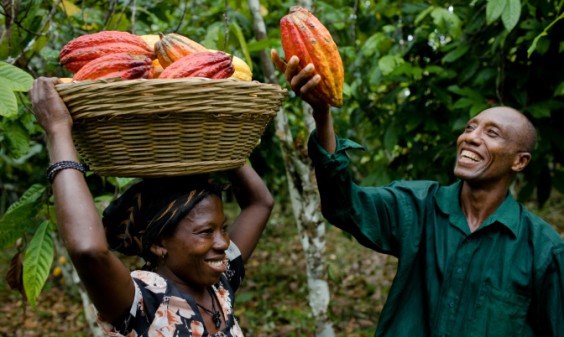
Rainforest Alliance certified cocoa farmers for Magnum Icecream in Assin Akonfudi, Ghana.

President Akufo-Addo has announced a new producer price for Cocoa for the 2020/2021 crop season.

The government has pegged the new price at GHS10, 560 per metric ton of cocoa— which translates to GHS660 per bag of cocoa.

The current 2019/20 producer price of GHS8,240 per metric ton (GHS514/64kg Bag) was an increase of 8.2 percent over the price of GH¢7,615 (GHS475/Bag) awarded in the previous  2018/19 crop year.

The announcement was made at the launch of the National Cocoa Rehabilitation Programme at Sefwi Wiawso in the Western North region.

ARMED ROBBERS WHO ROBBED A SUPREME COURT JUDGE JAILED 175 YEARS

0

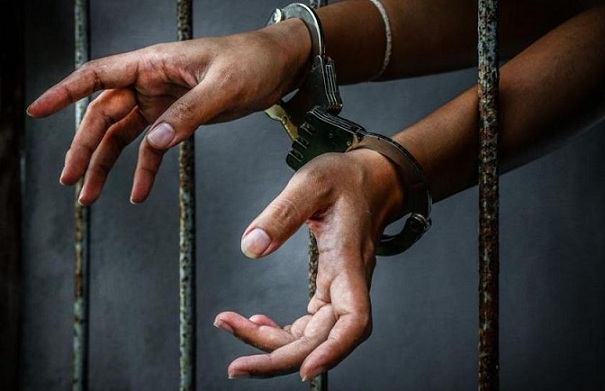
Seven persons who robbed a Supreme Court judge and a banker of their vehicles, a laptop and other personal effects at gunpoint, have been sentenced to a total jail term of 175 years by an Accra Circuit Court.

Nene Kwadwo Tetteh, aka Chairman Obed, who was not present while judgment was to being pronounced, has been sentenced to 25 years in absentia.

Welbeck Oppong, an accomplice, who escaped from lawful custody and still at large, was also sentenced 25 years in absentia.

The rest, who witnessed the trial, namely: Nana Kwabena Ackah, Isaac Agyemang aka Batman, Kweku Boaning, Frederick Kwasi Boateng aka Boat and Kofi Debrah was jailed 25 years each by the court after a full trial.

This was after the court presided over by Justice Aboagye Tandoh, a High Court Judge sitting with additional responsibility as a Circuit Court judge, found them guilty at the end of the trial.

They were variously charged with conspiracy to commit a crime to wit robbery, three counts of robbery, and having possession of the stolen property.

Meanwhile, Delali Alomatu, an accomplice, who pleaded guilty before the commencement of the trial in 2016, was serving 24 years jail term.

Prosecuting, Inspector Samuel Ahiabor narrated that the complainants in the case were Supreme Court Justice Gertrude Araba Esaaba Torkonu, who was then a Court of Appeal Judge and Mr Anthony Kodua Bediako, a banker.

Inspector Ahiabor said the accused persons were self-styled businessmen.

Prosecution said on December 8, 2016 at about 8:30 pm, the first complainant, Justice Torkonu was on board her official vehicle, Toyota Fortuner with registration number GM 6852-13 and was returning from a night church service.

Upon reaching her residence at Baatsonaa-Spintex area, she was attacked by a gang of armed robbers numbering more than six who attacked and robbed her of her vehicle, a laptop valued at GH¢1,300 and one iPhone valued at GH¢600 cash of GH¢900, US$50 and three Bibles. The robbers bolted after the incident.

The robbers not satisfied, further drove Justice Torkonu’s vehicle to the house of Mr Bediako (2nd complainant) at Anyaa, where they further attacked him at gun point and robbed him of his Hyundai Santafe vehicle with registration number GR 714-16, cash of GH¢350 and a Huawei mobile phone and bolted.

Prosecution said on July 16, 2017, Tetteh and Ackah who were in the company of his criminal syndicate namely; Kofi Newton, Nana Osei, Robert Tackie, all at large and removed the original number plates of the two vehicles to wit; Toyota Fortuner and Hyundai Santafe attempted to sell both vehicles.

Prosecution said the would-be buyer alerted police because they had previously defrauded him of cash in the sum of GH¢25,000 under the pretext of selling another vehicle to him but bolted with the vehicle after collecting his money.

The Prosecutor said the police managed to arrest three of Tetteh’s accomplices namely; Robert Tackie, Kofi Newton of the premises of Tesano Ecobank, but Tetteh managed to escape.

Prosecution said July 14, 2017, intelligence led to the arrest of Tetteh as the leader of the robbery incident. Tetteh however escaped from custody. He was however picked up this year (2020) by the Police.

Further investigations into the case disclosed that Tetteh and Ackah together with his accomplices now at large, sponsored criminals by providing them with weapons and ammunitions to embark on robbery expeditions within Accra and Tema municipalities.

Prosecution said when the accused persons were successful, they brought all the booty namely vehicle, TV Sets, and various sums of money to Tetteh to share.

Thereafter, Tetteh and Ackah also re-spray the vehicles and sell them.

On November 28, 2017, Prosecution said intelligence received at the Regional Police Command Accra to the effect that the accomplices of Tetteh and Ackah are hiding at Kade in the Eastern Region.

According to prosecution, a team of detectives were dispatched to Kade where they managed to arrest Alormatu and Kweku Boaning.

During interrogation, they admitted the offence and mentioned Agyemang who had also been arrested in a similar robbery case by the Sakumono Police as their accomplice who led them to the house of the Supreme Court Judge and thereafter handed over the Toyota Fortuna vehicle to Tetteh as he sponsored their robbery activities and Tetteh further gave them cash, the sum of GHS 4,000.00 as part payment. They further mentioned Yaw Sofeh and Kwamena Oppong now at large as their accomplices.

Prosecution said on February 7, 2018 intelligence led to the arrest of Welbeck Oppong at Apedwa in the Eastern Region.

Prosecution said Fredrick Kwasi Boateng, a.k.a. Boat, was also picked up by the Police at Akwatia in the Eastern Region. Kofi Debrah was also nabbed at Kasoa as those being part of the robbery syndicates.

After investigation the accused persons were charged with the offences.

RAWLINGS MOTHER GONE TO REST AT 101

0

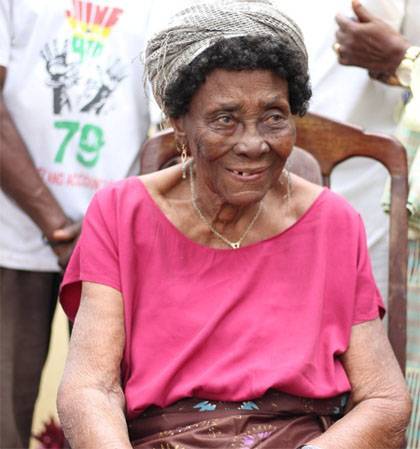
The mother of former President Jerry John Rawlings – Madam Victoria Agbotui, has died at age 101.

This has been confirmed by multiple sources close to the Rawlings’ family.

According to the sources, the mother of Mr. Rawlings who recently celebrated her 101st birthday on September 9, 2020, had been unwell for a while.

The late Madam Victoria Agbotui was born in 1919 and has been a solid rock behind her son who has ruled the country for a period of 20 years.

During the reign of Mr Rawlings, Madam Agbotui was the head of the catering department at the presidency.

She was a native of Dzelukope near Keta in the Volta Region.