Home Blog Page 84

FACTORS TO CONSIDER IN FORMULATING AGRICULTURAL POLICIES BY AGRIC OFFICERS

0

Following our publication on July 9, 2020, we promised to bring to our cherished readers a part two of that article. In that piece, a fellow at CEBSAR-Africa and ILAPI-Ghana, Mr. Haruna Gado Yakubu, expressed his opinion on Agricultural Policies Vs Political Rhetoric: A vicious cycle in Ghanaian Political Environment. Check that out if you have not read already. Today, we bring a follow up of that publication in this article.

Over the years, Ghana as a country has put together so many agricultural policies but as to whether those policies are workable we will soon find out.

According to Mr. Yakubu, an efficient conceptualization, formulation, and implementation, of any agricultural policy, must consider the following questions: What are the policy objectives? Do current policies meet objectives? What are the characteristics of a new policy set? How to implement new policies? How to monitor and evaluate?

When quality answers are given to the above questions, the positive impact of the policy under consideration is expected to be felt, he added.

A policy cycle mostly will start from the identification and mapping of policy issues or problems. This process usually involves mechanisms, largely, broad in nature: including the voice of concerned citizens and consumers, lobbying activities by interest groups or stakeholders, political pressures (from the Executive arm) and critical suggestions or inputs from the academia, and other experts. Ideally, this process results in a definition of broad policy objectives.

What do we want to achieve? Herein, political rhetoric or an impactful policy outcome? — This question he asked is a follow up to our previous publication: Agricultural policies vs political rhetoric; a vicious cycle in the Ghanaian political environment.

He added that it is desirable that policy aims and targets are formulated in defined operational terms, so as to have an efficient basis for assessment and to facilitate accountability. Mr. Yakubu, therefore, outlines six factors that sustainable agricultural policy formulation and implementation for Ghana must consider.

Gender Disaggregate Data
Unfortunately, the agriculture sector is mostly misunderstood to be for only the masculine, however, many activities in the agriculture chain include women. Manual planting, harvesting, and processing are mostly done by women, especially in the rural areas of Ghana.

It is therefore important to factor in the gender-disaggregated data when formulating agriculture policies in Ghana. This is because agricultural activities are still peasant in nature, though unfortunate, mechanization of the sector is still in the infant stage. The sex, number, and age bracket of labor in the sector must be delineated, to give a clear policy target.

Agro-Ecological Distribution
Fortunately, this factor has been considered in many of our policy implementation guidelines. In the current implementation of the planting for foods and jobs (PFFJ) several crops and animals have been earmarked for the different agro-ecological zones in the country.

However, when so many target crops are considered at a time for only 4 years ‘political policy cycle’, the intent verse the actual, become vague: monitoring the actual production gains for several crops and different production locations and the economic impact becomes a problem for a sector where monitoring and evaluation, and extension services are limited. It is his candid opinion that going forward, fewer crops should be considered.

For instance, the staple foods: cereals (maize, guinea corn and rice) be considered for the Northern (Savannah), Transitional, and Zones with wetlands or lowlands, for maize, guinea corn, and rice respectively. The major tuber crop: yam, and root tuber: cassava, should also be considered in the Northern (Savannah) and Transitional zones, with Cashew as the only cash crop, to be considered in these zones.

And, of course, cocoa, oil palm, and coconut being the main crops to be considered at the Coastal, Deciduous, and Forest areas. He added the emphasis of fewer crops, herein (9) will enable easy allocation of limited resources, throughout the country, and also enabling easy monitoring and evaluation.

Possible Aggregation of Peasant Farmers to Farm Cooperatives
It is his view that smaller farm units could be aggregated to form larger cooperatives with a specific crop and yield target. In that regard, MoFA can easily offer support in finances, inputs, and consultancy services, which will yield positive outcomes.

Farmer groups which perform best in a season should have a percentage increase in funding, as a motivation, he indicated. The current wholesale service approach, where individual farmers receive incentives to work on small sized farms will not yield significant impact, in his candid opinion. Large scale farmers can be left on the current support scheme.

In the animal sector, this will enable efficient distribution of limited resources by applying the Livestock Unit (LSU): a reference unit which facilitates the aggregation of livestock from various species and age as per convention, via the use of specific coefficients established initially on the basis of the nutritional or feed requirement of each type of animal.

Efficient consultancy services other than the farm visits by extension officers must be exploited in every agricultural policy
Farm visit by extension officers is key in the production chain, however, technical advice in the form of export trade by individual large scale farmers becomes a challenge.

Many farmers do not know about the latest phytosanitary regulations put in place by our trading partners, the EU, the US, and China. The main reason why we get most of our vegetables rejected at export.

It is therefore important to factor in such consultancy services in policy implementation. To a certain extent, the Ministry of Trade is helpful in this aspect. What is the benefit of a ‘bumper harvest’ when the quality food harvested cannot meet export requirements? – he quizzes.

Farm income objectives and welfare
This is obviously and directly related to farmers. The level and variability of farm income have long been a central concern of agricultural policies.

The traditional policy instrument must set targets for income to be generated from each farmer or farm group, using previous or current prices at the market for computation, depending on the inputs offered by the ministry.

When farm income is well accounted for, the economic impact on their activities can be well established.

Objectives related to consumers
Generally concern the volume and quality of the products produced by the agricultural sector, which is served to the consumer. Every agricultural policy targeted at significant product sales must factor in the consumer objective.

The value addition and quality control measures, starting from the farm to the market must be considered, else, the product will not attract significant demand in the competitive market. The integrity of the product must meet the preference of consumers.

When these factors are carefully considered, the timeline for the policy should be clearly defined as well to measure targets.

It is his sincere hope that the Government of Ghana [through MoFA] will focus on agricultural policies that are based on market interventions, addressing the specific economic issues using agriculture as the driving force, at the same time, considering social and environmental objectives, to ensure policy sustainability.

When the above stated, are carefully considered in agricultural policy formulation in his view, the vision of MoFA can be achieved: “A modernized agriculture culminating in a structurally transformed economy and evident in food security, employment opportunities and reduced poverty.”
THE TAKEOVER OF AFRICA’S FISSION TERRITORIES BY CHINESE

0

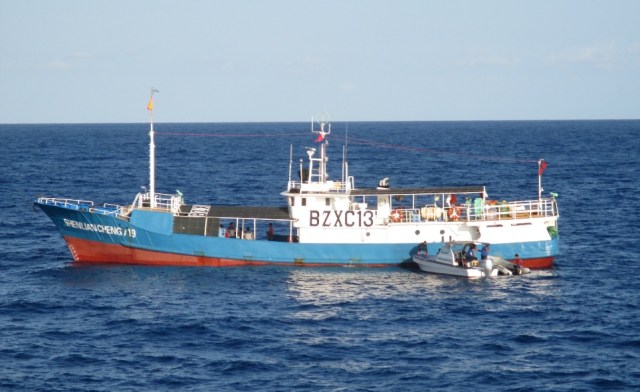
China appears to be launching a significant expansion of its distant water fishing fleet around the world and most notably in Africa.

Six supertrawlers are already docked in Liberia and three new vessels are now on their way to Morocco to join dozens, if not hundreds of other ships that have been operating in a legal grey area in West Africa. National governments in the region will have to become more assertive in pushing back against the Chinese or else risk their already diminished maritime resources become further decimated.

But if the past few years are anything to go by, there’s good reason to be concerned.

China’s distant fishing companies are apparently quite sophisticated in preying on weak governance in countries like Ghana and Liberia, where they mask their operations by registering vessels under local flags and sidestepping fishing regulations by offloading their cargos in international waters.

Both Ghana and Liberia are now evaluating permit applications for Chinese trawlers and, if past experience is any guide, both are expected to grant the licenses.

Senegal, though, is an outlier in the region. Dakar recently rejected the request for 52 Chinese trawlers to fish in its territorial waters. More countries on the continent need to follow their example or else the consequences could be dire.

As the fishing grounds in Africa’s coastal waters are steadily depleted, the impact will be felt across entire countries. Local communities that depend on fishing will wither and a once important source of protein will no longer be available for countries that now face increasingly dire food security challenges. This also means that African countries will have to spend more of their limited foreign exchange reserves to import food to make up for the loss.

But standing up to the Chinese isn’t easy and most African countries don’t have much experience doing so. All they have to do, though, is referred to section 3.5.6 of the 2018 FOCAC Action Plan and put the burden back on the Chinese side:

China supports Africa in the capacity-building of maritime law-enforcement and environment protection to ensure the security of maritime resources and promote maritime development and cooperation and the promotion of sustainable approaches that are environmentally, socially, and economically effective through the Blue Economy.

These are promises China made and should be obligated to keep. African governments have to do their part too and hold the Chinese accountable.

The next FOCAC will take place in less than a year in Dakar, and African negotiators must insist that fishing and maritime conservation gets the attention it deserves. If it’s brushed aside as it has been so far, the consequences will be tragic.

GIVE RIOTING STUDENTS A SECOND CHANCE – AUFO-ADDO

0

The Ghana Education Service (GES) announced the dismissal of 14 final year students who are believed to have caused chaos and destroyed properties in their respective schools in the wake of the ongoing West African Senior School Certificate Examination (WASSCE).

The GES in a statement said the action is to serve as a deterrent for other students who are still partaking in the exams.

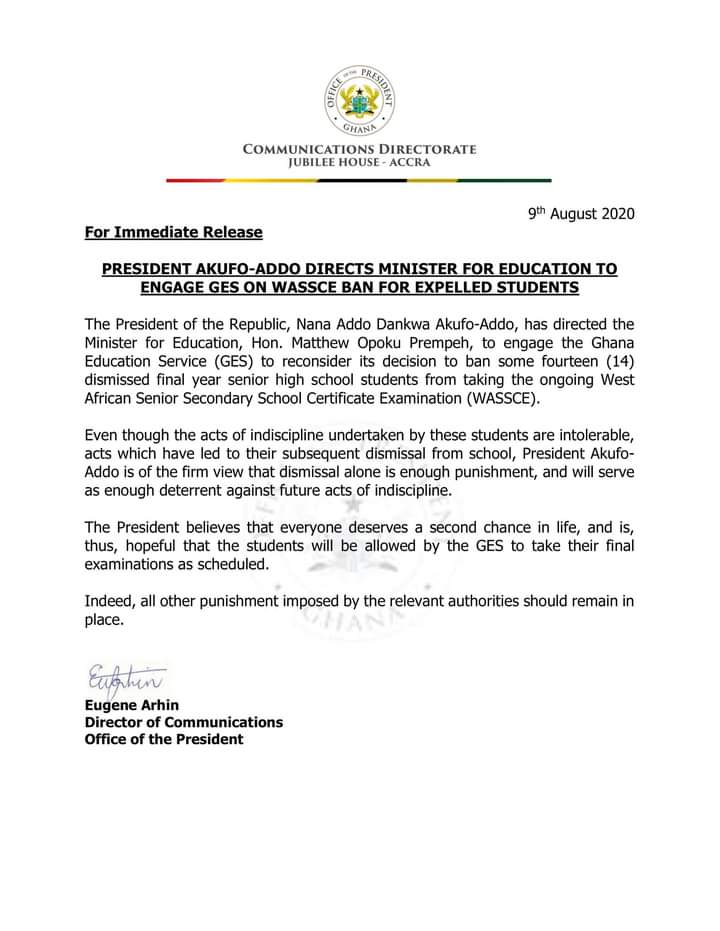
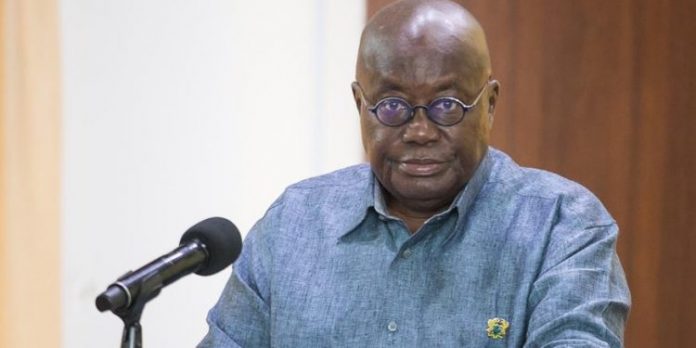
However, President Akufo-Addo has appealed to the Ghana Education Service to reconsider the decision to ban some 14 students from writing the ongoing WASSCE following their involvement in the recent chaos in their schools.

In a statement Sunday, the President directed the Education Minister to intervene in order to ensure that the students are made to write the exams. The statement, however, noted the dismissal and other punishment meted to them must stand.

Meanwhile, the West Africa Examination Council (WAEC) has relocated its examination centre from the premises of Bright Senior High School to the Ofori Panin Senior High School following the student riot that occurred at the centre on Thursday.

WAEC in a statement also noted it will not hesitate to sanction students and teachers of the school if they are found culpable in the rioting at their premises. Final year students of the school who are writing their exams on Thursday attacked an invigilator and a reporter over claims that supervision was strict during the exams. They were reportedly instigated by the proprietor of the school.

“The Council strongly condemns the behaviour of the proprietor and candidates of Bright SHS as reported and wishes to caution that such unruly behaviour contravenes Section 8 (1) of the WAEC Act, 2006 (Act 719) which frowns on and sanctions acts of assault on examination officials.

“In order to ensure the integrity of the examination and safeguard the lives of examination officials (Supervisors, Invigilators and WAEC Officers) assigned to the centre, the Council has decided to, in the interim, relocate the centre from Bright Senior High School to Ofori Panin Senior High School effective Saturday, 8th August, 2020,” WAEC said in a statement Friday.

Meanwhile, the Proprietor of the school located at Akyem Kukurantumi has been arrested.

He was arrested Friday Morning by CID officials from the Eastern Regional Police Headquarters accompanied by the Akyem Tafo District Police Commander.

None of the students has, however, been arrested.

Meanwhile, a woman from the Ghana Education Service identified as Mama Adwoa who was slapped and her phone smashed by the rioting students had her phone replaced by the school authority.

The Headmaster of Bright SHS on Thursday incited students numbering about 1000 to attack WAEC external invigilators for not compromising for his students to cheat.

Deliver Justice without fear or favor – Akufo-Addo

0

President Akufo-Addo has charged three newly sworn-in Justices of the Court of Appeal to carry out their duty of adjudicating cases without fear or favor, affection or ill-will.

The President gave the charge when he addressed a swearing-in ceremony of three newly appointed Justices of the Court of Appeal, Justices George Koomson, Edward Amoako Asante (President of the ECOWAS Court) and Novisi Afua Aryene, at the seat of the nation’s presidency, Jubilee House.

“To our new Justices of the Court of Appeal, it is important to bear in mind that the growth of our nation demands that we have a judiciary that commands the respect of the people by the quality of its delivery of justice as well as the comportment of its judges,” President Akufo-Addo said.

“Application of the laws of the land must occur in the words of the judicial oath you have taken, without fear, or favor, affection or ill-will and therefore, without recourse to political, religious or ethnic affiliations of any citizens of the land,” the President added.

Justice George Koomson, in a brief response on behalf of his two other colleagues, said they are mindful of the huge task and responsibility entrusted to them as a result of their appointment as Court of Appeal Justices and pledged they would live up to same.

“We would like to assure your Presidency and the good people of Ghana that we will continue to protect the rights and liberties of the people with dignity, honesty, and integrity,” Justice Koomson noted.

President Akufo-Addo will at a subsequent ceremony also swear-in three other Court of Appeal Justices, Justice Eric Baah, Justice Richard Adjei Frimpong, and Miss Cynthia Pamela Akotoaa Addo (the Judicial Secretary), which will bring the number of newly appointed Court of Appeal Judges to six (6).

84 PFJ FERTILIZERS INTERCEPTED IN UPPER WEST REGION

0

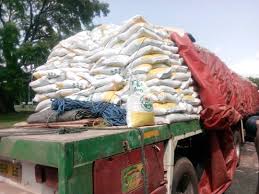
Immigration officers in the Western Region have intercepted 84 bags of NPK fertilizer suspected to be products from the government’s flagship Planting For Food and Jobs (PFJ) initiative.

The officials and a Nation Builders Corps (NABCo) Customs staff on duty at Beat Four (04), a known unapproved route bordering neighboring Burkina Faso foiled the smuggling at about 13:50 GMT on Thursday, August 6, 2020.

The fertilizers were ceased onboard two motor king tricycles en route neighboring Burkina Faso.

The purported owner of the goods, Inusah Adams, also known as Torries, opted for monetary settlements, but the determined officials stood their ground and chose service to the nation over illegality.

The Immigration base was informed and a reinforcement quickly dispatched to convey the ceased fertilizer.

A statement signed by the Upper West Region Public Affairs officer of the Ghana Immigration Service, Ibn Yussif Duranah Abdul-Mumin Seidu indicated that he fertilizer has been sent to the Hamile Sector Command for further investigations.

Ghana loses GHS120m to fertilizer smuggling – PFJ Secretariat

The Planting for Food and Jobs (PFJ) Secretariat under the Ministry of Food and Agriculture (MoFA) has warned that the program risks collapsing if concerted efforts are not made to stop the smuggling of government-subsidized fertilizer.

According to the Secretariat, Ghana lost a whopping GHS120 million from unaccounted for fertilizer, diversion of coupons, and fertilizer smuggling in the 2017 and 2018 planting seasons.

Officer In-charge of Special Duties on Planting for Food and Jobs, Baffour Amoh Kofi II, admonished stakeholders in synergy to stop fertilizer smuggling adding that, the situation, if not checked, will threaten the sustenance of the program.

“We have realized that if we do not stop this smuggling of fertilizer, in future, Planting for Food and Jobs will collapse because after we reviewed that of 2017 and 2018, we saw that diversion of coupons and unaccounted for fertilizer is costing government GHS120 million,” he lamented.

Failed measures

There have been recorded cases of fertilizer smuggling, a development that continuously impedes the successful implementation of the government’s flagship Planting for Food and Jobs program.

MoFA has said it is intensifying measures to check and eliminate fertilizer smuggling to neighboring and other African countries but it appears the new modalities introduced to be used for the distribution of fertilizers to farmers are not yielding the needed results.

Government-subsidized fertilizer under its Planting for Food and Jobs is aimed at increasing food production to address the high imports of foodstuff into the country.

Although the government branded its subsidized fertilizer for easy identification to curb smuggling, the menace still exists.

ATTITUDE FOR SUCCESSFUL AGRI-PRENEURIAL JOURNEY

0

By Bright Emmanuel Abia

No entrepreneur succeeds in every business venture, especially in Agricultural ventures. Every successful entrepreneur fails at least once, if not twice. How entrepreneurs learn from and utilize their failures, however, is what matters, because in entrepreneurship, attitude is everything.

Here are five key attitudes every Agricultural entrepreneur must conquer in order to run a prosperous business venture:

PASSION

Agricultural Entrepreneurs should be passionate about their ideas, goals and, of course, their companies. This passion is what drives them to do what they do.

Some entrepreneurs love the adventure and excitement of creating something new, and once it is established they lose interest and move on to something else.

Other entrepreneurs feel passionately about the product they are constructing or the sense of accomplishment they feel because they know they are helping other people, helping animals or helping the planet.

Whatever drives an individual to try to succeed is where his/her passion lies, and that passion is integral to entrepreneurial life.

 BRAVERY

Entrepreneurs, like everyone else, feel fear. They are fearful that they won’t succeed or fearful a well-conceived idea cannot be executed. They do not, however, let these fears of failure define them. They are brave. They learn from failure. They utilize their fear of failing to push themselves to work harder and to strive to correct the mistakes that may have caused them to fail.

Many entrepreneurs need multiple attempts to create a successful company. It is bravery that drives them to pursue success.

 FLEXIBILITY

Agricultural Entrepreneurs experience setbacks. There are hurdles to overcome on any journey.

Not everyone handles change or disappointment well. However, you must possess flexible mindsets so they can alter a course that seems to be headed toward failure.

Flexible Agricultural entrepreneurs should be aware that they may have to modify the route toward their established goal, or even perhaps tweak that established goal, in order to reach it successfully.

 STRONG WORK ETHIC

It is not easy to start from the ground up and become a successful Agribusiness Owner. Many hours of hard work, frustration, creativity and supervision are poured into a new venture. If you are not willing to get up and work hard every day, probably seven days a week, then how can you expect success? No successful business is created quickly, easily or without strife.

Agri-preneurs do not work a standard 9-5 day, nor do they log 40-hour work weeks. They are always working—establishing new ideas, creating new products, designing new processes, hiring smart and talented people.

Entrepreneurs motivate themselves and continually look forward.

 INTEGRITY

Agricultural Entrepreneurs must be able to show others
are truthful and honest. Regardless of the type of business they hope to establish, colleagues, vendors, customers and investors must trust them. There is no way around this—entrepreneurs must be trusted, and trust must be earned.

The best business idea in the world will likely fail if an untrustworthy person is at the helm. Suppliers need to know that payments for goods they have shipped will arrive on time.

Customers need to know that whatever product or service they have ordered will be delivered as promised. Colleagues need to know that they are a valued part of the company’s success. Investors need to know that the company has to potential to grow.

Attitude is everything in entrepreneurial life and Agriculture as well as Agribusiness is no different.

Fact Checker: Claim that University of Environment and Sustainable Devt started under Akufo-Addo false

0

BACKGROUND:

President Akufo Addo yesterday commissioned the Main Campus of the University of Environment and Sustainable Development in Somanya in the Eastern Region. Hours before the commissioning the NDC in Yilo Krobo issued a statement asking the President not to re-visit his usual habit of taking credit for what he has no hand in and to appreciate the efforts of his predecessor John Dramani Mahama. The NDC said the project was one of the dreams of the NDC made possible by Former President Mahama and former Education Minister Prof. Naana Jane Opoku Agyeman. A few hours later, there was a counter statement from the Krobo Bloc NPP Communication Bureau titled “Setting the records right about the University of Environment and Sustainability development (UESD)”. In that statement, the NPP claimed that the opposition NDC lied about securing funds for the construction of the University. The party claimed that the NDC included the project in all budgets from 2009 but failed to implement and that it was only under Nana Addo’s government that the project was started and completed. Seeing as this is an election year and issues of infrastructure will play a crucial role in the electioneering campaign, starrfmfactchecker deems it necessary to subject the claims made by both parties to some scrutiny.

 ABOUT UESD: The University is a government of Ghana project through the ministry of education. It is a new university at Trom-Somanya in the Yilo Krobo Municipality in the Eastern Region with the view to improving equitable access to tertiary education in Ghana. Given that there are universities in the other regions of the country, the University of Environment and Sustainable Development (UESD) will specialize in the conduct of research and knowledge dissemination in the sciences, agro-business and the built environment. This new university will offer general and specialized programs to fill the gaps and ensure well rounded training for environmental and sustainable development professionals in Ghana. These include degree programs and research in climate change, water resources development, energy sustainability, energy economics and policy, urban architecture, natural resources and environmental economics, environmental policy and environmental science. The project involves the development of complete infrastructure to support the functions of the university.

SOURCE: https://www.uesd-ghana.com

The website, www.uesd-ghana.com names Brazilian Engineering Company CONTRACTA ENGENHARIA as the contractor in charge of the project. However documents from parliament and utterances from government officials name an Italian firm Contracta Construizioni Italia SRL as the company undertaking the project. Checks by Starrfmfactchecker show that the Italian firm is a company under Contracta Engenharia Ltda which is the parent company. https://www.dnb.com/business-directory/company-profiles.contracta_costruzioni_italia_srl.5738dbe7b8831d0fae1cbe6c0c2778c7.html

http://contracta.com.br/en/projetos/university-of-environment-and-sustainable-development/

In order to identify the facts surrounding the construction of the University of Environment and Sustainable Development, we want to present a timeline of the events leading to yesterday’s commissioning of the first phase of the project;

 TIMELINE:

2012– then governing NDC in the executive summary of its manifesto stated that it will establish “a new public University in the Eastern Region to complete the NDC’s vision of providing a public University campus in every Region of the country and also to expand academic and residential facilities on existing campuses”( NDC 2012 Manifesto, Page 8)

April 2013- President Mahama inaugurated a 12-member committee to develop the roadmap for the establishment of the University.https://www.mahamalegacy.com/project/university-of-environment-and-sustainable-development-somanya-campus/. The committee was chaired by Professor Raymond Benning-Amoako-Nuamah

February 2014- President Mahama said in his State of the Nation Address that the establishment of the first University in the Eastern Region is becoming a reality and added that the 12 member committee has completed work. He stated then, that the draft bill will be presented to parliament soon. https://www.myjoyonline.com/news/full-transcript-president-john-mahamas-2014-state-of-the-nation-address/

Shortly after his State of the Nation Address, Education Minister Prof. Naana Jane Opoku Agyeman presented the memorandum of the bill to establish the university to parliament. Clause 3 of that memorandum stated that the “The University shall be established in Somanya and shall have (a) its first campus in Donkorkrom and any other place in the Eastern region; (b) other campuses in any other place as the Council may determine”.

June 2015: The 12-member committee tasked to develop the roadmap for the construction of the University submitted its report to President Mahama. https://www.graphic.com.gh/news/general-news/committee-presents-report-on-establishment-of-university-in-e-r.html

2016: President Mahama endorsed the approved bill which was subsequently ratified by parliament that year. On 20th October 2016, Finance Minister Seth Terkper presented the loan agreement for the establishment of the University to parliament. There were three papers;

  1. Buyer Credit Facility Agreement between the Government of the Republic of Ghana and Deutsche Bank S.p.A. and its affiliates in the sum of up to Thirty-Eight Million, Seven Hundred and Thirty-Eight Thousand, Seven Hundred and Fifty Euros (€38,738,750.00) for the development of the University of Environment and Sustainable Development. The committee report on this agreement was submitted on 27th October 2020, a motion was moved a day later and it was passed that same day, October 28.
  2. Commercial Loan Agreement between the Government of the Republic of Ghana and Deutsche Bank S.p.A. and its affiliates in the sum of up to Six Million, Eight Hundred and Thirty-Six Thousand, Two Hundred and Fifty Euros (€6,836,250.00) for the development of the University of Environment and Sustainable Development. The committee report on this agreement was submitted on 27th October 2020, a motion was moved a day later and it was passed that same day, October 28.
  3. The final paper was the Commercial Contract between the Government of the Republic of Ghana and Contracta Construzione Italia Srl. in the sum of up to FortyFive Million, Five Hundred and Seventy-Five Thousand Euros (€45,575,000.00) for the development of the University of Environment and Sustainable Development

SOURCE: LOANS, TREATIES and CONVENTIONS, 6th Parliament

With funds secured and the bill passed, President Mahama cut the sod for the construction of the main campus of the University of Environment and Sustainable Development on Thursday, December 29, 2016, just days before he was to hand over to then-president-elect Nana Addo Danquah Akufo Addo. At the sod-cutting ceremony, President Mahama expressed hope that their “our exploits and initiatives will be sustained for the betterment of Ghana,” https://www.graphic.com.gh/news/general-news/prez-cuts-sod-for-university-of-environment-and-sustainable-development.html

JAN 2018- Work began on the construction of the University in Somanya. Minister of state in charge of tertiary education Prof. Kwesi Yankah granted an interview to the Daily Graphic in which he said that the Akufo Addo government had no intention of abandoning the project. He said work had started as early as December 4 the previous year. The minister explained that the delay in beginning the project was because of some technical challenges. https://www.businessghana.com/site/news/general/157807/Work-begins-on-Somanya-Campus-of-Environment-University

On July 18, 2018, GBC reported that parliament had adopted the 90 million dollar loan agreement between the government of Ghana and the Exim-Import Bank of Korea for the construction of the Bunso Campus of the UESD( https://www.gbcghana.com/1.11666789 . The minority had raised concerns about the decision by the government to set up the satellite campus of the University at Bunso instead of Donkorkrom as stated in act 898 which established the university. Another concern the caucus had about the move by the government was the cost of the project. The NDC MPs maintained that the 90 million dollar price tag for the Bunso project was outrageous especially since the main campus was constructed at 45 million euros. https://www.ayoffycial.com/2018/minority-kicks-against-illogical-90m-loan-for-uesd-bunso-campus-project/

So let’s note this; per the act that established the University, while the main campus was to be sited in Somanya, the satellite campuses were to be in Donkorkrom first and then any other in the region as may be determined by the University Council. The minority, therefore, felt the government violating the provisions of the act and brought about this controversy over whether the government was relocating the University to Bunso. In November 2018 while on a three-day tour of the Eastern Region, President Akufo Addo asked the chiefs and people in Somanya to disregard the claims. https://www.graphic.com.gh/news/general-news/university-of-environment-sustainable-dev-won-t-be-relocated-prez-says-as-he-begins-e-r-tour-ghana-news.html

January 2020: The first phase of the project was completed. According to the Minister of State in charge of tertiary education, the University will begin admissions in the 2020 academic year. https://www.modernghana.com/news/978727/er-university-of-environment-and-sustainable.html

May 2020: According to President Akufo Addo, the agreement for the second phase of the Main Campus project was signed on 6th May 2020 with M/S Contract and valued at forty-nine million, eight hundred and ninety-one thousand, ninety-eight euros to be completed within thirty (30) months of signature of the agreement.

On August 5, 2020 President Akufo Addo commissioned the first phase of the main campus of the University of Environment and Sustainable Development.

CONCLUSION:

From the above, the facts show that the NDC government did more than just the enactment of Act 898 which established the University of Environment and Sustainable Development. Not only was the project captured in the 2012 Manifesto of the NDC, but the previous NDC administration began the process for the beginning of the project. This is manifest in the setting up of the 12-member committee that worked on the roadmap for the construction of the University. Then outgoing President Mahama also cut the sod for the beginning of the project in December 2016.  Contrary to the NPP’s claim that Nana Akufo Addo did all it takes to mobilize funds for the construction of the University, the  45 million euros for the first phase of the project was secured and approved by parliament in October 2016 under the NDC government. The NPP’s claim that the framework agreement was signed between the government and the Exim Bank of Korea for the construction of the University is misleading. The facts remain that the first phase of the project was signed between the government and the Deutsche Bank in 2016. Indeed the Exim Bank of Korea is providing funding for the satellite campus of the University at Bunso and not the Main Campus at Somanya which was commissioned yesterday. That agreement involving the Exim Bank of Korea was approved by parliament in July 2018, more than 6 months after work on the Somanya Main Campus project had started.  It is also not true that the previous government reneged on an agreement by bringing in a contractor from Brazil which led to protests by Exim Bank. On the website www.uesd-ghana.com, the company contracted to undertake the main campus project is a Brazilian named CONTRACTA ENGENHARIA which is the parent company of the Italian firm Contracta Construizioni Italia SRL which implemented the project. Based on the facts, starrfmfactchecker finds the claim by the governing NPP that the opposition NDC lied about securing funds for the construction of the University is false. Finally, it cannot be said that it was only under Nana Addo’s government that the project was started and completed. We rate the NPP’s claims as outright lies and therefore rated 2 stars.

DUFFOUR WARNS KEN AGYAPONG OVER PREJUDICIAL CLAIMS

0

A former governor of the Bank of Ghana, Dr. Kwabena Duffuor, has advised NPP MP for Assin Central, Kennedy Agyapong, to desist from making prejudicial comments regarding the collapse of Unibank.

Duffuor, who owned the collapsed bank, has through his solicitors also cautioned the media to be mindful of offering their platforms to the loose-talking lawmaker since they can be cited for contempt.

Hales Solicitors described the claims being made by the MP on various media platforms as not based on any verifiable facts and are grossly misconceived.

“The attention of Dr. Kwabena Duffuor has been drawn to certain comments made by Hon Kennedy Agyapong, Member of Parliament for Assin Central with regards to the fall out of the Bank of Ghana clean-up of the financial industry, and the revocation of Unibank Ghana Limited’s license and subsequent receivership.

“We have our client’s firm instructions to assure the good people of Ghana that Mr. Agyapong’s comments are not based on any verifiable facts and are grossly misconceived. The issues surrounding the revocation of Unibank’s operating license by Bank of Ghana are the subject matter of various proceedings in court and as such our client will not be commenting further on them.

“We take this opportunity to sound a note of caution to the various media houses who have afforded Hon Kennedy Agyapong the time to discuss ongoing cases before the courts, that they run the risk of being found in contempt of court, as most of the comments of Hon Agyapong are prejudicial to the cases currently pending before the courts.”

I WILL BUILD A JUST AND EQUAL SOCIETY – JM

0

The Flagbearer of the National Democratic Congress (NDC), John Dramani Mahama, says he is committed to building a just and equal society where all Ghanaians, regardless of their ethnicity or political affiliation, can benefit from opportunities in the country.

He says the next NDC administration will bring back the peace and unity of Ghana by making all Ghanaians feel that they belong to the country, especially as no group of persons owns Ghana more than others.

Mr. Mahama made the comments when he spoke to journalists after registering for a voter ID card in Bole in the Savanna Region on Wednesday. He observed that President Nana Akufo-Addo is doing everything, including jeopardizing the peace in the country, just to hang on to power.

Former President Mahama said Mr. Akufo-Addo is dictatorial and intolerant of dissenting views, adding that the closure of radio stations, harassment of journalists and the alienation of some ethnic groups, including questioning their Ghanaian citizenship, does not bode well for Ghana’s democracy and the peace and stability of the country.

He said the deployment of soldiers by the government to prevent eligible Ghanaians from registering in the on-going registration of voters is a sign of desperation, and indicative of a government who do not care about handing over a peaceful and united country.

The NDC leader says the only way to stop the government from further dividing Ghanaians and toying with the peace, stability, and unity of the country is for all eligible voters to be resolute and register for their voter ID cards, despite the machinations by the government to disenfranchise them.
LETS HAVE DIFFERENT SALARY STRUCTURE FOR OLD AND NEW MPS – MENSAH BONSU

0

Ghana’s Parliament is demanding different salary structures for seasoned MPs in order to serve as motivation for excellence.

The current status quo where new MPs and seasoned or old colleagues earn the same salary is demotivating, the leadership of Parliament argues.

Speaking at a Ministry of Parliamentary Affairs forum on nurturing career legislators in Ghana: Prospects and Challenges, Minister for Parliamentary Affairs Osei Kyei-Mensah-Bonsu wondered why someone like second deputy Speaker and Nadowli MP Alban Bagbin who has been a legislator for more than 27 years will earn the same salary as a new entrant.

The Suame MP blamed the current system of choosing political leaders which heavily depends on money for most of the troubles the country is in.

“If we don’t have career Members of Parliament, the Executive will become overbearing and dominate the political space. Indeed that is what the executive wants, every executive wants to deal with a very weak parliament.

“There should be concrete measures that we put in place to recognize longevity, for now, MPs regardless of the number of terms that you have served, the current 2nd Deputy Speaker, a 7th term MP is on the same salary as a first time Member for Parliament and there is nothing to indicate that he has served parliament for seven terms, so we in the House should structure our affairs to recognize the efforts of long-serving MPs.”