Home Blog Page 85

DELAYED GRATIFICATION – THE KEY TO SUCCESS

0
Little child is saving money for the future.

One of the most famous studies on Delayed Gratification is the ‘Stanford Marshmallow Experiment’. This was a study led by psychologist Walter Mischel. In these studies, a child was put in a room. In the room would be a marshmallow. The researcher would leave the room, but give the child an option. The child could eat the marshmallow directly or if it waits for the researcher to come back in 15 minutes, the child would get another marshmallow and could eat both.

Most of the children ate the marshmallow straight ahead. But some waited. The study didn’t finish there, however. Researchers continued to study the development of the children into adolescents. The researchers found that the children who were able to wait longer for the preferred rewards tended to have better life outcomes, as measured by SAT scores, educational attainment, body mass index, and other life measures.

What does this tell us? It means that the people who make the decision to wait for a reward tend to do better in life and achieve more. Or as you could also call it, delayed gratification: resisting or sacrificing something in the present for a later, greater reward in the future.

How do you put delayed gratification into practice? Gary Vaynerchuk has one of my favorite models around it: Macro patience, Micro speed

What does this mean? Let’s start with Macro Patience. Macro Patience is all about your vision and end-goals. It is knowing where you are heading and being patient in the process. With patience, Gary does not mean to sit around and do nothing. No. He means that you put in the work every day but do not expect any significant returns in the short-term.

Which can be nicely followed up by Micro Speed. In the Macro you are patient. But in the day to day work, you have to be fast. Do you see a task that needs to be finished? Go do it. Does someone contact you? Reply back. There is a problem? Fix it. That is where the Micro Speed is all about.

Macro Patience, Micro Speed is daily execution without any short-term expectations. Most people have this the other way around. They want their long-term goals fast, while they are lazy in the short-term and do not execute. Have it the good way around. Macro Patience. Micro Speed.

Delayed Gratification Strategies

Delayed Gratification sounds like one of these easy things on paper but in reality? It can be hard. Below are a few strategies that can help you out to develop the mindset to delay gratification.

Know Your Why

Most people fail at a new process because of one thing: they do not know their why. Or, their why is not strong enough. Knowing you’re why is one of the most important things to keep working at something for a long time with the same intensity you had at day one.

Knowing you’re why is a solid tool when you are about to quit or give in to a small reward in the present instead of a larger reward in the future. When you are on the verge of making the wrong decision, it is a great last resort to ask yourself the question: why am I doing this again?

Simon Sinek is well known for his books, keynotes, and interviews about knowing your why. I highly recommend you check him out if you struggle with finding your why.

Keep Things In Perspective

Goals. You probably know what you want to achieve. The only thing that is left is to constantly keep things in perspective. If you feel the urge to quit or give in to something, you should use self-talk to get out of that mindset.

To keep things in perspective just ask yourself the next question when you are in doubt: what is more important, achieving the end goal or the immediate pleasure? You will probably always answer it the same. Achieving the end goal is the top priority. The immediate pleasure is something that will be meaningless within no-time.

Reward Yourself

It might sound like a contradiction after the past two points, but rewarding yourself is a strategy to delay the real gratification.

If you know your why and the goals you want to achieve, you could break those goals down and give yourself really small rewards. Those small rewards can help you to keep working towards the end-goal and the real reward (gratification).

When you reward yourself, do not go overboard with it. Keep it small. A small reward could be cooking your favorite dish with all the expensive ingredients, watch a movie, play a game, go out of town for a day, or just have a guilt-free lazy day. The most important thing is that the rewards or small but meaningful to you.

Track Your Progress

Tracking your progress is a nice follow-up to the previous strategy. By tracking your progress, the goals you have achieved, you can look back at how far you have come. This can be really gratifying and satisfying. Besides that, tracking your progress will help you build momentum.

Get in touch with us through info@livingavenuegh.com


HELLO RWANDA: A PIECE BY THE YOUNG POSITIVIST

0

Dear reader, what comes to your mind when you hear about the country Rwanda? Do you think about their recent economic growth and how the country is developing rapidly? Or Paul Kagame, their President comes to mind? For me and like many, anytime I hear about Rwanda it is an imagery of the gruesome massacre and the near apocalypse of innocent people who could have played several roles in building up Rwanda to match countries all over the world in terms of economic growth, infrastructural development and betterment of the entire African continent.

This piece focuses on the Rwandan genocide which nearly wiped off an entire generation. This although difficult to deal with looking at how inhumane and appalling the situation was has become necessary for emotions and sentiments to be relegated to the background to address the issue as appropriate as my knowledge will permit. For clarity purposes sake, the writer is by no means trying to remind the good people of Rwanda and the rest of the world about this bizarre and most calamitous atrocity.

Rwanda, a beautiful country known for its great valley and lakes share its borders with Uganda, Tanzania, Burundi, and the Democratic Republic of the Congo. These countries have also seen some mayhems in the form of civil wars or political volatility which have put them in dark ages but their issues will be dealt with in a later piece.

Rwanda freed itself from the shackles and chains of colonialism from Belgium when it gained its independence on 1 st July 1962. The ordinary and reasonable man would have thought this period was the appropriate time for Rwandans to be united and correct all anomalies inflicted upon them as a result of this distasteful and shameful regime of imperialism but this was not meant to be. As heterogeneous as most African countries are, Rwanda is no exception as the country is divided into two main ethnic groups. The Hutus being in the majority ethnic group with an estimated 85% of the population and 14% being Tutsis who form the minority. History has it that when the Belgians ruled these people, they pitched camps with the Tutsis thus elevating the Tutsis above the Hutus who were in the majority. The Hutus are said to believe that the Tutsis are strangers and therefore do not belong to the country. More so, before independence, the Tutsis occupied most of the vital positions in the country as Rwanda before its independence, practised the monarchical system of governance and these monarchs were mostly Tutsis.

In 1959, about 20,000 Tutsis were killed by Hutu extremists and leading thousands of them to flee to Uganda and other neighbouring countries. These killings became rampant when Rwanda gained its independence in 1962. After president Gregoire Kayibanda; Rwanda’s first president after independence who was a Hutu won the direct election which resulted in a representative government dominated by majority Hutus, they the Hutus thought they had had their person being at the helm of the country’s affairs as President and as such could behave recklessly. From

my point of view, this was a bright opportunity for the President to have stamped his authority to ensure matters did not escalate but no, President Kayibanda danced to the barbaric tunes of his extremist Hutus resulting in the displacement and killing of many Tutsis.

In 1973, the Tutsis will heave a sigh of relief as President Kayibanda’s government was toppled by Juvenal Habyarimana and his cohorts. With the seizure of power, many thought this was a perfect opportunity to see in action the Lex talionis. To wit, many expected Habyarimana’s government to have ironed out their differences with the Hutus and see to it that the constant persecution of the Tutsis was brought to an end and also that all the Tutsis refugees in the neighbouring countries returned home but this was not the intention of the new government as the government’s aim was intended at deepening the woes of the Tutsis.

With the various host countries facing difficulties in harbouring these refugees coupled with the insatiable desire of the Tutsis to go back to their motherland, the situation became tough and complicated leading to the formation of the Rwandan Patriotic Front (RPF) a formidable force which later became the ruling party after the genocide. The RPF was first led by Fred Rwigyema who took some moderate number of RPF troops into the borders of Rwanda but died three days into the operation. At that time, Paul Kagame, the current President of Rwanda was in the United States of America furthering his military education and upon his return, took over as one of the leaders of the RPF.

With the help of the RPF, Ugandans were able to overthrow the tyrant regime of Idi Amin and restored President Milton Obote who had fled to neighbouring Tanzania when Idi Amin seized power. Obote as fate will have it failed to treat the Rwandan refugees fairly as he also inflicted many wounds on them. In a bid to help matters for his people, Paul Kagame and his abled men joined forces with the current Ugandan President Yoweri Museveni and ousted the government of Obote in 1985. Even with the overthrow of the Obote’s government, the RPF and the refugees were not content as they desired, even more, to go back to their motherland Rwanda. In their quest of making a return journey home, the RPF released a series of attacks on the Rwandan government which will go on to bring sleepless nights and incubus to President Habyarimana and his government. The RPF had laid a stronghold of some parts of the country and moved gradually towards the capital Kigali. With their limited military resources, the gallant Kagame and his men defeated the French and Belgian troops which according to locals believed funded and continued to fund Habyarimana’s government. The RPF thus became an irresistible and solid force to deal with. It is no surprise that they were able to defeat the Rwandan army and brought an end to the genocide.

To ensure that the civil war came to an end, there was a peace agreement brokered between the Rwandan government and the RPF. This took place in Tanzania on 4 th August. This agreement was known as the Arusha Peace Agreement or Arusha Negotiation. But as to whether this agreement will see the light of day, only God knew. The cold approach taken by the President in addressing the issue brings to the memory of a similar incident occurring in Nigeria during the

Biafra War. A peace accord which was signed on the hills of Aburi in Ghana was stalled as the head of state General Yakubu Gowon, timidly and selfishly did not implement the peace deal but rather plunged his country into turmoil. Same did happen in Rwanda as the government was sluggish in executing the agreed-upon arbitration.

The most unfortunate and regrettable incident occurred thus plunging the country into one of the deadliest and most inexplicable killings in human history. On 6th April 1994, President Juvenal Habyarimana’s plane was shot close to the Kigali airport. Onboard that plane was the Head of state of Burundi, President Cyprien Ntaryamira, also a Hutu and others who were with them. Till date, there have been no concrete findings as to who shot at the President’s plane. Some accused the RPF, but the RPF vehemently denied it. Others also asserted that it was the extremist Hutus who shot at the plane so there will be genuine grounds for them to perpetuate their mad atrocities. Others also opined that it was a coup d’état because the armies were not pleased with his administration. The questions demanding truthful answers are: “where was the world when these killings started?” Where was the United Nations (UN)? Where was the conscience of these warlords? In one of the most powerful books which give many details about what transpired in Rwanda and as an account from an eyewitness is General Romeo Dellaire’s book “Shake Hands with the Devil the Failure of Humanity in Rwanda”. He recounts how the incidents happened and how the most powerful countries like the United States of America and the United Kingdom sat aloof for these barbaric atrocities to happen. Even the UN that aims at providing international peace and security to the whole world including Rwanda went to sleep. He recounts that he had less the number of troops he required to combat this massacre when issues got out of hand. Begrudging anyone who tries to exonerate the US and the other countries for not providing the needed assistance when it mattered the most will be the least.

It is believed that all the hegemonic countries had taken a clue from what had happened in Mogadishu the capital of Somalia on 3 rd – 4 th October 1993. The events of these days were very unfortunate as eighteen (18) American soldiers had been killed and were dragged on the streets of Mogadishu in a brave attempt to send a strong signal to the Western world to stop intervening in matters of the kind on the African continent. This warning seemed to have sunk deep in the heads and hearts of folks from the western world and informed their decisions about not intervening in matters of the sort in Africa.

In a similar incident like what happened in Somalia, ten (10) Belgium troops were killed by Hutu extremists to send a strong signal to the world, and this triggered an immediate evacuation of all foreign nationals from Rwanda. French troops, as well as the Belgian troops, were also withdrawn from the mission. The UN hinted of closing the mission to leave the fate of the people in their own hands. By 10 th April 1994, all foreign nationals were evacuated from Rwanda. In what will go down as one of the most horrendous calamities in the history of mankind, is what took place in Rwanda from April to July 1993 and within the space of 100 days saw about 800,000 people being exterminated and over half a million people fleeing into refugee camps or going into hiding for fear of losing their lives. Who caused what or who started what is inconsequential. What amazes many like myself is how the world looked on unconcerned for this barbaric act to proceed without the conscience of humans being brought to bear.

It is still inconceivable what the Hutu extremists tried to achieve with their hatred towards the minority Tutsis. A question that comes to mind is whether the elimination of the minority Tutsis would have taken away the challenges of the Hutus. Could that have brought or put food on their table? Could that have developed the country? When I think of these callous leaders who masterminded and systematically orchestrated these unhallowed acts I cringe and wail. They rendered the most disservice thing to their country.

However, the remnants of the genocide would see light at the end of the tunnel as three amazing and brave men contributed in ensuring ceasefire with the hope that genocide will be a thing of the past and never repeat itself in the history of the people of Rwanda. These three gallant men were General Romeo Dellaire, a Canadian officer who was the commander of the UN troops, Paul Kagame, the leader of the RPF who is the current President of Rwanda and a highly skilled Ghanaian military officer Brigadier General Henry Kwami Anyidoho who was the commander of the Ghanaian troops in Rwanda. The contribution of these great and courageous men can never be underestimated and overlooked in the history of the genocide. In concluding this piece, I must say that I feel very ashamed for all the shameful atrocities which have happened on this continent especially what happened in Rwanda.

This is so because in the first place, how could we allow Satan to get hold of our hearts and minds? How could we be greedy and selfish like that? If we resort to these vicious and crazy styles of killings, how do we expect to develop? Was there nobody to have pointed out to them what happened in Nigeria about the Biafra War from 1967 to 1970? We make a mockery of ourselves if we engage in such kinds of senseless fights. Nobody can develop the continent for us. We are responsible for it and if we do not, posterity will hold us in judgement. As a continent with a rich culture of divergent celebrations, why don’t we come together and learn from one another and grow? This is our motherland! Africa must unite and learn from its darkness of ethnic bigotry. It will not save us but will rather cripple our development. Imagine what 800,000 people could have contributed to the development of a country. However, that option was never explored but rather sending them to their early graves with many weeping and gnashing their teeth till the point of their horrific deaths remained the goal.

This is the most barbaric and shameful incident that can happen to any country and a continent such as ours not to talk of the loss of properties and other essential stuff lost in the course of this unwarranted genocide. We must feel ashamed for all these insane and callous acts.

I write as a patriotic citizen of Africa and I am through this medium calling for an end to any form of uncivilized incidents like this. Together we can develop but divided we will diminish. Africa must unite. Rwanda must rise again and say no to any ethnic pogrom. Rwanda must work again, and Africa must work again, YOUNG POSITIVIST a concerned citizen of Africa.

By Columnist Boamah

get in touch with us: info@livingavenuegh.com


ECG dept owed to GREIDCo on the rise – IES

0

From data collated by the Institute for Energy Security (IES), the debt of GH¢850.993 million owed to the Ghana Grid Company (GRIDco) by the Electricity Company of Ghana (ECG) in December 2019 has shot up by almost 31 percent to GH¢1.114 billion as of end June 2020.

The Institute’s trend analysis of cash receivables of the GRIDCo in the first half of year 2020 (HY1/2020) indicates that the receivables profile of the power transmitter is growing worse. The analysis revealed that as of January 2020 the total debt owed to the GRIDco by ECG was GH¢902.865 million, from December 2019’s figure of GH¢850.993 million.

The monthly analysis done for the HY1/2020 showed that the amount owed by the ECG to GRIDCo totaled GH¢451.468 million. However, the ECG paid only GH¢188.198 million representing 41.69 percent of total invoices issued. For instance, at end January 2020, GRIDCo invoiced the ECG GH¢74.872 million, made up of GH¢68.558 million in Transmission Service Charge (TSC) and GH¢6.314 million as Regulatory (PURC) Levy for power transmitted for the ECG in January, sending total outstanding debt to GH¢902.865 million.

Out of the total monthly invoice of GH¢74.872 million, the ECG paid only GH¢23.0 million, representing 30.7 percent of the invoiced amount, as shown in Table 1 and Graph 1 below.

The payments of February to June invoices by the ECG followed a similar pattern; suggesting a huge pay gap. The analysis shows that the ECG currently piles up close to GH¢11.0 million debt per week, as GRIDCo’s outstanding receivables rise to GH¢1.114 billion at the end of June 2020.

Meanwhile, GRIDCo bills ECG about GH¢19 million per week, of which they pay roughly GH¢8.0 million per week. Compared to 2017 when the GRIDCo used to receive close to GH¢8.0 million per week from a billing rate of GH¢13.0 million per week, the current debt recovery rate is nothing but worse.

Because of the increasing payment gap, the outstanding debt of ECG to the GRIDCo is found to be increasing at an astronomical rate. Data shows GRIDCo’s receivables from the ECG is increasing despite government clearing its indebtedness to the ECG at end 2019, leaving a credit in excess of GH¢500.0 million, enough to cover its bill for January 2020 to April 2020.

In March 2020, the Government committed to fully absorbing the electricity bills for all lifeline consumers for 3 months beginning April 2020. It also offered to pay 50 percent of the electricity bill for residential and commercial consumers for the period, using the March 2020 bill as the benchmark.

Therefore, the logical expectation was at least 90 percent full debt recovery for both the ECG and GRIDCo, if the Government committed to his promise of paying for the electricity used by the people of Ghana. That was not to be, and Government has proceeded to extend the freebies to the aforementioned category of consumers, for an additional 3 months.

IES’ provisional projection based on the trend analysis, depicts that the debt position of ECG to GRIDCo could hit roughly 1.4 billion by the end of December 2020 should the ECG continue to pile up a debt of close to GH¢11.0 million debt per week. The projected figure could be higher if the government fails to pay fully the bills it has committed to take for consumers.

The IES is not against providing social protection programs for Ghanaians in these times of hardship caused by the COVID pandemic. In fact, the IES is strongly for it. However, the IES abhor policies that are targeted to see vital institutions whose contribution promotes economic development go down the drain due to political decisions that can go wrong.

Impact on GRIDCo

Aside the ECG, the indebtedness of the Northern Electricity Distribution Company (NEDCo), the Volta Aluminum Company (VALCO), and some mining companies to the GRIDCo, coupled with the depreciation of the Ghana cedi, contributes to the financial woes of the GRIDCo.

The debts owed by these companies to the GRIDCo is rising to unprecedented levels, and may likely render GRIDCo incapable of executing its critical projects that would make the national transmission system robust and improve the reliability of power supply. It could negatively influence the day-to-day operations of the company and could lead to the stalling of the many key projects undertaking by the company to improve on operations and efficiency, if not checked.

The increase debts that translate into financial constraints may also make it difficult for the transmitter to meet its financial obligations to financiers, contractors, suppliers and service providers among others. The bad financial state of the company induced by increased receivables could result in increased payables and deterioration of its working revenue, and by extension produce financial losses.

For three consecutive years, GRIDCo has been recording losses with a net loss of GH¢114.3 million in 2019. Even in 2015 when the GRIDCo produced a good financial results, with total revenue of GH¢472.345 million and net profit of GH¢44.797 million, most of the profit recorded was in debt. The current happenings thus clearly indicate that the year 2020 may experience another round of losses for State power utilities.

Remedial Actions

The Institute of Energy Security (IES), fears that the toughest leadership test is approaching, where government and its allied institutions in the power sector would have to show how they intend to bring back power utilities into cost-effective and profitable ways. The most appropriate module could be for the Government to reimagine its approach in dealing with debts in the sector, should it be willing to return power sector institutions to profit ways. Most critically, the Government must proffer new ways in which to recover revenues owed the GRIDCo from institutions, whether private or state, and from the Energy Sector Levy Act (ESLA) Fund.

The ECG must deal with the high commercial and technical losses in its system and must commit to clearing all the debt owed GRIDCo, to guarantee reliable power supply to its distribution network.

While the GRIDCo waits to receive payment from the ECG, or better still receive revival from the sharing of the ESLA Fund to help boost the finance of the company, Management of the company must be focused on pursuing the debts owed by the ECG and other defaulting customers. GRIDCo must also consider cutting back on some of the expenses (including CAPEX), focusing on those that are necessary to produce a robust transmission system, to manage the current challenges.

I met Afari Gyan Drinking alone in a bear bar – Prof. Ahwoi

0

Prof. Kwamena Ahwoi has revealed that he discovered the man who became Ghana’s longest-serving Electoral Commission Chairman, Dr. Kwadwo Afari-Gyan, at a drinking spot.

The former Local Government Minister said he had been sent on a mission by Captain Kojo Tsikata to make contact with Kofi Drah, a Senior Lecturer at the Department of Political Science at the University of Ghana.

He was to convince him to join the committee of experts to work on Ghana’s 1992 constitution.

Prof. Ahwoi said while he was on his way, he branched into a drinking spot at Achimota Forest area where a number of University of Ghana lecturers including Dr Kwesi Botchwey used to meet for occasional social drinks.

In his new controversial book ‘Working with Rawlings’, the local government expert recalled meeting Dr Afari-Gyan drinking alone.

“I joined him and engaged him in a conversation, hoping to find out from him the residence of Mr Drah. As the conversation dragged on, I began to see Dr Afari-Gyan in a new light. He was not only a progressive intellectual; he was also pro-Nkrumaist and not hostile to the revolution.

“I steered the conversation in the direction of the unfolding transition to constitutional rule and his views seemed to echo those of the Provisional National Defence Council.

“I aborted my trip to locate Mr Drah’s house, turned back and reported to Captain Tsikata’s Office the next day. The rest is history,” Prof. Ahwoi wrote.

ASEPA: KEN AGYAPONG DENIGRATING KWABENA DUFFOUR BY TWISTING FACTS

0

Mensah Thompson –  Executive Director for the Alliance for Social Equity and Public Accountability (ASEPA), has challenged claims by Assin Central MP Kennedy Agyepong that Dr. Kwabena Duffuor acquired personal properties with the funds of Unibank customers.

According to him, some of the properties being mentioned by the lawmaker were acquired by the business magnate long before Unibank was established.

Unibank was under administration and the purpose of administration according to Act 930 is to find viable means of reviving and sustaining the bank. So whatever challenges Unibank was going through that was why they were put under administration to resolve the problems and keep Unibank afloat.

“As part of Unibank’s commitment to the administration process of reviving the bank, it listed a number of properties it was willing to liquidate to inject into the bank. Yes you heard right, Dr. Duffuor was willing to sell off his own properties and others belonging to his companies to inject the money into Unibank so that no customer would lose their investment,” he further said in a statement.

It added: The letter Ken Agyapong showed on his TV is proof of that arrangement, but that letter does NOT in any way show how those properties were acquired and neither is it proof that depositors money was used to acquire those properties,(infact most of those properties are even older than Unibank)

“HODA Holdings has a number of Assets just like any holdings company, and so if the shareholders were willing and ready to liquidate some of their Assets to inject into Unibank to keep it afloat, why were they NOT given the chance to do so but rather cruelly collapsing the bank and still Government cannot even pay the depositors monies to them.
So who cares more about the customers; the shareholders who were willing to sell their hard-earned properties to save Unibank and it’s depositors investment or a Government that rejected that arrangement, collapsed the bank, and still cannot pay the depositors???”

“We have paid 98% of locked up cash” – Nana Addo

0
President Nana Akufo-Addo has said his government has paid all the locked-up deposits in the nine local banks that collapsed and 98 per cent of the funds that got stuck in the over 386 microfinance institutions, finance houses and savings & loans companies that also went down.

The banks and financial institutions were collapsed by the Bank of Ghana within a space of two years in a clean-up exercise of the financial sector.

In the mid-year budget review that was recently presented to Parliament, Finance Minister Ken Ofori-Atta said the government is spending GHS21 billion in picking up the tabs for the clean-up exercise.

Speaking on Koforidua-based GBC-owned Sunrise FM in the Eastern Region on Tuesday, 4 August 2020, President Nana Akufo-Addo said the state is not indebted to any Ghanaian or institution that fell victim to the collapse of the nine local banks.

“All those who had deposits in the banks, all of them, their monies have been refunded”, the President said.

“Let me repeat it: All those whose savings were in the banks, all those savings have been refunded and paid to the people”, he stressed.

The President said but for the central bank’s intervention under his watch, the depositors would have lost all their funds since the affected banks were already on the brink of collapse.

“In fact”, he noted, “the intervention of the central bank was all to protect their savings because many of the banks that finally went into receivership were about to collapse”, adding: ‘Their situation was dire, and if they had been allowed to collapse, all those deposits would have gone up in smoke”.

He said: “As far as the microfinance and savings & loans institutions are concerned, 98 percent of the deposits of the funds have also been paid”.

The President conceded: “There is still a balance”, noting: “The receivers, Nipah and the others, are working on it and I believe Nipah has gone so far as to say that by the end of August, all of them would have been paid”.

“Yes, there are still some in the system that have not received their money but the effort is being made to make sure that they are paid”, he said.

Recently, former President John Mahama, who is seeking a comeback, promised to pay all locked-up funds of the customers of Menzgold Company Limited and other financial institutions should he win the 7 December 2020 polls.

Speaking at an event in Accra to outdoor Prof Naana Jane Opoku-Agyemang as his running mate, the flag bearer of the NDC said: “My heart goes out to the many who have been affected by this Government’s unjustifiable collapse of Ghanaian-owned financial institutions”.

“It is heart-wrenching to hear government officials justify the huge amounts it is spending to manage the impact of the collapse, now put at 21 billion Ghana cedis”, he bemoaned.

The former President said: “I weep for the many who have lost their jobs, the many who have lost their businesses, the many who have lost their livelihood among others”.

He pledged “on behalf of the NDC that we shall pay within one year all who have funds locked up with the collapsed financial institutions. Within one year. I promise!”

“We shall not put up any long-term payment plans that will further worsen the living conditions of the victims.

“As has been introduced in other economies, the next NDC Administration will establish a Financial Services Authority that will be responsible for ensuring that consumer financial markets work for consumers, providers, and the economy as a whole.”

“The Authority will oversee all financial products and services that are offered to consumers, and will effectively and efficiently prevent and stop the challenges that have confronted customers of Menzgold, DKM among others.

“We will restore Ghanaian indigenous investment in the banking and financial sector through a tiered banking structure in order to restore viable credit sources for Ghanaian SMEs. We will make amends for those whose businesses were collapsed due to political victimization”, the former President said.

Also, Mr. Mahama said: “We will send all contractors with valid contracts who have been sitting at home for 4 years without being paid for legitimate work done for the government back to site”.

“We will make immediate arrangements to pay them their hard-earned monies deliberately withheld by the Nana Addo administration due to politics”.

ALLEGED VOTER SUPPRESSION AND MILITARY BRUTALITIES VIDEO RELEASED BY NDC

0

The opposition National Democratic Congress (NDC) on Tuesday, August 4, 2020, released video and photo evidence of supposed military intimidation of some Ghanaians in the ongoing voter registration exercise.

Officials of the opposition party insist such actions are calculated attempts by the governing New Patriotic Party to suppress votes in the NDC’s strongholds.

The NDC released the visuals following a challenge thrown it by the Minister of Defence, Dominic Nitiwul for the party to provide evidence of its military intimidation and voter suppression claims.

Addressing the press at the NDC’s headquarters in Accra, National Communication Officer of the party, Sammy Gyamfi, referenced recent pockets of violence at some registration centers and developments at Banda where residents in settler communities were allegedly prevented by the military from registering in the voter registration exercise.

He also recounted similar happenings in the Ahafo Ano North Constituency, Sekyere Afram Plains Constituency, Ketu South Constituency as well as the Oti and Central Regions.

Mr. Gyamfi also spoke about other incidents in the Asougyaman Constituency, Atiwa East Constituency, and other parts of the Eastern Region.

In the Ahafo Ano North Constituency, Sammy Gyamfi insisted that the armed military personnel deployed to that area were “aiding Electoral Commission Officials to deny hundreds of people of northern descent, predominantly of the Grumah tribe from taking part in the Voter Registration Exercise, despite the majority of them possessing Ghana Cards, one of the requirements needed to register. Their only crime according to their oppressors is that they do not bear Akan names and therefore cannot be identified as hailing from the Ahafo Ano North Constituency.”
“Not even the presence of the media to highlight these obvious infractions of the law has been able to convince the EC and the armed military men deployed to the area to allow these Ghanaian citizens to register,” he added.

In the Sekyere Afram Plains Constituency, Mr. Gyamfi said on Thursday 9th July 2020, when NDC supporters in accordance with Ghana’s electoral laws challenged some registrants in the area on grounds that they were not residents of the area “were arrested by the military and beaten to a pulp and locked up at the Drobonso Police Station based on the suspicion that they were foreigners.”

PROF. OKO AMARTEY REAPPOINTED AS UPSA VC

0

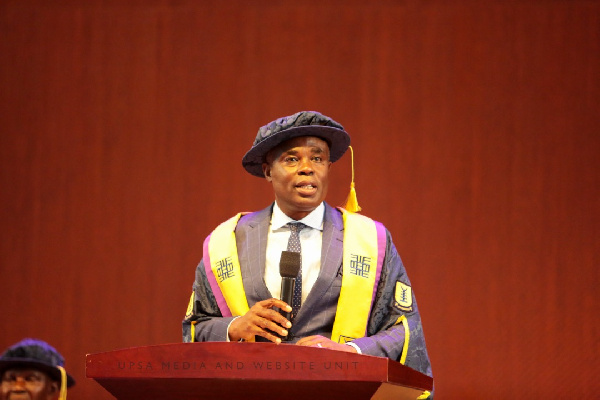
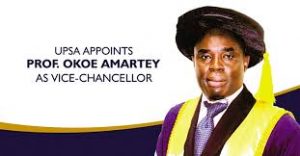
Professor Abednego Feehi Okoe Amartey has been re-appointed the vice-chancellor for the University of Professional Studies, Accra (UPSA).

The astute educationist was appointed to the position for the first time in 2017. After achieving several feats, his term in office expired earlier this year in accordance with the regulations of the tertiary institution.

Following a rigorous process that included appraisals, interviews, and consultations with faculty, staff, students, alumni, and all relevant stakeholders from the wider University community, Prof. Abednego Feehi Okoe Amartey has been re-appointed to serve a second term as the vice-chancellor of UPSA, a statement signed by Dr. G. Koryoe Anim-Wright, the Registrar of the school has said.

The statement added, “At a Special Meeting of the Council of the University of Professional Studies, Accra (UPSA) held on Monday, Aug. 3, 2020, Members of the University Council unanimously approved a second term for the Vice-Chancellor, Professor Abednego Feehi Okoe Amartey, from Jan. 1, 2021 to Dec. 31, 2024.”

In his first time, several academic programs of excellence were introduced including the PhD in Marketing, the MA in Peace and Security, and the E4Impact MBA program.

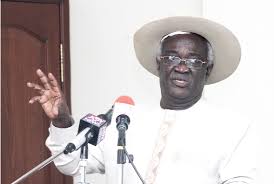
The Vice Chancellor’s Endowment Fund he launched in 2017 to help brilliant but needy students has provided hundreds of thousands in monetary support to ensure deserving students stay in school.

Under his administration, UPSA’s international partnerships and collaborations increased significantly to include strengthening faculty and staff global exchanges and instituting several collaborations for global learning opportunities for UPSA faculty.

TWENEBOAH AKODUA STUDENTS RIOT OVER STRICT WASSCE SUPERVISION

0

The Sekyere Kumawu district command of the Ghana Police service has commenced an investigation after WASSCE candidates of the Tweneboa Kodua Senior High School demonstrated on Monday over what they claim is the strict supervision by the headmaster.

The over 1,200 final year students of the school are demanding the immediate removal of the headmaster of the school, Mr. John Asante, who has been accused of being firm on them during the Integrated Science examination paper.

“They want us to get F9, unacceptable”, a student is heard on a video shared on Facebook while others scattered tables and chairs at the school’s dining hall boycotting their lunch.

However, the timely intervention of Police restored calm on campus as the protest nearly halted Paper 2 of the Integrated Science examination.

District Chief Executive of Sekyere Kumawu, Mr. Samuel Addai Agyekum, who was on his way to the campus for first-hand information on the protest promised parents that steps would be taken to resolve the matter.

“We were monitoring the exams and we had to go to Tweneboa Kodua so on my way there I saw the students chanting [and] demanding the removal of the headmaster. They were accusing the headmaster of being autocratic and so I have directed the CID to investigate and report same to me”, the DCE said.

This unfortunate development in the school by the first product of the Free Education government policy has attracted wide public condemnation with some parents accusing the education ministry of over pampering the students.

“I’m highly disappointed in our children for embarrassing government with this corrupt mindset in their youthful stage. Government has done whatever it could to give you free education. If our children want cheating to be entertained in final examination then how can we win the national battle against corruption,”  a parent questioned.

Another parent accused the government of over pampering the students just for votes in elections throwing moral values and discipline .

“Now a teacher has no right to punish a student for wrongdoing why won’t we see these unfortunate developments in schools.”

Rawlings never beat Akaah – Ahwoi

0

A former Local Government Minister, Prof. Kwamena Ahwoi has recounted the bad blood that characterized the relationship between former President Jerry Rawlings and former Vice President, Kow Nkensen Arkaah, which reportedly led to a brawl.

Prior to the 1992 presidential polls, Arkaah who was the leader of the then National Convention Party (NCP) became the Vice-Presidential candidate to Jerry Rawlings following an alliance between the National Democratic Congress and the NCP.

A former Local Government Minister, Prof. Kwamena Ahwoi has recounted the bad blood that characterized the relationship between former President Jerry Rawlings and former Vice President, Kow Nkensen Arkaah, which reportedly led to a brawl.

Prior to the 1992 presidential polls, Arkaah who was the leader of the then National Convention Party (NCP) became the Vice-Presidential candidate to Jerry Rawlings following an alliance between the National Democratic Congress and the NCP.

The pair had a difficult working relationship. There were reports that Rawlings physically assaulted Arkaah at a Cabinet meeting on December 28, 1995.

Recounting the incident 25 years on, Mr. Ahwoi, who was present at that cabinet meeting, insisted that Arkaah wasn’t beaten by Rawlings.

He, however, acknowledged that there was “an incident” at the meeting, but argued that Arkaah’s suit was not torn as claimed.

“Rawlings didn’t beat him [Arkaah]. But there was an incident and both of them fell on the floor. But Commodore Stephen Obimpeh, who was a military person, was sitting next to Arkaah so he went very quickly, jumped into them and separated them and Arkaah left there [the cabinet meeting].”

“At the time he [Arkaah] was leaving [the meeting], his suit wasn’t torn but we all later saw a picture with his suit torn. [He did that] because he went to the then IGP, to report that he had been assaulted by President Rawlings so he needed evidence,” Prof. Ahwoi narrated on Foot Prints on Citi TV.

Arkaah later became the leader of the Convention People’s Party formed by the merger of the NCP and the People’s Convention Party. Arkaah continued as Vice-President despite being the leader of the Convention People’s Party.

“So he [Arkaah] became the Vice-President and from day one, things were not good between them. Arkaah was beyond salvation because he a very stubborn person,” Prof. Ahwoi said.

Prof. Kwamena Ahwoi has written a book entitled “Working with Rawlings” which he launched last week.

In the book, Prof. Ahwoi narrated his experiences working with the founder of the NDC, Rawlings and other notable persons who played diverse roles in the governance of Ghana.

Prof. Ahwoi was subsequently interviewed by Samuel Attah-Mensah on Foot Prints on Citi TV.