Fellow Ghanaians, Good evening.
Nine (9) days ago, I came to your homes and requested you to make great sacrifices to save lives, and to protect our motherland. I announced the imposition of strict restrictions to movement, and asked that residents of the Greater Accra Metropolitan Area and Kasoa and the Greater Kumasi Metropolitan Area and its contiguous districts to stay at home for two (2) weeks, in order to give us the opportunity to stave off this pandemic. As a result, residents of these two areas had to make significant adjustments to our way of life, with the ultimate goal being to protect permanently our continued existence on this land.
They heeded the call, and they have proven, so far, to each other, and, indeed, to the entire world, that being a Ghanaian means we look out for each other. Yes, there are a few who continue to find ways to be recalcitrant, but the greater majority have complied, and have done so with calm and dignity. Tonight, I say thank you to each and every one of you law-abiding citizens.
Let me thank, in particular, all our frontline actors who continue to put their lives on the line to help ensure that we defeat the virus. To our healthcare workers, I say a big ayekoo for the continued sacrifices you are making in caring for those infected with the virus, and in caring for the sick in general. You are the heroes and heroines of our generation, and Government will do all in its power to provide you with the relevant tools to do your work effectively. To the men and women of our security services, who have been enforcing the directives, by patrolling our streets day and night, conducting surveillance, snap checks and mounting road blocks, we are deeply in your debt. It is these security measures that have created the basic framework within which our medical personnel are able to pursue contact tracing, testing and treatment of persons with the virus, whose implementation offers us the most secure means to defeat the virus.
Reports I have received so far indicate that the police, military and other members of our security services have discharged their mandate with considerable professionalism. Furthermore, working with the Ministry of Local Government and Rural Development, we see personnel of the Ghana Armed Forces involved in the clean-up of our drainage systems and of our markets.
In the very few instances where members of our security agencies have employed the use of excessive force against the citizenry, in enforcing the restrictions on movement, the Inspector General of Police and the Chief of Defense Staff of the Armed Forces have taken steps to investigate such incidents, and, they have given me the assurance that, those found culpable, will be duly sanctioned. Thus far, the alleged wrongdoers have been withdrawn from the ongoing exercise. To enhance command and control, more senior officers have been deployed at the operational level, and each member of our security services participating in the exercise has been handed an aide-mémoire highlighting, essentially, the guidelines for the operation.
However, I am extremely disturbed by the actions of a few, unpatriotic persons, who are deliberately passing off and circulating old videos of alleged brutality by members of the security agencies, largely of foreign origin, and presenting them as though they were new incidents by Ghanaian security personnel, which have occurred during the course of this past week. It is sad, it is unfortunate, and it must end. We should all be in this fight together, and there is nothing to be gained with widespread fabrication and distribution of such videos, whose sole aim is to create discontent, and undermine the trust of the population in the men and women of our security services. Who gains from such conduct? Nobody in their right senses! The law enforcement agencies are determined to locate the originators of these anti-social acts.
Fellow Ghanaians, as I have said before, all that Government is doing is intended to achieve five (5) key objectives – limit and stop the importation of the virus; contain its spread; provide adequate care for the sick; limit the impact of the virus on social and economic life; and inspire the expansion of our domestic capability and deepen our self-reliance.
As at today, Sunday, 5th April, 2020, our current situation is such that we have recorded a total of two hundred and fourteen (214) cases. The Greater Accra Region has one hundred and eighty-nine (189) cases, followed by the Ashanti Region with twelve (12), Northern Region ten (10), Upper West Region one (1), Eastern Region one (1), and Upper East Region one (1). The ten from the Northern Region are the West African nationals who entered our country illegally, after the closure of the borders. In total, three (3) persons have fully recovered from the disease, forty-nine (49) persons have been discharged from treatment facilities, and are being managed from home; and the remaining one hundred and fifty-five (155) are responding to treatment. Two (2) persons are moderately ill, and five (5) persons, as I said before, have lost their lives.
Of the one thousand and thirty (1,030) travellers, who were mandatorily quarantined and tested on their arrival in Ghana on the 21st and 22nd of March, seventy-nine (79) were initially found to be positive, and appropriate arrangements were made for their isolation and treatment. Subsequently, after twelve (12) further days of quarantine, twenty-six (26) other persons were found to be positive as a result of their second test, bringing the total number of those found to be positive to one hundred and five (105), all of whom have been isolated for treatment. Of the remaining nine hundred and twenty-five (925) persons, who have undergone two tests and found to be negative, eight hundred and four (804) have been released from quarantine to join their families. The remaining one hundred and twenty-one (121) are, as I speak, in the process of being released. I want to thank all of them and their families and loved ones for their understanding and co-operation with the stringent procedures that Government was forced to deploy in the public interest.
Efforts also at contact tracing have been ramped up over the course of the past week. Indeed, for every confirmed case of COVID-19, all the contacts have been listed, monitored and tracked. Additionally, in the home or place of work of a confirmed case, all persons, be they at home or at work, have been tested, whether they had symptoms or not. Within the locality or neighbourhood of a confirmed case, the opportunity is also being provided for persons to undergo voluntary testing to ascertain the extent of community spread.
We are, thus, about to enter a critical phase of our fight in the coming week, as the Ghana Health Service is due to receive the results of some fifteen thousand, three hundred and eighty-four (15,384) out of nineteen thousand, two hundred and seventy-six (19,276) persons who have been reached through contact tracing. It is the results of these tests that will determine our future course of action. Government’s policy and measures will continue to be driven by the science in this matter. The Ghana Academy of Arts and Sciences and the Centre for Scientific and Industrial Research (CSIR) are now partnering government in the struggle. I met with their representatives on Friday, and arranged with them a mechanism for the realisation of this partnership. The nation and I appreciate their involvement.
So, in the course of the coming week, a determination will be made as to whether or not to extend the duration of the two-week restriction on movement, and the implementation or otherwise of any more enhanced measures to deal with the virus. I have, however, by Executive Instrument, extended the closure of our borders for two (2) more weeks, until further notice. The data tells us that the overwhelming majority of confirmed cases came from travellers or from people who have come into contact with travellers.
Fellow Ghanaians, tonight, I stand before you to ask for your continued patience, support, vigilance and adherence to the measures. Let each one of us play his or her part to enhance our collective efforts at containing the spread of the virus, which will enable us to hasten the lifting of these restrictions, and returning the nation to normalcy.
I was encouraged by the appreciation of Government’s handling of the pandemic, and the offer of support by the leadership of the major political parties in the country, whom I met on Friday. I applaud Parliament’s decision to call off its planned recess, and be on standby to aid in the fight against the virus. I thank staff of the University of Ghana’s Noguchi Memorial Institute for Medical Research, the Kwame Nkrumah University of Science and Technology’s Kumasi Centre for Collaborative Research, and the National Public Health Reference Laboratory of the Korle-bu Teaching Hospital for the solid work they are doing for Mother Ghana.
I am very grateful to the individuals and institutions, who have responded to my appeal for donations to be made into the COVID-19 National Trust Fund, which has been established to complement Government’s fight against the virus, and to assist in the welfare of the needy and the vulnerable. A total amount of some eight million, seven hundred and fifty thousand cedis (GH¢8.75 million), which includes six hundred thousand United States dollars (US$600,000), has been received so far for this purpose. I am happy that so many appointees of my government have also followed my example by donating their salaries to the Fund.
We are in difficult times, and that is why I directed the Minister for Finance to send to Parliament the Coronavirus Alleviation Programme (CAP), whose objective is to protect households and livelihoods, support micro, small, and medium-sized businesses, minimise job losses, and source additional funding for promotion of industries to shore up and expand industrial output for domestic consumption and exports.
Through this Programme, the Ministries of Gender, Children and Social Protection and Local Government and Rural Development, and the National Disaster Management Organisation (NADMO), working with MMDCEs and the faith-based organisations, have begun to provide food for up to four hundred thousand (400,000) individuals and homes in the affected areas of the restrictions. This begun in Accra today, and will begin in Kumasi tomorrow. It will come in the form of dry food packages and hot meals, and will be delivered to vulnerable communities in Accra, Tema, Kumasi and Kasoa.
Again, the Ghana Water Company Ltd and the Electricity Company of Ghana have been directed to ensure the stable supply of water and electricity during this period. In addition, there will be no disconnection of supply. Furthermore, Government will absorb the water bills for all Ghanaians for the next three months, i.e. April, May and June. All water tankers, publicly and privately-owned, are also going to be mobilised to ensure the supply of water to all vulnerable communities.
Government, in collaboration with the National Board for Small Scale Industries (NBSSI), Business & Trade Associations and selected Commercial and Rural Banks, will roll out a soft loan scheme up to a total of six hundred million cedis (GH¢600 million), which will have a one-year moratorium and two-year repayment period for micro, small and medium scale businesses.
Fellow Ghanaians, it is vital that we protect the lives of our frontline health workers, who are risking their lives every day to battle this virus. That is why Government is placing a high priority on the procurement of personal protective equipment (PPEs) for them. Thus far, three hundred and fifty thousand (350,000) masks, five hundred and fifty eight thousand, six hundred and fifty (558,650) examination gloves, one thousand (1,000) reusable goggles, twenty thousand (20,000) cover-alls, seven thousand (7,000) N-95 respirators, five hundred (500) waterproof gumboots, two thousand (2,000) reusable face shields, two thousand (2,000) gallons of hand sanitizers, ten thousand (10,000) 100ml pieces of hand sanitizers, and five hundred (500) shoe covers have been sent to the regional health directorates, for onward distribution to the district health directorates for use by our health workers in all the districts. The Minister for Health is ensuring that they reach the health workers. This, notwithstanding, Government is aware that more needs to be done, especially in the face of the global shortage of PPEs.
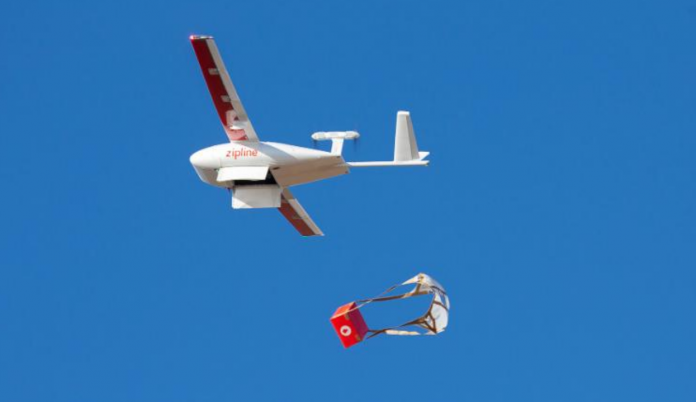
It is for this reason that Government is actively engaged with local manufacturing companies to assist them in the domestic production of PPEs., and I am encouraged by the response from the Ghanaian private sector. Domestic production of face masks, head covers, surgical scrubs and gowns will commence from Tuesday. For example, three million, six hundred thousand face masks will be produced domestically, with an output of one hundred and fifty thousand (150,000) per day. I am equally impressed with the invention of a solar-powered handwashing sink by Jude Osei from Kumasi, and the ‘COVID-19 prevention electronic bucket’ made by Kelvin Owusu Dapaah and Richard Boateng, both students of Obuasi Senior High and Technical School. Necessity, indeed, is the mother of invention, as the Ghanaian sense of enterprise and innovation is beginning to be felt.
An insurance package, with an assured sum of three hundred and fifty thousand cedis (GH¢350,000) for each health personnel and allied professional at the forefront of the fight, has been put in place, with a daily allowance of one hundred and fifty cedis (GH¢150) being paid to contact tracers. Government has also decided that all health workers will not pay taxes on their emoluments for the next three months, i.e. April, May and June. Furthermore, all frontline health workers will receive an additional allowance of fifty percent (50%) of their basic salary per month, i.e. for March, April, May and June. The March allowance will be paid alongside that of April. The Ministry of Transport is also making available, for free, ‘Aayalolo’ buses to convey health workers in Accra, Tema, Kumasi and Kasoa to and from work, along specific routes, for the entire duration of the restrictions.
I am happy that operators of public transport, such as trotros and taxis, are largely adhering to the admonition to observe social distancing in their vehicles. Each one of them should do so.
Towards ensuring the cleanliness of our country, especially in the Greater Accra and the Greater Kumasi areas, which are currently the subjects of the restrictions, the Ministry of Sanitation and Water Resources, together with some four hundred (400) personnel drawn from the Police, Military, Fire Service and Prisons Service, from Friday, 3rd April, to today, Sunday, 5th April, have embarked on desilting our gutters, collection and disposal of garbage from homes, public places, markets and vehicle terminals. We must ensure that the end of this exercise will lead to a new attitude towards cleanliness in our surroundings. That would be a positive legacy from this crisis. MMDAs outside the areas affected by the restrictions have been directed to emulate this clean-up exercise.
As at Saturday, 4th April, 2020, markets and lorry terminals in thirteen (13) regions have been cleaned and sprayed, with the three (3) other regions set to follow in the coming few days. We have had to take the extra step of closing a few markets in Accra and Kumasi, where traders and market women had flouted the rules for social distancing. Some districts have also embraced the policy of alternate-days-for-alternative-products, in a bid to decongest the markets and ensure social-distancing.
I am fully aware of the disruptions to your lives occasioned by these measures. Your personal movements, way of life, the education of your children, your livelihoods have all been disturbed by this virus. But, believe me, the measures are necessary if we are to free ourselves permanently of this pestilence.
So, fellow Ghanaians, I will continue, passionately, to appeal to you to observe prescribed social distancing and good personal hygiene to contain community spread. These enhanced hygiene protocols must become a part of our everyday lives. We must not abandon them. And, remember, that the law enforcement agencies are going to increase their enforcement of the stay-at-home directive. Do not leave your homes other than for the essential, stipulated reasons. The cynics question our capacity for the maintenance of discipline in this period, and in its aftermath; however, I am confident that we will prove them wrong. Ghanaians always rise up to the occasion, and we will do so again. United, we are going to win this battle.
I am privileged to be speaking to you on a sacred day of the Christian calendar, Palm Sunday, which ushers in the Holy Wseek to commemorate the passion and sacrifice of Jesus Christ. Let His example unite all of us, Christians, Muslims, all Ghanaians, in our care for each other, and in our resolve to overcome this challenge. This, too, shall pass!
Together, let us ensure that the scourge of this virus becomes nothing but a temporary blip on the fortunes of our nation, and we will go on to realise the vision and aspirations of our forebears, who envisioned Ghana to be a free, democratic, prosperous nation, the beacon of freedom and justice, the Black Star of Africa, the harbinger of a new black civilisation in which the dignity and prosperity of black people everywhere are assured.
May God bless us all, and our homeland Ghana, and make her great and strong.
Send your news stories to info@livingavenuegh.com
Contact us on 0302938806 or WhatsApp 0302938806 to advertise your products and services